

 For over a quarter century, I've had the privilege of guiding students through the rigorous International Baccalaureate Diploma Programme, teaching History, Geography, English and Theory of Knowledge. Throughout that time, I've witnessed countless students rise to the challenge, producing truly exceptional work that demonstrates deep conceptual understanding, critical thinking, and sophisticated research skills. Now, I'm making a curated selection of these outstanding Internal Assessments (IAs) and Extended Essays (EEs) available for free. This collection represents a significant portion of my teaching career and embodies the very best of what IB History students can achieve. It's a testament to the power of inquiry-based learning, meticulous research, and the development of a nuanced historical perspective. I believe these examples will serve as invaluable resources for current and future IB History students, teachers, and anyone with a passion for historical exploration.The IAs and EEs in this collection are not merely "passing" examples. They represent the upper echelon of student achievement, consistently earning high marks and demonstrating compelling and well-defined historical questions, often
exploring niche topics or offering fresh perspectives on established
debates; a sophisticated understanding of source criticism, going beyond
surface-level analysis to uncover the nuances and biases of their chosen
sources; well-structured and persuasive arguments; and a thorough grasp of the relevant historical context and
historiography, placing their research within broader historical
narratives.
For over a quarter century, I've had the privilege of guiding students through the rigorous International Baccalaureate Diploma Programme, teaching History, Geography, English and Theory of Knowledge. Throughout that time, I've witnessed countless students rise to the challenge, producing truly exceptional work that demonstrates deep conceptual understanding, critical thinking, and sophisticated research skills. Now, I'm making a curated selection of these outstanding Internal Assessments (IAs) and Extended Essays (EEs) available for free. This collection represents a significant portion of my teaching career and embodies the very best of what IB History students can achieve. It's a testament to the power of inquiry-based learning, meticulous research, and the development of a nuanced historical perspective. I believe these examples will serve as invaluable resources for current and future IB History students, teachers, and anyone with a passion for historical exploration.The IAs and EEs in this collection are not merely "passing" examples. They represent the upper echelon of student achievement, consistently earning high marks and demonstrating compelling and well-defined historical questions, often
exploring niche topics or offering fresh perspectives on established
debates; a sophisticated understanding of source criticism, going beyond
surface-level analysis to uncover the nuances and biases of their chosen
sources; well-structured and persuasive arguments; and a thorough grasp of the relevant historical context and
historiography, placing their research within broader historical
narratives.
This collection is designed to be a valuable resource for:
- IBDP History Students: Use these examples as models for your own IAs and EEs. Study the structure, the research methodologies, the source analysis techniques, and the argumentation styles. However, remember that plagiarism is a serious offence. These examples are for inspiration and guidance, not for copying.
- IBDP History Teachers: Use these examples to illustrate best practices to your students, to provide a benchmark for assessment, and to gain insights into successful student approaches.
- Anyone Interested in History: These essays offer fascinating insights into a wide range of historical topics, showcasing the power of historical inquiry and the depth of understanding that can be achieved through rigorous research.
I sincerely hope that this collection of student work proves to be a valuable resource for you. It is a testament to the dedication and intellectual curiosity of the many students I've had the privilege of teaching over the years.
Collection of students' IBDP History Internal Assessments and Extended Essays over the past quarter century:
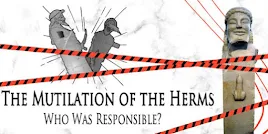 The desecration of the Hermai, a series of stone sculptures in ancient
Athens, remains a topic of historical intrigue and debate. These herm
statues, typically depicting the head of the god Hermes atop an erect penis,
were widely placed throughout the city. In 415 BCE just before the
Athenian expedition to Sicily, numerous
Hermai were vandalised overnight. This incident struck at the heart of
Athenian religious and communal identity, and its motive was shrouded in
suspicion. The Athenians feared a conspiracy linked to
internal political factions or even foreign influence. The event led to a
climate of paranoia, resulting in a series of trials and executions,
including that of the prominent philosopher Socrates, who was accused of
impiety and corruption of the youth. Although the culprits were never
conclusively identified, some historical sources suggest the involvement
of Alcibiades, a leading figure in the expedition, who may have been
implicated to undermine his political position; this IA considers screaming feminists were really to blame.
The desecration of the Hermai, a series of stone sculptures in ancient
Athens, remains a topic of historical intrigue and debate. These herm
statues, typically depicting the head of the god Hermes atop an erect penis,
were widely placed throughout the city. In 415 BCE just before the
Athenian expedition to Sicily, numerous
Hermai were vandalised overnight. This incident struck at the heart of
Athenian religious and communal identity, and its motive was shrouded in
suspicion. The Athenians feared a conspiracy linked to
internal political factions or even foreign influence. The event led to a
climate of paranoia, resulting in a series of trials and executions,
including that of the prominent philosopher Socrates, who was accused of
impiety and corruption of the youth. Although the culprits were never
conclusively identified, some historical sources suggest the involvement
of Alcibiades, a leading figure in the expedition, who may have been
implicated to undermine his political position; this IA considers screaming feminists were really to blame.


 This student's question "To what extent did William’s Feigned-Retreat Tactics determine his victory in the Battle of Hastings?" proved to be excellent IBDP History Internal Assessment topic because it encouraged critical analysis of a pivotal historical event, allowing for an in-depth evaluation of military strategy, causation, and the interplay of multiple factors in William’s victory, such as leadership, morale, and Harold’s decisions. The question’s focus on "extent" allowed him to offer nuanced argumentation, requiring him to weigh the tactic’s significance against other elements. Additionally, it drew on diverse primary and secondary sources, fostering historiographical debate and meeting the IBDP’s emphasis on analytical rigour and historical inquiry.

 A mixture of the IBDP's Language A and History courses, this Extended Essay received an 'A' for investigating Luther's linguistic prowess to reveal scholarly consensus regarding its pivotal role in Reformation advancement. Academics emphasise Luther's vernacular Bible translation as revolutionary, democratising scriptural access whilst establishing standardised German. His rhetorical strategies—employing accessible vocabulary, vivid metaphors and polemical vigour—effectively disseminated theological concepts across social strata. Historians note Luther's strategic utilisation of printing technology amplified his linguistic influence exponentially. Recent scholarship has further examined his pamphlets, hymns and correspondence as complementary vehicles for reformist ideas. The historiographical trajectory acknowledges Luther's linguistic innovations not merely as communicative tools, but as fundamental catalysts transforming religious discourse throughout sixteenth-century Europe.
 The authenticity of the Glasgow Letter, allegedly written by Mary, Queen of Scots, has sparked considerable historiographical debate. Traditional historians, relying on contemporaneous accounts and the letter's content, have often attributed it to Mary, using it to support narratives of her culpability in the murder of her husband, Lord Darnley. Conversely, revisionist scholars have challenged this interpretation, citing inconsistencies in handwriting, linguistic style, and political motivation. They argue that the letter may have been forged to implicate Mary, casting doubt on its validity as historical evidence. This internal assessment highlights the complexities of interpreting primary sources and the influence of bias in historical narratives.
 Did Cromwell and the New Model Army targeted civilians during the 1649 Siege of Drogheda? The study evaluates two key sources: Tom Reilly’s Cromwell Was Framed, which argues no civilians were killed, and Thomas Wood’s 1772 eyewitness account, detailing the siege’s brutality. Reilly’s book, by a local Drogheda historian, uses primary sources but lacks structure and may dismiss conflicting evidence. Wood’s account, potentially biased due to Royalist editing, vividly describes civilian deaths, though its reliability is questioned. The investigation examines Cromwell’s orders, reports to Parliament, and accounts like Dean Bernard’s, suggesting civilian targeting despite Reilly’s claims of stable post-siege population. Historians like Michéal Ó Siochrú support civilian casualties, citing Cromwell’s and Hugh Peter’s reports. This IA highlights challenges in source reliability and bias, concluding Cromwell likely targeted civilians, aligning with traditional views despite Reilly’s counterarguments.
  One of the first Extended Essays I supervised, this considers the historiography of Captain James Cook’s legacy in Hawaii where he was tragically killed. Those recognising British Enlightenment values, celebrate Cook as a pioneering navigator and scientist whose voyages advanced geographical and anthropological knowledge. This paper acknowledges his portrayal as a scapegoat for subsequent colonial injustices as anachronistic, projecting modern ideological biases onto 18th-century contexts. Conservative analyses argue that blaming Cook overlooks the agency of Hawaiian leaders and the complex socio-political dynamics of the period, instead honouring his contributions to exploration whilst acknowledging the inevitability of cross-cultural encounters in his era.
 How accurate is Victor Hugo’s Les Misérables? A work of historical fiction that, whilst
rooted in the socio-political context of 19th-century France,
prioritises dramatic narrative over strict historical accuracy, the
novel vividly portrays the June Rebellion of 1832, the plight of the
urban poor, and the injustices of the penal system, drawing on real
events and conditions. However, Hugo often embellishes or simplifies
historical details to enhance thematic depth, such as the exaggerated
depiction of barricades or the idealised portrayal of revolutionary
figures. Thus, whilst the novel captures the spirit of its era, it should
not be regarded as a precise historical record.
How accurate is Victor Hugo’s Les Misérables? A work of historical fiction that, whilst
rooted in the socio-political context of 19th-century France,
prioritises dramatic narrative over strict historical accuracy, the
novel vividly portrays the June Rebellion of 1832, the plight of the
urban poor, and the injustices of the penal system, drawing on real
events and conditions. However, Hugo often embellishes or simplifies
historical details to enhance thematic depth, such as the exaggerated
depiction of barricades or the idealised portrayal of revolutionary
figures. Thus, whilst the novel captures the spirit of its era, it should
not be regarded as a precise historical record. 
 A veritable tour de force by my student who received an 'A' for this Extended Essay and a '7' for the History course itself, this investigation into Ludwig II's demise, revealing persistent scholarly contention. Traditional narratives, established by the 1886 official inquest, maintained suicide by drowning, citing the monarch's supposed mental instability. However, revisionist historians have scrutinised inconsistencies in medical reports and witness testimonies, proposing alternative theories of assassination. Some scholars suggest political motivations, noting Bavarian ministers' concerns regarding Ludwig's financial extravagance and governmental disengagement. Forensic re-examinations have highlighted suspicious elements, including unexplained injuries and the absence of water in the king's lungs. Despite extensive archival research, conclusive evidence remains elusive, leaving the circumstances of Ludwig's death an enduring historical enigma that continues to provoke scholarly debate.
 The
question of whether Aaron Kosminski was Jack the Ripper remains a
contested topic within historical and criminological circles. Modern
DNA analysis of a shawl, purportedly found at the scene of one of the
murders and linked to Catherine Eddowes, has identified mitochondrial
DNA matching that of Kosminski’s descendants. This evidence is presented
as strong indication of his culpability. However, considerable debate
persists regarding the shawl’s authenticity, its chain of custody, and
the definitive nature of mitochondrial DNA in this context. Therefore,
whilst Kosminski is a prominent suspect, conclusive proof establishing
him unequivocally as Jack the Ripper is still considered by many to be
absent.
The
question of whether Aaron Kosminski was Jack the Ripper remains a
contested topic within historical and criminological circles. Modern
DNA analysis of a shawl, purportedly found at the scene of one of the
murders and linked to Catherine Eddowes, has identified mitochondrial
DNA matching that of Kosminski’s descendants. This evidence is presented
as strong indication of his culpability. However, considerable debate
persists regarding the shawl’s authenticity, its chain of custody, and
the definitive nature of mitochondrial DNA in this context. Therefore,
whilst Kosminski is a prominent suspect, conclusive proof establishing
him unequivocally as Jack the Ripper is still considered by many to be
absent.  This Extended Essay compares Tsars Alexander II (1855–1881) and Alexander III (1881–1894), centering on their contrasting approaches to governance and reform as often seen in Paper 3 exams. Traditional scholarship characterises Alexander II as a “reforming tsar” for emancipating the serfs and modernising institutions, though critiques note his reluctance to curb autocratic power. Alexander III, by contrast, is framed as a reactionary, reversing liberal policies to enforce repression, Russification, and orthodoxy. Soviet historiography often dismissed both as upholders of bourgeois autocracy, whilst post-Soviet analyses highlight Alexander II’s pragmatism amid societal pressures versus Alexander III’s ideological conservatism. Debates persist over whether their policies reflected personal inclinations or responses to external threats, with recent studies emphasising continuity in tsarist objectives despite divergent methods.
 To what extent did the Dreyfus Affair influence Theodor Herzl’s Zionist beliefs? This IA primarily analyses Kornberg’s Theodor Herzl: From Assimilation to Zionism and Herzl’s own diaries. Kornberg’s 1993 book challenges the traditional view that the Dreyfus Affair was the primary catalyst for Herzl’s Zionism, arguing that Herzl exaggerated its impact to bolster his leadership, with anti-Semitism in Austria and Germany being more influential. Herzl’s diaries, while offering insight into his thoughts, lack consistent emphasis on the Dreyfus Affair, focusing more on broader anti-Semitic trends across Europe. The investigation highlights a historiographical divide: traditional views, supported by historians like Alex Bein, emphasise the Affair’s profound impact on Herzl, whilst revisionists like Kornberg argue it was secondary to other factors, such as Austrian political developments. It acknowledges the Affair’s role as a pivotal moment that crystallised Herzl’s awareness of pervasive anti-Semitism, particularly in France but also recognises Herzl’s strategic use of the Affair to advance Zionism.
  This internal assessment examines Joseph Stalin’s possible involvement in the violent 1907 Tbilisi bank robbery through a variety of primary and secondary evidence. Contemporary reports from The New York Times establish the event’s brutal facts but notably omit Stalin’s name, suggesting he may have operated behind the scenes. Biographers like Simon Sebag Montefiore argue that Stalin acted as a central organiser and liaison for the attackers, whilst more skeptical historians like Stephen Kotkin claim his direct role lacks definitive proof. My student's investigation highlights the difficulty of uncovering the truth because Stalin later manipulated historical records to sanitise his revolutionary past. Ultimately, the text illustrates how power and secrecy allowed Stalin to shape his political image despite his early connections to extremist fundraising activities. This analysis demonstrates that history is often an evolving debate influenced by interpretation and the selective preservation of memory.
  Was Emily Davison's death a deliberate act of
suicide remains subject to historical debate. On June 4, 1913, during the
Epsom Derby, Davison stepped onto the racecourse and was fatally
injured by King George V's horse. Some historians argue this act was
intentional, citing evidence of her previous militant suffragist
activities and willingness to endure personal harm for political
attention. Others propose that her death was accidental, highlighting
the ambiguity of her intentions and absence of clear evidence indicating
suicidal motivations. Despite extensive analysis, the precise nature of
Davison's intent continues to fuel scholarly discussion and remains
unresolved.
Was Emily Davison's death a deliberate act of
suicide remains subject to historical debate. On June 4, 1913, during the
Epsom Derby, Davison stepped onto the racecourse and was fatally
injured by King George V's horse. Some historians argue this act was
intentional, citing evidence of her previous militant suffragist
activities and willingness to endure personal harm for political
attention. Others propose that her death was accidental, highlighting
the ambiguity of her intentions and absence of clear evidence indicating
suicidal motivations. Despite extensive analysis, the precise nature of
Davison's intent continues to fuel scholarly discussion and remains
unresolved. Another Extended Essay scoring an 'A' based on content covered in the class, this concerns how the Bosnian Crisis of 1908-1909 reflects evolving scholarly perspectives on its impact upon Triple Entente cohesion. Traditional interpretations posited that Austria-Hungary's annexation of Bosnia-Herzegovina significantly strengthened Anglo-Franco-Russian solidarity through shared diplomatic humiliation. More nuanced scholarship has subsequently identified complex diplomatic repercussions, noting how Russia's reluctant acquiescence created temporary intra-Entente tensions. Recent analyses emphasise the crisis as a catalyst for incremental rather than immediate Entente consolidation, precipitating enhanced military conversations and strategic planning. Historians now generally concur that whilst the crisis did not instantaneously cement the alliance, it contributed substantially to the psychological and diplomatic foundations that would prove crucial during subsequent Balkan confrontations.
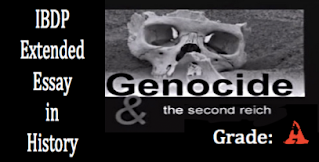 To what extent did the Second Reich’s colonial activities in South West Africa influence Nazi ideology? Traditionalist historians, such as Jürgen Zimmerer, argue that these colonial practices, including racial hierarchies and extermination policies, directly shaped Nazi racial ideology and genocidal methods, providing a blueprint for later atrocities. Conversely, revisionist scholars, like Robert Gerwarth, caution against overstating this link, suggesting that whilst there were ideological parallels, Nazi policies were more directly influenced by contemporary European eugenics and post-First World War radicalisation. This Extended Essay which received an 'A' focuses on the continuity of racial policies versus the distinct socio-political contexts driving Nazi ideology.
.jpg) Was Captain William Turner culpable for the sinking of the RMS Lusitania in
1915? Critics argue that Turner failed to adhere to Admiralty
directives, such as zigzagging to evade submarines, thereby compromising
the vessel’s safety. Conversely, defenders contend that the Admiralty’s
ambiguous instructions, the presence of munitions aboard the Lusitania,
and the unprecedented nature of unrestricted submarine warfare
complicated his decisions. Furthermore, Germany’s deliberate targeting
of civilian vessels undermined claims of negligence. Whilst some view
Turner’s actions as contributory, others emphasise external factors,
leaving his culpability unresolved in historical discourse.
Was Captain William Turner culpable for the sinking of the RMS Lusitania in
1915? Critics argue that Turner failed to adhere to Admiralty
directives, such as zigzagging to evade submarines, thereby compromising
the vessel’s safety. Conversely, defenders contend that the Admiralty’s
ambiguous instructions, the presence of munitions aboard the Lusitania,
and the unprecedented nature of unrestricted submarine warfare
complicated his decisions. Furthermore, Germany’s deliberate targeting
of civilian vessels undermined claims of negligence. Whilst some view
Turner’s actions as contributory, others emphasise external factors,
leaving his culpability unresolved in historical discourse.  The IA explores Winston Churchill’s responsibility for the Gallipoli campaign’s failures in 1915, focusing on his leadership as First Lord of the Admiralty. Key sources include the Dardanelles Commission’s 1917 report and Dan Van Der Vat’s The Dardanelles Disaster, which provide detailed accounts of the campaign’s planning and execution. Churchill initiated the plan to seize Gallipoli to disrupt German alliances and open a second front, but underestimated Ottoman resistance and rushed the operation despite warnings from Admiral Carden. The campaign suffered from inadequate resources, poor planning, and delays, exacerbated by political disagreements and lack of reinforcements. Naval attacks failed, costing ships and lives, and the subsequent land campaign under Ian Hamilton was equally disastrous due to unprepared troops and insufficient support. While Churchill’s overreach and lack of contingency plans were significant, others, including Lord Kitchener, shared responsibility. The Commission highlighted poor planning but avoided definitive blame. Ultimately, Churchill’s pivotal role in the rushed and ill-prepared operation makes him accountable, though not solely responsible, for the Gallipoli disaster.
 Scoring an 'A' in many ways thanks to the remarkable generosity of Sir Hew Strachan, currently professor of international relations at the University of St Andrews, who selflessly wrote a lengthy email in reply to this student asking for information. The historiography surrounding Field Marshal Douglas Haig’s role in the Battle of the Somme has been deeply contentious. Early interpretations, notably from wartime propaganda and post-war memoirs, often portrayed Haig as a resolute commander facing insurmountable challenges. However, revisionist historians, such as John Terraine, argued that Haig’s strategy was a necessary, albeit costly, step towards victory, constrained by the technological and tactical limitations of 1916. Conversely, critics, including Basil Liddell Hart, condemned Haig as an inflexible ‘butcher’, highlighting the staggering casualties- over 600,000 Allied losses- as evidence of incompetence. Recent scholarship adopts a more nuanced view, balancing strategic context with moral critique.
 Whether T.E. Lawrence, popularly known as Lawrence of Arabia, was raped during
his capture at Deraa in 1917 remains a subject of historical debate.
Lawrence’s own account in his memoir, Seven Pillars of Wisdom, describes
a brutal assault by Ottoman soldiers, though he does not explicitly
confirm sexual violence. Some historians argue that cultural and
personal reticence may have led him to obscure the full truth, whilst
others contend that the ambiguity reflects psychological trauma rather
than literal events. This led to an internal assessment that
demonstrated a nuanced understanding of the historical context, the
reliability of autobiographical narratives, and the evolving definitions
of sexual violence.
Whether T.E. Lawrence, popularly known as Lawrence of Arabia, was raped during
his capture at Deraa in 1917 remains a subject of historical debate.
Lawrence’s own account in his memoir, Seven Pillars of Wisdom, describes
a brutal assault by Ottoman soldiers, though he does not explicitly
confirm sexual violence. Some historians argue that cultural and
personal reticence may have led him to obscure the full truth, whilst
others contend that the ambiguity reflects psychological trauma rather
than literal events. This led to an internal assessment that
demonstrated a nuanced understanding of the historical context, the
reliability of autobiographical narratives, and the evolving definitions
of sexual violence.  The
circumstances surrounding Grigori Rasputin’s death in December 1916
remain shrouded in ambiguity, despite a generally accepted narrative. A
group of conspirators, including Prince Felix Yusupov and Grand Duke
Dmitri Pavlovich, lured Rasputin to Yusupov’s palace with the intention
of ending his influence over the Tsarina. Accounts detail a protracted
and violent struggle involving poisoning, shooting, and ultimately,
drowning in the Neva River. Whilst these nobles are widely considered
responsible, conflicting testimonies and political motivations suggest a
more complex scenario, potentially involving higher authorities seeking
to distance themselves from the deed. This IA even posits whether a
British secret service agent did the deed.
The
circumstances surrounding Grigori Rasputin’s death in December 1916
remain shrouded in ambiguity, despite a generally accepted narrative. A
group of conspirators, including Prince Felix Yusupov and Grand Duke
Dmitri Pavlovich, lured Rasputin to Yusupov’s palace with the intention
of ending his influence over the Tsarina. Accounts detail a protracted
and violent struggle involving poisoning, shooting, and ultimately,
drowning in the Neva River. Whilst these nobles are widely considered
responsible, conflicting testimonies and political motivations suggest a
more complex scenario, potentially involving higher authorities seeking
to distance themselves from the deed. This IA even posits whether a
British secret service agent did the deed. The historiographical debate surrounding the death of Manfred von Richthofen on April 21, 1918 reveals persistent controversy over whether the fatal shot was fired by Canadian pilot Captain Roy Brown or by Australian ground gunners. Traditional RAF accounts and early histories credited Brown, supported by his combat report and squadron records. Forensic re-examination of the 1918 autopsy by Colonel Sinclair, combined with ballistic analysis, demonstrates that the low-velocity, undeformed bullet and the rising 14–15° trajectory are incompatible with Brown’s position. Revisionist works, notably Carisella and Ryan, together with later studies by Miller and Markham, shift responsibility to the Australian 53rd Battery, initially favouring Gunner Buie because of Sinclair’s (now discredited) deflection theory. Modern consensus, informed by trigonometric reconstruction, eyewitness corroboration of tracer hits, and the greater volume of fire from a belt-fed Vickers gun, identifies Sergeant Cedric Popkin of the 24th Machine-Gun Company as the most probable shooter, illustrating the critical role of medical, ballistic, and positional evidence in overturning long-accepted aerial-victory attributions.
 The
Aurora cruiser's role in the October Revolution of 1917 is a pivotal,
if debated, aspect of the events covered in my IBDP HL lessons. Whilst
often depicted as the vanguard of the Bolshevik uprising, the extent of
its direct impact is nuanced. The cruiser's crew, primarily sympathetic
to the Bolshevik cause, played a symbolic role, firing a blank shot from
its forward gun as a signal for the storming of the Winter Palace.
Though this act is commonly cited, historians debate whether it was the
decisive trigger, or rather a symbolic gesture within a broader
insurrection. The Aurora, therefore, remains an iconic symbol, but its
specific contribution requires careful consideration.
The
Aurora cruiser's role in the October Revolution of 1917 is a pivotal,
if debated, aspect of the events covered in my IBDP HL lessons. Whilst
often depicted as the vanguard of the Bolshevik uprising, the extent of
its direct impact is nuanced. The cruiser's crew, primarily sympathetic
to the Bolshevik cause, played a symbolic role, firing a blank shot from
its forward gun as a signal for the storming of the Winter Palace.
Though this act is commonly cited, historians debate whether it was the
decisive trigger, or rather a symbolic gesture within a broader
insurrection. The Aurora, therefore, remains an iconic symbol, but its
specific contribution requires careful consideration.

 How far did Alexandra Kollontai influence the Russian Revolution? As an
active Bolshevik, she contributed to shaping policies on gender equality
and social reforms, notably advancing the rights of working-class
women. Kollontai was instrumental in establishing the Zhenotdel, the
Bolshevik women's department, which sought to educate, mobilise, and
integrate women into revolutionary society. Her writings and speeches
emphasised the necessity of women's emancipation as integral to
socialist transformation. Furthermore, Kollontai's progressive views on
family structure, marriage, and sexuality challenged traditional norms,
leaving a lasting ideological impact on post-revolutionary Soviet
society.
How far did Alexandra Kollontai influence the Russian Revolution? As an
active Bolshevik, she contributed to shaping policies on gender equality
and social reforms, notably advancing the rights of working-class
women. Kollontai was instrumental in establishing the Zhenotdel, the
Bolshevik women's department, which sought to educate, mobilise, and
integrate women into revolutionary society. Her writings and speeches
emphasised the necessity of women's emancipation as integral to
socialist transformation. Furthermore, Kollontai's progressive views on
family structure, marriage, and sexuality challenged traditional norms,
leaving a lasting ideological impact on post-revolutionary Soviet
society.  Leon Trotsky's significance in the October Revolution remains a subject
of historical debate. Whilst Lenin provided the ideological framework
and overall strategic direction, Trotsky's organisational capabilities
were crucial. He masterminded the Military Revolutionary Committee,
ensuring the Red Guard's readiness for the uprising. His persuasive
oratory skills galvanised support within the Petrograd Soviet, enabling
the Bolsheviks to seize power effectively. Without Trotsky's tactical
prowess and ability to mobilise key support, the revolution's success
would have been considerably less assured, although it would be
misleading to dismiss Lenin’s centrality. His influence was undoubtedly
pivotal.
Leon Trotsky's significance in the October Revolution remains a subject
of historical debate. Whilst Lenin provided the ideological framework
and overall strategic direction, Trotsky's organisational capabilities
were crucial. He masterminded the Military Revolutionary Committee,
ensuring the Red Guard's readiness for the uprising. His persuasive
oratory skills galvanised support within the Petrograd Soviet, enabling
the Bolsheviks to seize power effectively. Without Trotsky's tactical
prowess and ability to mobilise key support, the revolution's success
would have been considerably less assured, although it would be
misleading to dismiss Lenin’s centrality. His influence was undoubtedly
pivotal.  Did Rosa Luxemburg support the Spartacist Uprising? Whilst she was a leading figure in the Spartacus League, she initially
expressed reservations about the timing of the January 1919 revolt. She
favoured a more gradual approach, prioritising the education and
organisation of the working class before attempting a seizure of power.
However, once the uprising commenced, fuelled by the dismissal of the
Independent Social Democratic Party members from the Berlin police,
Luxemburg actively participated in its leadership through articles in
Die Rote Fahne. Despite her earlier caution, she ultimately supported
the uprising as a response to the prevailing political climate.
Did Rosa Luxemburg support the Spartacist Uprising? Whilst she was a leading figure in the Spartacus League, she initially
expressed reservations about the timing of the January 1919 revolt. She
favoured a more gradual approach, prioritising the education and
organisation of the working class before attempting a seizure of power.
However, once the uprising commenced, fuelled by the dismissal of the
Independent Social Democratic Party members from the Berlin police,
Luxemburg actively participated in its leadership through articles in
Die Rote Fahne. Despite her earlier caution, she ultimately supported
the uprising as a response to the prevailing political climate. 'A'-winning Extended Essay considering the role of the Chinese Labour Corps and the May Fourth Movement in Peking, reflecting evolving interpretations of their significance in modern Chinese history. Initially, the CLC, which supported Allied forces during the Great War, was overlooked, with Western narratives focusing on military contributions. However, recent scholarship has highlighted its crucial role and the harsh conditions endured by its members. The May Fourth Movement of 1919, sparked by dissatisfaction with the Treaty of Versailles, has been extensively studied as a pivotal moment in Chinese nationalism and intellectual awakening. Early interpretations emphasised its anti-imperialist and cultural dimensions, whilst contemporary analyses explore its broader social and political ramifications, including its influence on the Chinese Communist Party and modern Chinese identity.
 The Jallianwala Bagh massacre of April 13, 1919, where Brigadier General Dyer ordered troops to fire on an unarmed crowd in Amritsar, killing 379 and injuring over 1200, is examined to assess its moral justification. This Internal Assessment takes on Andrew Roberts's argument that it was justified by analysing two main sources: Nick Lloyd’s book, The Amritsar Massacre: The Untold Story of One Fateful Day, which defends Dyer’s actions, arguing the crowd was volatile and the British acted with restraint, and Richard Attenborough’s film Gandhi, which portrays the massacre as a brutal act, though with inaccuracies, such as depicting women and children present. Lloyd suggests Dyer acted in self-defence due to misinformation, whilst Indian historians like Savita Narain and Raja Ram argue the crowd was peaceful, and Dyer’s excessive force, including 1650 bullets fired without warning, was unjustified
  Yet another Extended Essay scoring an 'A' based on a common DP History exam question, this one examines the historiography surrounding the Treaty of Versailles which has been marked by a spectrum of interpretations regarding its justification as a peace settlement. Early critiques, notably from the "Diktat" school, posited that the treaty was excessively punitive, sowing the seeds for future conflict. Conversely, some historians argue that it was a necessary measure to contain German militarism and establish a new order in Europe. Revisionist perspectives emerged, suggesting that the treaty was a flawed but ultimately pragmatic attempt at peace. Recent scholarship has sought to contextualise the treaty within broader geopolitical dynamics, emphasising its complex legacy and the challenges of post-war reconciliation.

 The Holodomor, a catastrophic famine that occurred in Soviet Ukraine from 1932 to 1933, has been the subject of a number of my students' internal assessments and extended essays, especially given the latest Russian atrocities being waged against that country. Central to the discourse is whether the famine was a result of deliberate policies implemented by Joseph Stalin's regime, aimed at suppressing Ukrainian nationalism, or whether it was a consequence of poor agricultural practices and adverse weather conditions. Proponents of the former view argue that the Soviet government's actions, including grain requisition quotas and the blockade of food aid, constituted genocide. Conversely, others contend that it was an unintended consequence of broader economic failures. This contentious issue continues to provoke strong emotions and differing interpretations.
 The origins of Hitler's pathological anti-Semitism are complex and multifaceted, defying a singular explanation. Influenced by the virulent anti-Semitic currents prevalent in late 19th and early 20th-century Europe, Hitler absorbed ideas blaming Jews for societal ills, including Germany's defeat in World War I and economic hardships. His experiences in Vienna, where anti-Jewish sentiment was particularly strong, further radicalised his views. Additionally, his exposure to extremist ideologies during his time in post-war Munich, coupled with his charismatic leadership and ability to exploit public grievances, allowed him to elevate anti-Semitism into a central tenet of Nazi ideology, culminating in the Holocaust. Historians point to a confluence of factors, including his personal experiences, political opportunism, and a distorted interpretation of history and social Darwinism. Hitler's anti-Semitism, fuelled by a potent mix of prejudice, paranoia, and a desire for scapegoating, ultimately culminated in the horrific genocide of the Holocaust.
  For his May 2026 Internal Assessment, my student explores the historical debate regarding Paul von Hindenburg’s involvement in Hitler’s ascent to power, specifically examining if he was a passive figurehead or an active collaborator. It contrasts the structuralist methodology of Hans Mommsen, who attributes the fall of the Weimar Republic to broad systemic failures, with the biographical approach of Sebastian Haffner, who emphasises personal moral responsibility. Whilst Mommsen views Hindenburg as an old man caught in a complex political puzzle, Haffner argues the President was a purposeful agent who sought to undermine democracy. The article evaluates these opposing historiographical perspectives, ultimately suggesting that both institutional weaknesses and individual decisions were critical factors. This synthesis highlights how a historian’s background and methodology fundamentally shape the interpretation of historical guilt and agency.
 The question of who was responsible for the Reichstag Fire remains a subject of historical debate which led me to personally investigate on-site with my class. On the evening of February 27, 1933, the German Parliament building, the Reichstag, was set ablaze. The fire was pivotal in consolidating Hitler's power, as the Nazi regime swiftly attributed the act to a communist conspiracy, using it to justify the suspension of civil liberties and the mass arrest of political opponents. Marinus van der Lubbe, a Dutch communist, was arrested at the scene and later executed. However, some historians argue that the Nazis may have orchestrated the fire themselves to eliminate opposition and consolidate their authority. Here are a couple of IAs researching the topic.
 The question of Hitler's direct involvement in the assassination of Austrian Chancellor Engelbert Dollfuss in 1934 remains a subject of historical debate. Whilst the perpetrators were Austrian Nazis who clearly aimed to establish a regime aligned with Germany, explicit orders from Hitler have never been definitively proven. Some historians argue that the assassination was orchestrated with at least Hitler's tacit approval, given his ambition to annex Austria. Others suggest that while Hitler desired Dollfuss's removal, the plot was primarily driven by radical Austrian elements, with Hitler maintaining a degree of plausible deniability. Ultimately, conclusive evidence directly linking Hitler to the precise planning and execution of the assassination is lacking, though his broader strategic aims undoubtedly contributed to the climate of violence.
  An outstanding IA from an outstanding student, this IA focuses on the historical and legal debate surrounding the 1934 "Law pertaining to Measures of Emergency State Self-Defence", which was enacted to retroactively justify the murders committed during the Night of the Long Knives. One perspective argues that this legislation established a permanent legal precedent for extrajudicial killings, effectively placing the Führer above the law and transitioning Germany into a state of lawlessness. Conversely, other scholars suggest the law was merely a temporary, improvised measure designed to cover up specific crimes rather than a structured shift in the judicial framework. My student analysed contemporary Nazi propaganda from jurist Carl Schmitt and modern historical analysis by Richard J. Evans to illustrate these conflicting views. Ultimately, the investigation examines how this act contributed to the erosion of justice by normalising state-sanctioned violence under the guise of national security. This analysis highlights the interdisciplinary challenge of interpreting historical events through both a political and a technical legal lens.
  The work of another one of my outstanding students, she conducted a detailed historical investigation into the 1934 Latvian coup d'état led by Kārlis Ulmanis, one of the most prominent Latvian politicians of pre-World War II Latvia during the Interwar period of independence from November 1918 to June 1940 and who had served as the country's first prime minister. Here, she examines whether his seizure of power was truly an attempt to resolve political instability or a calculated move for personal authority. In Section A, she evaluates primary evidence, such as the diary of Vilhelms Munters, alongside modern scholarly perspectives to challenge Ulmanis’s official justifications. Her analysis in Section B highlights how global authoritarian trends and internal parliamentary struggles provided a backdrop for the transition to an autocratic regime. Ultimately, concludes that whilst national unrest was genuine, Ulmanis’s actions were heavily driven by long-term political ambition and the desire to establish a personality cult.
  The historiography of the Battle of Cable Street, which took place on October 4, 1936 in London’s East End, has evolved significantly over time as seen in this Extended Essay. Initially, the event was framed as a heroic moment of anti-fascist resistance, where Jewish, Irish, and socialist communities united to halt Oswald Mosley’s British Union of Fascists (BUF) from marching through a predominantly Jewish area. Early accounts, often influenced by left-wing narratives, emphasised the role of collective action and solidarity. However, later scholarship has critiqued this portrayal, highlighting the complexities of the event, including the limited impact on the BUF’s broader influence and the tensions within the anti-fascist coalition. Recent studies have also examined the role of the police, the media’s portrayal, and the long-term implications for British politics, offering a more nuanced understanding of this pivotal moment in British history.
  Was the Battle of Luding in May 1935 a pivotal event during the Chinese
Communist Party's Long March or a minor skirmish exaggerated for
propaganda? Edgar Snow's Red Star Over China portrays it as the
Long March's most critical moment, based on Mao's account of Red
Army soldiers bravely crossing a chain-only Luding Bridge under
Kuomintang fire, despite half the planks being removed. Conversely, Jung
Chang and Jon Halliday argue the
battle was a myth, citing witnesses from the 1980s and 1990s who
recalled no significant conflict and suggested the Red Army removed the
planks to create a heroic narrative. Official CCP reports celebrate the
battle, claiming soldiers overcame great odds, a narrative reinforced
through films and memorials, yet Deng Xiao-Ping later described it as an
easy operation. Contradictory sources, including Snow's CCP-revised
work and Chang's anti-Mao bias, complicate the truth. Investigations
reveal the bridge's treacherous conditions, but witness accounts and
journals from May 1935 suggest minimal conflict.
Was the Battle of Luding in May 1935 a pivotal event during the Chinese
Communist Party's Long March or a minor skirmish exaggerated for
propaganda? Edgar Snow's Red Star Over China portrays it as the
Long March's most critical moment, based on Mao's account of Red
Army soldiers bravely crossing a chain-only Luding Bridge under
Kuomintang fire, despite half the planks being removed. Conversely, Jung
Chang and Jon Halliday argue the
battle was a myth, citing witnesses from the 1980s and 1990s who
recalled no significant conflict and suggested the Red Army removed the
planks to create a heroic narrative. Official CCP reports celebrate the
battle, claiming soldiers overcame great odds, a narrative reinforced
through films and memorials, yet Deng Xiao-Ping later described it as an
easy operation. Contradictory sources, including Snow's CCP-revised
work and Chang's anti-Mao bias, complicate the truth. Investigations
reveal the bridge's treacherous conditions, but witness accounts and
journals from May 1935 suggest minimal conflict.  The authenticity of Robert Capa's iconic "The Falling Soldier" photograph has been a long-standing point of contention among historians and photography critics. Some argue that the image, depicting a Republican soldier at the moment of death, was staged for dramatic effect. Evidence cited includes inconsistencies in the location where the photograph was purportedly taken and the lack of supporting documentation. Conversely, many believe the photograph to be genuine, capturing the brutal reality of the Spanish Civil War. Supporters point to Capa's reputation as a fearless war photographer and the powerful emotional impact of the image as indicators of its veracity.
 Conducted by a couple of my Spanish students, these Internal Assessments and Extended Essays investigating the bombing of Guernica during the Spanish Civil War reveals a contentious debate over motives and justifications. Traditionalist historians, such as Hugh Thomas, argue that the bombing was a deliberate act of terror by the Nationalists, supported by the German Condor Legion, aimed at breaking civilian morale and testing aerial warfare tactics, with little strategic justification. Conversely, revisionist scholars, including Jesús Salas Larrazábal, contend that the attack targeted legitimate military objectives, such as disrupting Republican supply lines, and that civilian casualties were unintended consequences exaggerated by propaganda. The debate hinges on interpreting military intent, the extent of civilian targeting, and the role of propaganda in shaping historical narratives.
  This investigation explores whether Federico García Lorca foresaw his death when he returned to Granada in July 1936, amidst the Spanish military uprising. Historian Ian Gibson argues Lorca was aware of the risks, citing his leftist activities, friendships with republican figures, and death motifs in his writings, suggesting he accepted potential martyrdom. Conversely, journalist Eduardo Molina Fajardo posits Lorca believed he was safe in Granada due to his apolitical stance, friendships across ideological lines, and plans to travel to Mexico, indicating he did not anticipate his fate. Evidence includes Lorca’s political engagements, his stay with the Falangist Rosales family, and internal conflicts among insurgents, which may have led to his arrest and execution on August 16, 1936. The lack of definitive records and reliance on subjective sources like eyewitness accounts complicate conclusions. Ultimately, Lorca’s death may have been an unforeseen consequence of misjudging his safety, challenging the romanticised view of him as a revolutionary martyr.
 Extended Essay looking at the debate surrounding the role of Trotskyists in the Barcelona May Days of 1937 is contentious. Traditional Marxist historians, such as Ernest Mandel, argue that the Partido Obrero de Unificación Marxista (POUM), though not strictly Trotskyist, played a significant role in the uprising due to their anti-Stalinist stance, which exacerbated tensions within the Republican coalition. Conversely, writers like George Orwell, who was present during the events, assert that the POUM and Trotskyists were unfairly blamed by Communist-led forces seeking to consolidate power and eliminate dissenting leftist factions. This debate highlights the complex interplay of ideological differences, political expediency, and the broader dynamics of the Spanish Civil War.
 The Marco Polo Bridge Incident of
July 7, 1937, marked a pivotal moment in the escalation of the Second
Sino-Japanese War leading me to cycle to the site with a student for his
IA. A minor clash between Japanese and Chinese troops near the Marco
Polo Bridge in Beijing, sparked by a disputed patrol, rapidly escalated
into a full-blown military confrontation. The incident, shrouded in
conflicting accounts and political motivations, provided the pretext for
Japan's full-scale invasion of China, plunging the region into a brutal
and protracted conflict. The incident's legacy continues to be debated,
with historians examining the complex interplay of military strategy,
political ambition, and nationalistic sentiment that contributed to its
tragic unfolding.
The Marco Polo Bridge Incident of
July 7, 1937, marked a pivotal moment in the escalation of the Second
Sino-Japanese War leading me to cycle to the site with a student for his
IA. A minor clash between Japanese and Chinese troops near the Marco
Polo Bridge in Beijing, sparked by a disputed patrol, rapidly escalated
into a full-blown military confrontation. The incident, shrouded in
conflicting accounts and political motivations, provided the pretext for
Japan's full-scale invasion of China, plunging the region into a brutal
and protracted conflict. The incident's legacy continues to be debated,
with historians examining the complex interplay of military strategy,
political ambition, and nationalistic sentiment that contributed to its
tragic unfolding. 


 This IA examines the extent to which black Germans were affected by racist Nazi government policies, analysing two key sources: Massaquoi’s Destined to Witness, and Lusane’s Hitler’s Black Victims. Massaquoi’s work offers a firsthand perspective whilst Lusane’s book provides archival data and survivor interviews. The investigation reveals black Germans weren't primary Nazi targets- some members of the Hitler Youth were in fact black- but faced discrimination, notably through the Nuremberg Laws and the Rhineland sterilisation program, affecting about 500 mixed-race individuals from an estimated 20,000–25,000 black population. Black women faced harsher treatment, including higher sterilization and concentration camp rates.
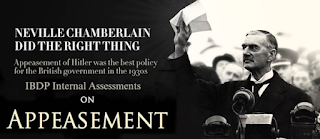
.jpg)
 The question of Czechoslovakian resistance to the 1939 German invasion remains a significant historiographical debate which this Czech student of mine seized. Initial assessments largely supported the official government line – that armed resistance would have been futile given the Wehrmacht’s strength and the lack of Allied support. Later scholarship, particularly post-Cold War, has challenged this, arguing Czechoslovakia possessed a modernised army, significant fortifications, and a motivated populace. I would add Hitler would never be able to fully commit, concerned about any Allied attack on his rear. Whilst acknowledging the overwhelming odds, historians now debate whether sustained resistance could have significantly raised the cost of occupation for Germany, potentially deterring further aggression or influencing Allied policy, though conclusive proof remains elusive.
  An Extended Essay looking at the typical IBDP Paper 2 exam question asking the extent to which foreign intervention contributed to the Nationalist victory in the Spanish Civil War. Some historians, such as Antony Beevor, argue that the substantial military aid provided by Nazi Germany and Fascist Italy, including troops, aircraft, and strategic support, was instrumental in tipping the balance in favour of Franco's forces. Conversely, other scholars, like Hugh Thomas and revisionists like Paul Preston, contend that while foreign intervention was indeed crucial, it was the disorganisation and internal divisions within the Republican camp, exacerbated by the limited and often delayed support from the Soviet Union and the international brigades, that ultimately sealed their defeat. This debate underscores the multifaceted nature of the conflict and the interplay of domestic and international factors.
  The persecution of Marshal Mikhail Tukhachevsky was a complex event with multiple factors at play. Whilst German involvement has been cited as a contributing factor, its extent is debated. In 1937, the Nazis fabricated documents suggesting Tukhachevsky was conspiring with Germany, which were then leaked to the Soviet Union. Stalin, already suspicious of Tukhachevsky, used this as pretext for his arrest and execution. The IA required critical analysis of both primary and secondary sources, including NKVD documents, German intelligence reports, and interpretations from scholars such as Conquest and Montefiore. It also evaluated competing historical perspectives—whether the purge of Tukhachevsky stemmed primarily from Stalin’s paranoia and desire to eliminate potential rivals, or whether the forged evidence provided by German intelligence played a decisive role to show the role of disinformation, the fragility of Soviet military leadership, and the extent to which foreign powers could manipulate internal Soviet affairs during the interwar period.
  Air Marshal Italo Balbo's mysterious death on June 28, 1940 over Tobruk reveals a sharp divergence between operational military reconstructions and political interpretations of motive. Folco Quilici emphasises the "accident" narrative, utilising declassified military logs and eyewitness testimony from Captain Baylon to illustrate a series of systemic failures, including jammed radios, unannounced flight plans, and the chaos of an ongoing British RAF raid. Anti-Fascist historian Angelo Del Boca challenges this through circumstantial evidence of a premeditated purge, citing Mussolini’s personal jealousy and Balbo’s vocal opposition to the Pact of Steel. This is supported by Ciano’s diary entries and survivor accounts suggesting a delayed stand-down order for the anti-aircraft batteries. Whilst the declassification of Balbo’s autopsy in 1995 and contemporary British intelligence support the likelihood of "friendly fire," this investigation concludes that the event can't be viewed in isolation from the political friction of the era. Ultimately, the sources suggest that whilst a direct order for assassination remains unproven, the Fascist regime provided the fatal conditions for Balbo’s removal, illustrating the interpretative challenge of separating battlefield error from political convenience.

 The appalling question of whether Churchill deliberately sacrificed Coventry
to protect intelligence secrets during the Second World War still
remains contentious. On November 14, 1940, the Luftwaffe devastated
Coventry, killing hundreds. Some historians, citing Ultra decrypts,
argue that Churchill knew of the impending raid but withheld warnings to
avoid revealing that Britain had cracked Enigma codes. Others,
including Martin Gilbert, contend that the intelligence was imprecise,
lacking specific targets, and that Churchill prioritised national
strategy over local defence. While evidence suggests strategic
considerations influenced decisions, the notion of deliberate sacrifice
remains speculative, lacking definitive proof.
The appalling question of whether Churchill deliberately sacrificed Coventry
to protect intelligence secrets during the Second World War still
remains contentious. On November 14, 1940, the Luftwaffe devastated
Coventry, killing hundreds. Some historians, citing Ultra decrypts,
argue that Churchill knew of the impending raid but withheld warnings to
avoid revealing that Britain had cracked Enigma codes. Others,
including Martin Gilbert, contend that the intelligence was imprecise,
lacking specific targets, and that Churchill prioritised national
strategy over local defence. While evidence suggests strategic
considerations influenced decisions, the notion of deliberate sacrifice
remains speculative, lacking definitive proof.  The Royal Navy's action against the French fleet at Mers-el-Kébir in
July 1940 was clearly justified by compelling strategic necessity
following France's surrender to Nazi Germany. With the French government
capitulating and signing an armistice against its sworn promises,
Britain faced the grave risk that significant naval assets would fall
into German hands, fundamentally altering the balance of naval power.
Despite diplomatic efforts to secure alternative arrangements, including
neutralisation of the vessels or their relocation to distant ports,
French Admiral Gensoul haughtily rejected these proposals. Churchill's
government, faced with existential threats to Britain's survival, had no
viable alternative but to neutralise these vessels, thereby preventing
Hitler from acquiring formidable naval resources that would have
imperilled the Allied war effort.
The Royal Navy's action against the French fleet at Mers-el-Kébir in
July 1940 was clearly justified by compelling strategic necessity
following France's surrender to Nazi Germany. With the French government
capitulating and signing an armistice against its sworn promises,
Britain faced the grave risk that significant naval assets would fall
into German hands, fundamentally altering the balance of naval power.
Despite diplomatic efforts to secure alternative arrangements, including
neutralisation of the vessels or their relocation to distant ports,
French Admiral Gensoul haughtily rejected these proposals. Churchill's
government, faced with existential threats to Britain's survival, had no
viable alternative but to neutralise these vessels, thereby preventing
Hitler from acquiring formidable naval resources that would have
imperilled the Allied war effort. This investigation into the influence of Pervitin (methamphetamine) on German operational success during the Meuse crossing in May 1940 reveals a conflict between contemporary medical theory and modern operational synthesis. Dr Fritz Hauschild’s 1940 medical report established a theoretical framework for performance enhancement, asserting that controlled doses could sustain alertness for 24 hours. Conversely, Ohler argues that the Blitzkrieg’s relentless tempo was pharmacologically sustained. Qualitative evidence from eyewitnesses like Heinrich Böll suggests the stimulant temporarily delayed exhaustion, yet scholars Steinkamp and Rasmussen highlight significant limitations, including uneven distribution, "rebound" collapse, and impaired tactical judgement. Ultimately, this May 2026 IA demonstrates that whilst Pervitin acted as a secondary tool to resist fatigue, the decisive factors in the 1940 breakthrough remained command flexibility, radio coordination, and superior doctrine, illustrating the difficulty of isolating pharmacological effects from broader organisational success.
  Scoring an insulting 5/25 from the IBO- the only one of my students to have failed in over two decades of my teaching the course- for a meticulously- researched and sophisticated investigation into the claim that Hitler had only one testicle which has been a subject of historical speculation and debate. This assertion, often linked to medical records and anecdotal accounts, emerged in the post-war period, with some sources suggesting he suffered from monorchism due to injury or congenital condition. However, the evidence remains inconclusive, as no definitive medical documentation has been verified. Historians have approached the topic with caution, noting the potential for myth-making and the influence of wartime propaganda. Whilst the claim persists in popular culture, scholarly consensus leans towards scepticism, emphasising the lack of reliable primary sources to substantiate this aspect of Hitler’s medical history. Historians have largely focused on the broader context of Hitler's life and career, avoiding the propagation of unsubstantiated medical gossip, but at a time when children are actively taught biology in schools in the service of the latest insidious ideology, to punish a high school student for sensitively researching such a topic is deplorable.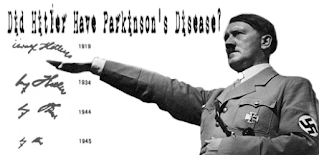

 Among the Extended Essays and Internal Assessments linked here investigating the role of art in promoting Nazi ideology, a couple look specifically into the reception of the 1937 "Degenerate Art" exhibition. Whilst some historians like Shirer argue that the exhibition was a resounding failure, failing to achieve its intended purpose of purging "degenerate" art from the public sphere, others like Spotts contend that it was a calculated and successful propaganda tool. The exhibition's impact on the wider artistic community is also a point of contention, with some arguing that it served to solidify the Nazi regime's control over artistic expression, while others suggest it ultimately contributed to a greater awareness of the dangers of totalitarian regimes. The exhibition's legacy continues to be a source of scholarly inquiry and public discussion and is especially popular give many of my students live in Munich.
.jpg) Another
popular subject for my students' research investigations, Rudolf Hess's
flight to Scotland in May 1941 remains a contentious historical puzzle.
The official narrative suggests a lone, deluded attempt by Hitler's
deputy to negotiate peace with Britain, bypassing official channels.
However, alternative theories abound. Some posit a secret British
intelligence operation to lure Hess, offering feigned peace prospects.
Others suggest Hess genuinely believed influential British factions
opposed Churchill and desired an Anglo-German agreement against the
Soviet Union. The complete truth is elusive; crucial documents remain
classified, and the motivations of both Hess and certain British figures
are still debated, leaving the definitive explanation for his audacious
journey shrouded in uncertainty.
Another
popular subject for my students' research investigations, Rudolf Hess's
flight to Scotland in May 1941 remains a contentious historical puzzle.
The official narrative suggests a lone, deluded attempt by Hitler's
deputy to negotiate peace with Britain, bypassing official channels.
However, alternative theories abound. Some posit a secret British
intelligence operation to lure Hess, offering feigned peace prospects.
Others suggest Hess genuinely believed influential British factions
opposed Churchill and desired an Anglo-German agreement against the
Soviet Union. The complete truth is elusive; crucial documents remain
classified, and the motivations of both Hess and certain British figures
are still debated, leaving the definitive explanation for his audacious
journey shrouded in uncertainty. A few Internal Assessments and Extended Essays my students wrote concerning Operation Barbarossa. One scored a 'D'- originally a 'C', I advised him not to have it regraded as it was more narrative than actual evaluative. Traditionalist historians, such as Lord Alan Bullock, argue that the invasion was a premeditated act of aggression, driven by Hitler’s ideological goal of Lebensraum and the destruction of Bolshevism, with no credible Soviet threat. Conversely, revisionist scholars, including Viktor Suvorov in his book Icebreaker which served as the basis for two IAs, contend that Barbarossa was pre-emptive, citing Soviet military build-ups as evidence of an imminent attack on Germany. Critics of this view, such as David Glantz, dismiss it as speculative, emphasising Hitler’s long-standing expansionist ambitions. The debate centres on interpreting military intelligence, ideological motives, and strategic planning.

.jpg)
 The question of whether Erwin Rommel, the German field marshal during the Second World War, was a hero or a myth remains a subject of considerable debate. Proponents of his heroic status highlight his tactical brilliance, particularly in the North African campaign, and his reputed chivalry, earning him the moniker "Desert Fox." Conversely, critics argue that his legacy is a myth, inflated by wartime propaganda and post-war romanticisation, which obscures his role within the Nazi regime. Whilst Rommel's involvement in the plot against Hitler is often cited, his earlier loyalty to the regime complicates the narrative, rendering his legacy contentious.
  Did Admiral Wilhelm Canaris, head of the Abwehr, play a significant role in the resistance against Hitler? As a senior intelligence officer, Canaris is credited with covertly undermining Nazi operations, including leaking information to the Allies and supporting plots against Hitler, notably the 20 July assassination attempt. His actions, however, were often cautious and indirect, leading some historians to question the extent of his commitment. Whilst his eventual execution by the Nazis in 1945 underscores his opposition, others argue his role was exaggerated post-war, complicating assessments of his true significance in the resistance.
 Sophie Scholl receives a lot of attention, especially from my students, because she was the only female in the White Rose. Personally, I feel she was a disaster who joined against the wishes of the group and ended up getting caught and led to everyone being arrested and executed, including her own brother. That said, traditionalist historians like Annette Dumbach have portrayed the group as heroic moral exemplars, driven by Christian ethics and a commitment to human rights, significantly influencing post-war German memory. Conversely, revisionist scholars, including Gunter Heipp, argue that their impact was limited, highlighting their small scale, elite composition, and lack of broader societal influence during the war, suggesting their legacy was amplified post-war for political purposes. The debates in these research papers centre on assessing their practical effectiveness versus their symbolic role in resistance narratives.
  Another subject of my class trips, the Wannsee Conference,
held on January 20, 1942, is widely regarded as a pivotal moment in the
Holocaust, though its significance is debated among historians. It
formalised the "Final Solution," coordinating the systematic deportation
and extermination of European Jews, with senior Nazi officials
endorsing the plan. While some scholars, such as Christopher Browning,
argue it marked a decisive bureaucratic shift towards genocide, others,
like Mark Roseman, contend it merely streamlined pre-existing policies,
as mass killings had already begun. Nevertheless, the conference
symbolises the Nazi regime's chilling efficiency and ideological
commitment to annihilation, underscoring its historical importance.
Another subject of my class trips, the Wannsee Conference,
held on January 20, 1942, is widely regarded as a pivotal moment in the
Holocaust, though its significance is debated among historians. It
formalised the "Final Solution," coordinating the systematic deportation
and extermination of European Jews, with senior Nazi officials
endorsing the plan. While some scholars, such as Christopher Browning,
argue it marked a decisive bureaucratic shift towards genocide, others,
like Mark Roseman, contend it merely streamlined pre-existing policies,
as mass killings had already begun. Nevertheless, the conference
symbolises the Nazi regime's chilling efficiency and ideological
commitment to annihilation, underscoring its historical importance. Subject of a few outstanding internal assessments and this extended essay (receiving an 'A' from the IBO), the Nazis’ medical experiments, conducted primarily within concentration camps, served a chillingly pragmatic purpose aligned with their ideological goals. Ostensibly framed as scientific research, they aimed to advance Nazi racial ideology and military medicine. Experiments sought to determine the limits of human endurance, test the efficacy of treatments for battlefield injuries- often without anaesthetic- and ‘prove’ the racial inferiority of perceived enemies. These investigations were not driven by genuine medical inquiry, but by a ruthless pursuit of knowledge to benefit the ‘Aryan’ race and enhance German military capabilities, utterly disregarding the suffering and deaths of victims.
 The question of whether US President Roosevelt possessed foreknowledge of the attack on Pearl Harbour remains a contentious historical debate. While evidence suggests FDR anticipated a Japanese attack in the Pacific, the extent to which he knowingly allowed the attack to occur to galvanise public support for war is fiercely disputed. Critics point to intercepted and partially decoded Japanese communications, arguing Roosevelt deliberately withheld crucial information from military commanders at Pearl Harbour. However, proponents maintain that intelligence was ambiguous and insufficient to predict the precise timing and location of the attack, and that a full warning would have revealed decryption capabilities.
.jpg) The culpability of Leni Riefenstahl for Nazi crimes remains a subject of ongoing debate. While she never directly participated in atrocities, Riefenstahl's prolific filmmaking, notably "Triumph of the Will," served as powerful propaganda for the Nazi regime. This work undeniably glorified Hitler and the Nazi party, aiding in their consolidation of power. Although she consistently denied knowledge of the Holocaust and claimed she was merely an artist, critics argue she knowingly collaborated with a murderous regime, benefiting from its patronage. Consequently, the extent of her complicity remains a complex ethical and historical question, leaving her legacy contested.
The culpability of Leni Riefenstahl for Nazi crimes remains a subject of ongoing debate. While she never directly participated in atrocities, Riefenstahl's prolific filmmaking, notably "Triumph of the Will," served as powerful propaganda for the Nazi regime. This work undeniably glorified Hitler and the Nazi party, aiding in their consolidation of power. Although she consistently denied knowledge of the Holocaust and claimed she was merely an artist, critics argue she knowingly collaborated with a murderous regime, benefiting from its patronage. Consequently, the extent of her complicity remains a complex ethical and historical question, leaving her legacy contested. The extent of Albert Speer's knowledge about the Holocaust remains a subject of historical debate. As Adolf Hitler's architect and later Minister of Armaments, Speer was deeply embedded in the Nazi regime. While he claimed limited awareness of the extermination camps, evidence suggests he attended conferences where the Final Solution was discussed and visited areas near concentration camps. His proximity to key figures and his role in resource allocation imply he likely had more knowledge than he admitted. Historians continue to scrutinise his testimony, questioning whether his professed ignorance was a deliberate attempt to distance himself from the atrocities.

.jpg)
 The question of whether Britain and the United States should have bombed Auschwitz during the Second World War is highly contentious. Advocates argue that targeting the camp could have disrupted the Holocaust, potentially saving countless lives by halting the extermination process. However, opponents highlight the practical and ethical challenges, including the risk of killing prisoners, the difficulty of achieving precision with 1940s bombing technology, and the possibility that such action might not have significantly impeded the Nazi genocide. This debate underscores the complex moral and strategic dilemmas faced by Allied leaders in balancing military priorities with humanitarian imperatives during the war.
 Making the most of our location and my own connections to the site, students have been able to write their research papers on the liberation of Dachau concentration camp by American forces on April 29, 1945 which revealed the horrors of the Nazi regime. Soldiers encountered emaciated prisoners, mass graves, and evidence of systematic brutality. Over 30,000 survivors, many near death, were found in appalling conditions. The discovery of gas chambers and crematoria underscored the camp's role in mass murder. Shocked by the atrocities, American troops documented the scene, and some executed captured SS guards in anger. The liberation marked a pivotal moment in exposing the Holocaust's extent, serving as a stark reminder of the inhumanity perpetrated within Dachau's walls.

 Possibly the most popular, even overused, subject for students, the question of whether the dropping of the atomic bombs on Hiroshima and Nagasaki was necessary
remains a subject of intense historical debate. Proponents argue that
it hastened Japan's surrender, potentially saving lives by avoiding a
prolonged and costly invasion of the Japanese mainland. Critics,
however, contend that Japan was already on the brink of defeat and that
the bombings were motivated by political and strategic considerations,
including demonstrating American power to the Soviet Union. The ethical
implications of using such devastating weapons against civilian
populations further complicate the issue, leaving historians and
scholars divided on the necessity and morality of this decision.
Possibly the most popular, even overused, subject for students, the question of whether the dropping of the atomic bombs on Hiroshima and Nagasaki was necessary
remains a subject of intense historical debate. Proponents argue that
it hastened Japan's surrender, potentially saving lives by avoiding a
prolonged and costly invasion of the Japanese mainland. Critics,
however, contend that Japan was already on the brink of defeat and that
the bombings were motivated by political and strategic considerations,
including demonstrating American power to the Soviet Union. The ethical
implications of using such devastating weapons against civilian
populations further complicate the issue, leaving historians and
scholars divided on the necessity and morality of this decision. This investigation explores the post-war fate of Japanese doctors from Unit 731, a truly horrific biological warfare division. The text highlights how the United States granted immunity to these individuals, including director Shiro Ishii, in exchange for their scientific research data. Whilst the Soviet Union conducted the Khabarovsk Trial to prosecute some members, the American government prioritised Cold War strategic interests over legal accountability. Consequently, many high-ranking officials avoided punishment and later secured influential positions in Japanese healthcare, education, and industry. As my student relates, these decisions led to a long-term suppression of the unit's atrocities within global historical narratives and Japanese textbooks. Ultimately, the sources reveal how geopolitical competition between superpowers facilitated the evasion of justice for victims of human experimentation.
  This EE into the historical debate surrounding Edvard Beneš' decision to support the mass deportation of Sudeten Germans from Czechoslovakia is complex and multifaceted. As this EE outlines, some historians argue that Beneš was driven by a desire for ethnic homogeneity and a need to secure the new Czechoslovak state against future German aggression. Others contend that Beneš was heavily influenced by political pressure from the Czechoslovak government in exile and the Soviet Union, which saw the deportations as a means to consolidate power and eliminate potential threats. This debate highlights the interplay between national security, political expediency, and the ethical implications of mass deportations.
.jpg)
 Similarly, the Marshall Plan, implemented between 1947 and 1952, is a key subject for research given it was driven by multifaceted American motives. Primarily, it aimed to rebuild war-torn European economies, stabilising nations vulnerable to communist influence. By providing over $13 billion in aid, the U.S. sought to foster economic recovery, strengthen democratic governments, and create markets for American goods. Additionally, the plan served geopolitical interests, countering Soviet expansionism and solidifying Western alliances during the Cold War. Humanitarian concerns also played a role, as the Americans claimed to be motivated to alleviate widespread suffering. Ultimately, the Marshall Plan reflected a strategic blend of economic, political, and ideological objectives, shaping post-war Europe and American global influence.
.jpg) No doubt influenced by my vocal admiration for the man and his role in liberating Europe and the Free World, this is yet another extended essay focusing on Churchill, in this case his role in the creation of Israel for which the student received an 'A'. Whilst he supported the Zionist cause during the early 20th century, his stance was influenced by strategic considerations rather than unwavering ideological commitment. Churchill's 1921 White Paper, which limited Jewish immigration to Palestine, reflected British imperial interests and concerns about Arab reactions. However, he later advocated for a Jewish state during the Second World War, partly to address the plight of Jewish refugees. Historians debate the extent of his influence, with some emphasising his pragmatic approach and others highlighting his evolving support for Zionism amidst shifting geopolitical dynamics.
No doubt influenced by my vocal admiration for the man and his role in liberating Europe and the Free World, this is yet another extended essay focusing on Churchill, in this case his role in the creation of Israel for which the student received an 'A'. Whilst he supported the Zionist cause during the early 20th century, his stance was influenced by strategic considerations rather than unwavering ideological commitment. Churchill's 1921 White Paper, which limited Jewish immigration to Palestine, reflected British imperial interests and concerns about Arab reactions. However, he later advocated for a Jewish state during the Second World War, partly to address the plight of Jewish refugees. Historians debate the extent of his influence, with some emphasising his pragmatic approach and others highlighting his evolving support for Zionism amidst shifting geopolitical dynamics.


.jpg)

 To what extent did Konrad Adenauer’s political and economic strategies contribute to West Germany’s post-World War II reconstruction? This IA focuses on two sources: Adenauer’s 1950 speech on the European Coal and Steel Community (ECSC), a primary source reflecting his vision for European integration, and Werner Biermann’s 2007 biography, Ein Jahrhundert Leben, a secondary source analysing Adenauer’s leadership. Adenauer’s economic strategies, including the social market economy and the 1948 currency reform, fuelled the Wirtschaftswunder, supported by the Marshall Plan. His international diplomacy, notably the 1952 London Debt Agreement, ensured economic stability. Politically, Adenauer’s coalition-building and NATO alignment secured West Germany’s recovery, although his focus on Western integration sparked debate over reunification delays.
 An intriguing mystery, the Dyatlov Pass incident historiography is marked by shifting explanations. Early Soviet investigations concluded an "unknown compelling force" caused the hikers' deaths, offering little clarity. Post-Soviet scrutiny introduced theories ranging from secret military tests, involving radiation or infrasound, to an avalanche, though the unusual injuries and tent damage complicated the latter. Indigenous Mansi involvement was largely dismissed. More recent hypotheses incorporate katabatic winds creating unusual conditions or a "Karman vortex street" inducing panic. Despite extensive re-examination and scientific modelling, no single theory fully accounts for all the evidence, leaving the precise sequence of events a persistent subject of debate and speculation.
 This 2024 IA examines whether President Dwight D. Eisenhower viewed the 1957 launch of Sputnik as a genuine national emergency. It evaluates primary materials, such as official press conference transcripts and contemporary journalism, to contrast the president’s composed public image with the growing political and social anxiety of the era. The author suggests that while Eisenhower initially maintained a measured military perspective informed by secret intelligence, later events like the Vanguard rocket failure forced a more urgent response. Ultimately, the source argues that the administration used the perceived crisis as a strategic opportunity to advance long-term goals in education, science, and space exploration. This investigation highlighted the complexities of leadership and public perception during the early Cold War which was especially useful for the Cold War section for the IBDP History Paper 2 exam, both when considering leaders and crises.
 Especially timely given Trump's disastrous attack on Iran and his sights now on Cuba, this historical investigation evaluates the extent of John F. Kennedy’s responsibility regarding the 1961 Bay of Pigs invasion failure. The collection includes a primary presidential speech used for political damage control and a secondary historical narrative by Jim Rasenberger that utilises declassified CIA documents. Further analysis incorporates perspectives from military historians and former administration officials to contrast Kennedy’s public accountability with internal institutional errors. These sources collectively argue that whilst the President's strategic caution hindered the mission, the collapse was largely rooted in flawed intelligence and structural mismanagement inherited from his predecessors. Ultimately, my student's IA illustrates how modern archival evidence allows for a more nuanced understanding of Cold War decision-making beyond contemporary rhetoric.
 The B-59 incident during the Cuban Missile Crisis is subject to varied historical interpretations concerning culpability. Early narratives largely lauded Vasili Arkhipov for preventing a nuclear strike, implicitly blaming the aggressive U.S. naval blockade. Later analyses have examined the stressful conditions faced by the Soviet submariners, arguing that miscommunication and extreme duress contributed to the heightened tension. Some historians point to the U.S. Navy's use of depth charges, albeit non-lethal, as unduly provocative. More nuanced perspectives acknowledge a confluence of factors: the intense Cold War atmosphere, flawed communication protocols on both sides, and the immense pressure bearing down on the individuals involved, thus distributing blame across multiple actors.
  An enduring Cold War mystery, the death of Dag Hammarskjöld on September 18, 1961 has generated sharply divergent historiography. Initial Rhodesian, British, and United Nations inquiries unanimously concluded pilot error or altimeter misreading caused the Ndola crash, officially ruling it an accident despite missing wreckage and incomplete evidence.Post-Soviet declassification from the 1990s onwards brought intense scrutiny, revealing altered radio logs, dismissed African eyewitness reports of a second aircraft and aerial flashes, and the suspiciously unmarked state of Hammarskjöld’s body. Theories shifted decisively toward deliberate sabotage, implicating Belgian colonial circles, Western mining interests in Katanga, mercenary pilots, South African paramilitary groups, and possible CIA or MI6 involvement. Recent UN panels and German academic analyses have judged the accident explanation unsustainable, citing plausible evidence of foul play and the continued withholding of archives by several states. Whilst no theory yet commands universal acceptance and absolute proof remains elusive, the prevailing scholarly consensus now regards Hammarskjöld’s death as a politically motivated assassination arising from his uncompromising defence of Congolese unity against colonial and Cold War resource interests.
 .jpg) Still not accepted by conspiracy nutcases, the assassination of John F. Kennedy has generated extensive historical debate and numerous conspiracy theories. The Warren Commission concluded that Lee Harvey Oswald acted alone, a finding supported by most respected historians who emphasise forensic evidence and Oswald's Marxist sympathies. However, critics argue that the Commission overlooked inconsistencies and potential involvement of organisations like the CIA, Mafia, or Cuban exiles. Recent scholarship often focuses on contextualising the assassination within Cold War tensions and societal unrest. Despite ongoing speculation, the majority of historians maintain that Oswald was the sole perpetrator, whilst acknowledging the enduring public fascination with alternative explanations.
Still not accepted by conspiracy nutcases, the assassination of John F. Kennedy has generated extensive historical debate and numerous conspiracy theories. The Warren Commission concluded that Lee Harvey Oswald acted alone, a finding supported by most respected historians who emphasise forensic evidence and Oswald's Marxist sympathies. However, critics argue that the Commission overlooked inconsistencies and potential involvement of organisations like the CIA, Mafia, or Cuban exiles. Recent scholarship often focuses on contextualising the assassination within Cold War tensions and societal unrest. Despite ongoing speculation, the majority of historians maintain that Oswald was the sole perpetrator, whilst acknowledging the enduring public fascination with alternative explanations. Certainly not the finest IA produced by a student this centres on whether amalgamation or tribalism was the greater catalyst for the Biafran War. Traditionally, the war has been attributed to the British colonial policy of amalgamation, which arbitrarily merged diverse ethnic and cultural groups into a single entity without regard for existing divisions. This artificial unification is argued to have sown seeds of discord among the regions. However, tribalism, driven by deep-seated ethnic animosities and internal power struggles, played a significant role in escalating tensions. Nwankwo and Ifejika Samuel's "The Making of a Nation-Biafra" highlights indigenous contributions to intergroup hatred, whilst Madiebo’s "The Nigerian Revolution and the Biafran War" underscores British influence. Both sources suggest that attributing sole blame to colonial policies overlooks the complexities of local dynamics in fuelling the conflict.
 The historiography of the Gulf of Tonkin Resolution, passed in 1964, is debated among historians. Early accounts, aligned with American government narratives, justified the resolution as a response to alleged North Vietnamese attacks on American ships, legitimising escalation in Vietnam. Revisionist scholars, however, argue that the incidents were exaggerated or fabricated, criticising the resolution as a pretext for war. Recent studies, using declassified documents, highlight the Johnson administration's manipulation of evidence to gain Congressional support. Whilst some historians see the resolution as a necessary Cold War measure, others view it as an unjustified expansion of executive power, reflecting broader debates on American imperialism. Here are two examples of Extended Essays from past students, the most recent being awarded an 'A' by the IBO.
 “Did Mao initiate the Cultural Revolution or was he driven by events beyond control?” The genesis of the Cultural Revolution remains a significant point of historical contention regarding Mao Tse-tung's evil agency. One perspective firmly asserts Mao's initiating role, viewing the movement as a deliberate attempt to purge perceived revisionist elements within the Party, reassert his ideological authority, and reignite revolutionary fervour amongst the populace, particularly the youth. Conversely, some interpretations suggest a more reactive Mao, propelled by escalating power struggles, radicalised student movements, and a breakdown of established political norms, which he then sought to harness and direct. More nuanced analyses propose a synthesis, arguing that whilst Mao undoubtedly launched the initial campaign with specific aims, the subsequent intensity and chaotic trajectory far exceeded his original intentions, forcing him to adapt and respond to unforeseen developments and the initiatives of various factions.
 The investigation explores whether the Soviet submarine K-129 was attempting a nuclear strike when it sank in 1968. Two primary sources are evaluated: David H. Sharp’s “The CIA’s Greatest Covert Operation” (2012) and Kenneth Sewell and Clint Richmond’s “Red Star Rogue” (2005). Sharp, a former CIA insider, details the recovery of K-129, suggesting it sank 1,600 nautical miles from Hawaii, too far for a missile strike, implying no attack was planned. Sewell, a Navy veteran, argues the submarine sank 303 nautical miles from Hawaii, suggesting a rogue mission to strike the U.S. His theory relies on declassified documents but includes speculation. Both sources face limitations: Sharp’s account is censored by the CIA, and Sewell’s narrative blends fact with conjecture. Technical evidence, like SOSUS recordings, lacks clarity on whether an implosion or explosion caused the sinking. Damage to the submarine’s missile silos is noted, but its cause remains uncertain. The conflicting coordinates and incomplete data highlight challenges in assessing classified events with both sources offering partial insights but no definitive proof of a nuclear strike attempt.
 This top student of mine took on the historical debate surrounding Henry Kissinger’s potential culpability for war crimes in Cambodia during the Vietnam War. His IA evaluates primary evidence, such as private telephone transcripts with Richard Nixon, alongside critical legal arguments from Christopher Hitchens. Key points of contention include whether Kissinger possessed direct control over bombing targets and if he intentionally bypassed legislative oversight to hide civilian casualties. Conversely, the materials present Kissinger’s own justifications, which cite military necessity and claim that reports of collateral damage were significantly inflated. Ultimately, the collection highlights the challenges historians face when interpreting conflicting accounts, destroyed records, and varying ethical frameworks. Through these diverse perspectives, the IA evaluates the questions concerning whether Kissinger bears moral or legal accountability for the devastating aerial campaigns in Southeast Asia.
  The impact of Leon Uris's 'Exodus' on Soviet Jewish emigration to Israel between 1970 and 1974 remains a complex and debated topic chosen by this student who not only received an 'A' for this Extended Essay, a '7' for the course at HL, but a remarkable 44/45 in the IBDP. Some historians attribute significant influence to the novel, arguing it ignited a sense of Zionist identity and emboldened Soviet Jews to seek repatriation. Others downplay its direct role, emphasising instead the impact of broader geopolitical factors, such as the Six-Day War and growing international pressure on the Soviet Union regarding human rights. Further arguments highlight the increasing awareness of Jewish cultural heritage within the USSR and the discriminatory policies faced by Soviet Jews, factors seen as more directly influencing the emigration wave. Assessing Exodus's precise contribution necessitates considering these intertwined social, political, and cultural forces.
 A compelling internal assessment, this looks into the historiography surrounding Lin Biao's involvement in the 1971 incident, often referred to as the Lin Biao Incident. Officially, the Chinese Communist Party maintains that Lin, fearing exposure for a failed coup attempt against Mao tse-tung, attempted to flee to the Soviet Union, resulting in his death in a plane crash in Mongolia. However, this narrative is contested. Some scholars, drawing on declassified documents and survivor accounts, question the veracity of the official account, suggesting a potential power struggle within the Party leadership as a more plausible explanation. Others posit that Lin may have been framed, or that the circumstances of his death were deliberately misrepresented. Alternative interpretations range from accidental death to forced escape. The lack of conclusive evidence and the politically sensitive nature of the event in China continue to fuel scholarly disagreement, making definitive conclusions about Lin's precise role exceedingly difficult to ascertain.
 The scandal surrounding the Munich Police Department's culpability for the inadequate response to the 1972 Olympic massacre presents contrasting scholarly perspectives which suit the any History research investigation. Some historians, notably Reeve and Groussard, argue the department's fundamental unpreparedness and tactical misjudgements were principally responsible for the tragic outcome. Conversely, scholars such as Klein and Schreiber contend that structural deficiencies in West German security architecture, coupled with post-war constraints on police militarisation, created insurmountable operational limitations. More nuanced analyses from Brundage and Williams suggest responsibility was distributed across multiple institutional failures, including intelligence shortcomings, diplomatic constraints, and the unprecedented nature of the crisis within contemporaneous security paradigms.
.jpg) The historiographical discourse concerning newspaper coverage of the 1972 Kent State shootings reveals significant scholarly contention. Researchers such as Hensley and Lewis document pronounced ideological divisions, with conservative publications emphasising student aggression whilst liberal outlets accentuated governmental overreaction. Casale and Paskoff's analyses demonstrate substantial factual inconsistencies across contemporaneous reporting, attributable to deadline pressures and restricted access to the scene. Revisionist scholarship from Davies challenges the reliability of both conservative and liberal accounts, whilst Michener's contemporary investigation suggests systematic distortion. Recent archival work by Means and Wasserman indicates that geographical proximity to Kent significantly influenced reportorial accuracy, with Ohio newspapers demonstrating greater factual precision than national counterparts.
The historiographical discourse concerning newspaper coverage of the 1972 Kent State shootings reveals significant scholarly contention. Researchers such as Hensley and Lewis document pronounced ideological divisions, with conservative publications emphasising student aggression whilst liberal outlets accentuated governmental overreaction. Casale and Paskoff's analyses demonstrate substantial factual inconsistencies across contemporaneous reporting, attributable to deadline pressures and restricted access to the scene. Revisionist scholarship from Davies challenges the reliability of both conservative and liberal accounts, whilst Michener's contemporary investigation suggests systematic distortion. Recent archival work by Means and Wasserman indicates that geographical proximity to Kent significantly influenced reportorial accuracy, with Ohio newspapers demonstrating greater factual precision than national counterparts.  Another outstanding Extended Essay from an exceptional student I was privileged to have in my History, Geography and Theory of Knowledge classes looking at the historiographical discourse surrounding Brandt's 1974 downfall. Traditional narratives, exemplified by Merkl and Marshall, posit the Guillaume espionage scandal as the proximate cause, emphasising security breaches as irreconcilable with chancellorship. Revisionist interpretations from Baring and Schöllgen contend the affair merely provided a convenient pretext, whilst underlying economic difficulties and coalition tensions constituted more substantive factors. Ash and Sarotte contextualise the resignation within Cold War intelligence operations, suggesting Eastern Bloc strategic success. Recent scholarship by Faulenbach indicates Brandt's personal exhaustion and fractious party relations had rendered his position untenable, with the Guillaume revelation serving as catalyst rather than cause for an inevitable political demise.
 Another outstanding Extended Essay awarded an 'A' by the IBO in May 2026, this examines the impact of British intervention during the Dhofar Civil War (1965–1976). It highlighted how the United Kingdom provided essential military support, such as SAS expertise and RAF air power, which prevented the Omani monarchy from collapsing under a communist-inspired insurgency. However, whilst my student acknolwdged that whilst foreign involvement was a critical force multiplier, the ultimate victory was secured by Sultan Qaboos’s domestic initiatives. These internal efforts included extensive civil development, a rebel amnesty programme, and the strategic use of Dhofari defectors to win local "hearts and minds". Ultimately, the extended essay balances Western military perspectives with Omani accounts to conclude that British aid was a necessary but insufficient factor on its own. The victory is presented as a complex synthesis of strategic foreign assistance, regional support from Iran, and transformative national reforms.
  Was Rubin ‘Hurricane’ Carter framed for the 1966 Lafayette Bar triple murder in Paterson, New Jersey? This investigation centres on the June 17, 1966, shooting that killed Jim Oliver, Fred Nauyoks, and Hazel Tanis, and blinded Willie Marins, leading to the arrest and life sentences of Rubin Carter and John Artis. My student effectively uses primary sources from the original 1966 trial, including Paterson Police Department arrest reports, Patty Valentine’s grand-jury testimony identifying the getaway car, Alfred Bello’s statements, and the polygraph examiner John J. McGuire’s conclusion that Carter showed deception. These are critically contrasted with Carter’s own 1974 memoir The Sixteenth Round, which the student demonstrates contains verifiable inconsistencies regarding earlier life events when compared to 1963 Sports Illustrated and Saturday Evening Post interviews. The analysis astutely highlights how Bob Dylan’s 1975 song “Hurricane” and the later motion picture shifted public perception, transforming a conviction supported by contemporaneous evidence (matching ammunition, failed polygraph, witness identification of the car) into a symbol of racial injustice. By evaluating Valentine’s consistent testimony against Carter’s selective narrative, and noting the absence of racism allegations before the memoir’s publication, the IA successfully interrogates the interplay between evidence, memory, and cultural influence, fulfilling the criteria for historical significance, source criticism, and independent analysis required.
  This IA investigates the extent to which the 1975 Helsinki Accords served as a turning point in the Cold War and evaluates whether the accords represented a genuine transformation in East–West relations or merely a symbolic gesture. He evaluates the Helsinki Final Act and Leonid Brezhnev’s 1975 speech, contrasting the Soviet desire for territorial legitimacy with the Western focus on human rights. From the Soviet viewpoint, the accords were a diplomatic windfall intended to secure postwar frontiers and geopolitical gains. Conversely, Western powers viewed the agreement as a tool to promote humanitarian values. Historians like Sarah Snyder and Daniel Thomas emphasise that while the accords initially favoured the Eastern Bloc, the human rights obligations in Basket III eventually empowered dissident movements, weakening communist authority. Despite Melvyn Leffler’s perspective that the accords were tactical instruments in a continued rivalry, my student concludes they transitioned the global struggle from an arms race to a contest of ideas. The reflection considers the challenges of navigating biased sources and the interpretive nature of historical inquiry.
  The historiographical discourse concerning the involvement of the KGB and the Bulgarian State Security Services (DS) in the 1978 assassination of Georgi Markov reveals considerable scholarly divergence. Former DS officer Vladimir Kostov and defectors Oleg Kalugin and Oleg Gordievsky emphasise varying degrees of KGB technical and operational dominance, with Kalugin claiming primary Soviet authorship whilst Kostov stresses Bulgarian initiative. Investigative journalist Khristo Khristov’s unprecedented access to declassified KGB–DS files (2006) provides documentary evidence of poison and weapon transfers, yet highlights selection bias and the systematic destruction of approximately 16,000 DS volumes in 1989–1990. Forensic analyses of the ricin pellet and delivery mechanism consistently point to Soviet technical services, whereas Zhivkov’s repeated requests for assistance and the symbolically timed attack on his birthday underscore Bulgarian agency. Recent witness testimony from Vladimir Mednis (2012) corroborates high-level KGB planning under Yuri Andropov, challenging Kalugin’s later inconsistencies. Collectively, the sources demonstrate that, whilst the operation was joint, the KGB supplied the decisive expertise and matériel, qualifying the traditional view of Bulgaria as a mere Soviet proxy and illustrating the methodological difficulties posed by partial archives in post-communist historiography.
 This Extended Essay evaluates the historiography surrounding France’s role in the Rwandan Genocide. Early accusations centred on a deliberate policy of supporting the Hutu-led government, providing military assistance and ideological backing which enabled the genocide’s planning and execution. More recent scholarship, whilst acknowledging a close relationship with the Rwandan state under Habyarimana, offers some nuance this, suggesting a miscalculation of political realities and a failure to comprehend the extremist elements within the regime, rather than active complicity. However, debate persists regarding the extent to which French inaction, motivated by strategic interests and mission civilisatrice ideals, contributed to the unfolding tragedy and subsequent impunity.
 Written by a student when teaching in Peking, this is another Extended Essay investigating the Chinese Communist Party's horrific assault on its own unarmed subjects showing the world the nature of the regime. Scholarly debate regarding Deng Xiao Ping's ultimate responsibility for the Tiananmen Square Massacre persists with complexity. Some historians contend that Deng's reformed policies and authoritarian pragmatism paved the way for the tragic events, arguing that his tacit approval culminated in a calculated military response. Others, however, maintain that institutional and bureaucratic forces were predominantly responsible, suggesting that Deng’s role was merely contributory rather than central. Recent archival evidence has provoked renewed reassessment of Deng’s involvement, although consensus remains elusive among academics. This historiographical dispute reflects broader interpretative challenges in analysing the intricate dynamics of Chinese political reform and state control.
 This student's Extended Essay on Why Gorbachev agreed to German reunification addresses a sharply focused, highly debatable turning point in twentieth-century history that directly shaped the end of the Cold War, allows rigorous analysis of causation, and demands critical engagement with Soviet, German, and Western perspectives. The essay itself argues that Gorbachev’s consent to reunification on October 3, 1990 was driven by interlocking domestic pressure relieved (and unintentionally unleashed) by glasnost and perestroika, the unsustainable economic crisis in both the USSR and the DDR, the urgent need for Western financial aid and improved relations to salvage his reforms, and his genuine ideological belief in self-determination and a “common European home”. Using primary sources such as Gorbachev’s own Perestroika and speeches, Schäuble’s Der Vertrag, Kohl’s memoirs, and an original 1990 eyewitness interview, together with secondary works by Taubman, Wentker, and Burkhardt (all carefully evaluated with OPCVL), my student concludes that Gorbachev didn't passively surrender East Germany out of weakness but made a deliberate, ultimately tragic strategic choice to sacrifice the DDR in a desperate attempt to save a reformed Soviet Union- a gamble that instead ended the Cold War whilst accelerating the USSR’s dissolution just fourteen months later.
  This IA analyses the persuasive tactics employed by American Secretary of State Colin Powell during his pivotal February 5, 2003, address to the United Nations. The research question specifically focuses on identifying the faulty methods used to present the case for Iraqi weapons of mass destruction. It's an appropriate IBDP History IA that goes beyond simple narrative to conduct a critical evaluation of evidence and methodology. By systematically comparing Powell’s assertions, such as satellite imagery and audio intercepts, with counter-evidence from sources like UN weapons inspector Hans Blix and former inspector Scott Ritter, the student deconstructs the speech's credibility. The analysis is further strengthened by applying a framework of historical fallacies, identifying tactics such as feigned certainty, misrepresentation of data, and oversimplification. It offers a rather sophisticated understanding of historical methodology, evaluating the value and limitations of its key sources to build a compelling argument that the presentation was a politically motivated performance rather than a factual account, making it a solid example of historical enquiry and critical analysis.
  Written only a few years after the event in question, I'm not sure how this ended up getting past the requirement not to do a topic within the last ten years. As it is, debate regarding the American Patriot Act's constitutionality centres on its expansion of governmental surveillance powers versus fundamental rights. Detractors argue that provisions, particularly concerning bulk data collection (Section 215) and National Security Letters, violated the Fourth Amendment's protections against unreasonable searches and seizures, alongside First Amendment free speech concerns. Conversely, supporters maintain the Act was a necessary response to terrorism, implemented with sufficient judicial oversight and statutory safeguards to prevent abuse. They cite legal precedents upholding surveillance in national security contexts. The judiciary offered mixed rulings, ultimately leading to reforms like the USA Freedom Act, suggesting a complex constitutional landscape rather than outright unconstitutionality.
 This EE in Film Studies investigates how effectively Kubrick’s cinematic adaptation of A Clockwork Orange captures the essence of Anthony Burgess’ novella, focusing on the power of its language and themes. Utilising C.S. Peirce’s semiotic theory, it contrasts literature’s use of “signs” with film’s “icons” to analyse the translation of Burgess’ dystopian narrative, particularly its Nadsat argot and themes of violence and free will. It examines key scenes such as the Korova Milkbar and Ludovico Technique, to assess Kubrick’s cinematic techniques—camera angles, music, and props—against Burgess’s literary devices like repetition, onomatopoeia, and imagery to argue Kubrick effectively conveys Alex’s trivialisation of violence and the novella’s moral complexities, though engages with criticisms, notably Burgess’s claim that the film glorifies violence and dilutes Alex’s irredeemability. Despite debates over thematic fidelity and characterisation, it concludes that Kubrick’s adaptation preserves and amplifies the novella’s impact, contributing to its cultural legacy whilst highlighting the intricate relationship between literature and cinema.
 This Visual Arts EE from one of my truly outstanding students examining how 20th-century Olympic posters used graphic design to promote national identity easily earned an 'A' from the IBO due to its thorough research, clear structure, and insightful analysis. It effectively traces the evolution of graphic design, establishing its role as a communication tool, particularly in branding national identity through Olympic posters. Focusing on the Mexico City 1968, Moscow 1980, and Seoul 1988 posters, it provides a diverse, chronologically varied sample that highlights distinct cultural and historical contexts. The methodology is robust, combining IOC reports with secondary sources on design principles, ensuring a rigorous analysis. The essay excels in connecting visual elements—typography, colour, and symbolism—to broader socio-political goals, demonstrating how each poster reflected its nation’s identity and Olympic values.
  This Extended Essay in Music examines the influence of Buddy Holly, Minimalism, and Indian music on The Beatles’ oeuvre through three carefully selected songs: “In Spite of All the Danger,” “Tomorrow Never Knows,” and “Within You Without You.” There's analysis, comparing musical structures, chord progressions, and instrumentation with clarity, supported by detailed figures and references to primary sources, such as Beatles’ recordings and scholarly articles. Its interdisciplinary approach, blending music theory with cultural context, highlights The Beatles’ evolution from early rock to experimental and Indian-inspired sounds, showcasing their amazing adaptability and innovation.
  This Film Extended Essay, earned an A from the IBO for its focused analysis of how Christopher Nolan’s usage of abstract story concepts and narrative encourage audience immersion within his films. It explores six films—Inception, Interstellar, Tenet, The Prestige, Memento, and Oppenheimer. It applies Freud’s Cognitive Psychoanalytic Theory and Bordwell’s contingent universals to analyse scenes like Inception’s folding city and Memento’s reverse chronology, demonstrating how Nolan’s manipulation of time, space, and perception creates cognitive and emotional engagement. Supported by diverse sources- (although probably not as diverse as Nolan would like, having just made Helen of Troy an African in his latest film) scholarly articles, interviews, and critiques- the essay showcases rigorous research whilst offering original insights into Nolan’s puzzle-like storytelling.
  Making a nice interdisciplinary link with my History course, this EE on Florian Henckel von Donnersmarcks The Lives of Others serves as an exemplary Language and Literature investigation, analysing the psychological impact of surveillance and oppression in the DDR through three main characters: Georg Dreyman, Christa-Maria Sieland, and Gerd Wiesler. It skilfully examines how state repression affects individual psyches, and its use of primary sources, including the film and an actual interview with producer Max Wiedemann, alongside secondary studies on Stasi methods, ensured a robust evidential base. Applying psychological concepts like the drama triangle added sophistication, showing interdisciplinary engagement. The essay also draws parallels between historical oppression and modern issues like cyberbullying, highlighting its relevance.