

Moosburg
.gif)
Münchenerstraße
during the Nazi era and today. The Nazi Party in Moosburg began in 1922
culminating on March 16, 1923, when a local group of the party was
founded in the city, the first in the entire district. It had an initial membership of 27 individuals, predominantly small farmers, artisans, and disaffected war veterans. The branch was led by Josef Huber, a local butcher who'd served in the First World War and joined the party after attending a rally in Freising in 1922. Huber's leadership was instrumental in organising early meetings, which were held in the back room of the Gasthaus zum Löwen, a local inn, between 1923 and 1925. These gatherings typically attracted thirty to 50 attendees and featured speeches denouncing the Weimar Republic, the Treaty of Versailles, and perceived Jewish influence in German society. The Moosburg local group supported the founding of the local branch in
Freising and by 1928 the district management of the Nazi Party was for
the district in Moosburg, led by local figures such as Hans Müller, a schoolteacher who joined in 1922 and organised early meetings in the town’s Gasthaus zur Post. Party meetings were held biweekly at the Gasthaus zur Post, featuring speakers like Rudolf Hess, who visited on April 10, 1932, attracting 800 attendees. These gatherings often included anti-Semitic rhetoric, though no violent incidents against Moosburg’s Jewish residents were recorded before 1933.  The
hyperinflation crisis of 1923 devastated local livelihoods, with the
price of a loaf of bread in Moosburg rising from 1,200 marks in January
to 100 billion marks by November, as recorded in the town's market
ledgers. Small farmers, who comprised 42 percent of Moosburg's workforce
according to a 1925 census, faced ruin as agricultural prices
collapsed. The Nazi Party exploited this discontent, promising economic
stability and land reforms. By 1925, the Moosburg branch had grown to 83
members, a figure reported in the Nazis' regional party newsletter, Der
Völkische Beobachter, on June 7, 1925. Three local party members, including Huber,
travelled to Munich to participate in so-called Beer Hall Putsch; their arrest and the temporary ban
on the Nazi Party forced the Moosburg branch to operate clandestinely
under the guise of a cultural association, the Heimatverein Moosburg,
until the ban was lifted in 1925. During this period, meetings were held
in private homes, with 14 documented gatherings between December 1923
and February 1925, each attended by 20 to 30 individuals. The
relegalisation of the party in February 1925 allowed the Moosburg branch
to resume public activities, including a rally on March 15, 1925, which
drew 200 attendees to the town square. Meanwhile the SA established a unit in Moosburg in 1928, led by Karl Schmidt, a
former World War I veteran. This group, numbering thirty men by 1930,
was involved in street confrontations with communist sympathisers,
particularly during a rally on May 15, 1930, where two SA members were
injured in a brawl outside the town’s brewery.
The
hyperinflation crisis of 1923 devastated local livelihoods, with the
price of a loaf of bread in Moosburg rising from 1,200 marks in January
to 100 billion marks by November, as recorded in the town's market
ledgers. Small farmers, who comprised 42 percent of Moosburg's workforce
according to a 1925 census, faced ruin as agricultural prices
collapsed. The Nazi Party exploited this discontent, promising economic
stability and land reforms. By 1925, the Moosburg branch had grown to 83
members, a figure reported in the Nazis' regional party newsletter, Der
Völkische Beobachter, on June 7, 1925. Three local party members, including Huber,
travelled to Munich to participate in so-called Beer Hall Putsch; their arrest and the temporary ban
on the Nazi Party forced the Moosburg branch to operate clandestinely
under the guise of a cultural association, the Heimatverein Moosburg,
until the ban was lifted in 1925. During this period, meetings were held
in private homes, with 14 documented gatherings between December 1923
and February 1925, each attended by 20 to 30 individuals. The
relegalisation of the party in February 1925 allowed the Moosburg branch
to resume public activities, including a rally on March 15, 1925, which
drew 200 attendees to the town square. Meanwhile the SA established a unit in Moosburg in 1928, led by Karl Schmidt, a
former World War I veteran. This group, numbering thirty men by 1930,
was involved in street confrontations with communist sympathisers,
particularly during a rally on May 15, 1930, where two SA members were
injured in a brawl outside the town’s brewery.
 Landstraße during the Third Reich left and below. By the late 1920s, the Nazi Party in Moosburg began to gain traction among the middle class and youth. The Great Depression, which began in 1929, exacerbated local unemployment, with 18% of Moosburg's workforce, or 412 individuals, registered as jobless by December 1930, per municipal records. Moosburg’s
agricultural economy suffering as grain prices fell by 30% between 1929
and 1930. Local farmers, such as Johann Weber, who owned a 20-hectare
farm just outside Moosburg, joined the party in 1930 after losing half
his income due to declining markets. By 1930, the Moosburg branch had
grown to 120 members, according to a 1931 report in the Münchener Post, a Social Democratic newspaper. The Nazis capitalised on this crisis, organising soup kitchens that served 1,200 meals between January and March 1931, led by Maria Schneider, a schoolteacher and the first female member of the Moosburg branch, who joined in 1927 and established the local chapter of the National Socialist Women's League in 1930. The league had 45 members by 1932, focusing on propaganda aimed at housewives and young women. The Nazi Party's electoral success in Moosburg reflected its growing influence. In the 1930 Reichstag election, the party secured 22.3% of the vote in Moosburg, compared to 18.3 percent nationally, with 1,104 ballots cast in its favour out of 4,950 total votes. This result made the Nazis the second-largest party in Moosburg, behind the Bavarian People's Party, which received 38.7 percent. The party's vote share increased to 39.1 percent in the July 1932 election, with 1,935 votes, surpassing the Bavarian People's Party's 34.2 percent. These figures, published in the Moosburger Anzeiger on August 2, 1932, indicate a significant shift in local political allegiance, driven by economic hardship and effective propaganda which focused on community engagement, such as organising harvest festivals in 1931 and 1932, further embedded it in local culture, with 2,000 attendees at the 1932 festival.
Landstraße during the Third Reich left and below. By the late 1920s, the Nazi Party in Moosburg began to gain traction among the middle class and youth. The Great Depression, which began in 1929, exacerbated local unemployment, with 18% of Moosburg's workforce, or 412 individuals, registered as jobless by December 1930, per municipal records. Moosburg’s
agricultural economy suffering as grain prices fell by 30% between 1929
and 1930. Local farmers, such as Johann Weber, who owned a 20-hectare
farm just outside Moosburg, joined the party in 1930 after losing half
his income due to declining markets. By 1930, the Moosburg branch had
grown to 120 members, according to a 1931 report in the Münchener Post, a Social Democratic newspaper. The Nazis capitalised on this crisis, organising soup kitchens that served 1,200 meals between January and March 1931, led by Maria Schneider, a schoolteacher and the first female member of the Moosburg branch, who joined in 1927 and established the local chapter of the National Socialist Women's League in 1930. The league had 45 members by 1932, focusing on propaganda aimed at housewives and young women. The Nazi Party's electoral success in Moosburg reflected its growing influence. In the 1930 Reichstag election, the party secured 22.3% of the vote in Moosburg, compared to 18.3 percent nationally, with 1,104 ballots cast in its favour out of 4,950 total votes. This result made the Nazis the second-largest party in Moosburg, behind the Bavarian People's Party, which received 38.7 percent. The party's vote share increased to 39.1 percent in the July 1932 election, with 1,935 votes, surpassing the Bavarian People's Party's 34.2 percent. These figures, published in the Moosburger Anzeiger on August 2, 1932, indicate a significant shift in local political allegiance, driven by economic hardship and effective propaganda which focused on community engagement, such as organising harvest festivals in 1931 and 1932, further embedded it in local culture, with 2,000 attendees at the 1932 festival.
 The
hyperinflation crisis of 1923 devastated local livelihoods, with the
price of a loaf of bread in Moosburg rising from 1,200 marks in January
to 100 billion marks by November, as recorded in the town's market
ledgers. Small farmers, who comprised 42 percent of Moosburg's workforce
according to a 1925 census, faced ruin as agricultural prices
collapsed. The Nazi Party exploited this discontent, promising economic
stability and land reforms. By 1925, the Moosburg branch had grown to 83
members, a figure reported in the Nazis' regional party newsletter, Der
Völkische Beobachter, on June 7, 1925. Three local party members, including Huber,
travelled to Munich to participate in so-called Beer Hall Putsch; their arrest and the temporary ban
on the Nazi Party forced the Moosburg branch to operate clandestinely
under the guise of a cultural association, the Heimatverein Moosburg,
until the ban was lifted in 1925. During this period, meetings were held
in private homes, with 14 documented gatherings between December 1923
and February 1925, each attended by 20 to 30 individuals. The
relegalisation of the party in February 1925 allowed the Moosburg branch
to resume public activities, including a rally on March 15, 1925, which
drew 200 attendees to the town square. Meanwhile the SA established a unit in Moosburg in 1928, led by Karl Schmidt, a
former World War I veteran. This group, numbering thirty men by 1930,
was involved in street confrontations with communist sympathisers,
particularly during a rally on May 15, 1930, where two SA members were
injured in a brawl outside the town’s brewery.
The
hyperinflation crisis of 1923 devastated local livelihoods, with the
price of a loaf of bread in Moosburg rising from 1,200 marks in January
to 100 billion marks by November, as recorded in the town's market
ledgers. Small farmers, who comprised 42 percent of Moosburg's workforce
according to a 1925 census, faced ruin as agricultural prices
collapsed. The Nazi Party exploited this discontent, promising economic
stability and land reforms. By 1925, the Moosburg branch had grown to 83
members, a figure reported in the Nazis' regional party newsletter, Der
Völkische Beobachter, on June 7, 1925. Three local party members, including Huber,
travelled to Munich to participate in so-called Beer Hall Putsch; their arrest and the temporary ban
on the Nazi Party forced the Moosburg branch to operate clandestinely
under the guise of a cultural association, the Heimatverein Moosburg,
until the ban was lifted in 1925. During this period, meetings were held
in private homes, with 14 documented gatherings between December 1923
and February 1925, each attended by 20 to 30 individuals. The
relegalisation of the party in February 1925 allowed the Moosburg branch
to resume public activities, including a rally on March 15, 1925, which
drew 200 attendees to the town square. Meanwhile the SA established a unit in Moosburg in 1928, led by Karl Schmidt, a
former World War I veteran. This group, numbering thirty men by 1930,
was involved in street confrontations with communist sympathisers,
particularly during a rally on May 15, 1930, where two SA members were
injured in a brawl outside the town’s brewery. Landstraße during the Third Reich left and below. By the late 1920s, the Nazi Party in Moosburg began to gain traction among the middle class and youth. The Great Depression, which began in 1929, exacerbated local unemployment, with 18% of Moosburg's workforce, or 412 individuals, registered as jobless by December 1930, per municipal records. Moosburg’s
agricultural economy suffering as grain prices fell by 30% between 1929
and 1930. Local farmers, such as Johann Weber, who owned a 20-hectare
farm just outside Moosburg, joined the party in 1930 after losing half
his income due to declining markets. By 1930, the Moosburg branch had
grown to 120 members, according to a 1931 report in the Münchener Post, a Social Democratic newspaper. The Nazis capitalised on this crisis, organising soup kitchens that served 1,200 meals between January and March 1931, led by Maria Schneider, a schoolteacher and the first female member of the Moosburg branch, who joined in 1927 and established the local chapter of the National Socialist Women's League in 1930. The league had 45 members by 1932, focusing on propaganda aimed at housewives and young women. The Nazi Party's electoral success in Moosburg reflected its growing influence. In the 1930 Reichstag election, the party secured 22.3% of the vote in Moosburg, compared to 18.3 percent nationally, with 1,104 ballots cast in its favour out of 4,950 total votes. This result made the Nazis the second-largest party in Moosburg, behind the Bavarian People's Party, which received 38.7 percent. The party's vote share increased to 39.1 percent in the July 1932 election, with 1,935 votes, surpassing the Bavarian People's Party's 34.2 percent. These figures, published in the Moosburger Anzeiger on August 2, 1932, indicate a significant shift in local political allegiance, driven by economic hardship and effective propaganda which focused on community engagement, such as organising harvest festivals in 1931 and 1932, further embedded it in local culture, with 2,000 attendees at the 1932 festival.
Landstraße during the Third Reich left and below. By the late 1920s, the Nazi Party in Moosburg began to gain traction among the middle class and youth. The Great Depression, which began in 1929, exacerbated local unemployment, with 18% of Moosburg's workforce, or 412 individuals, registered as jobless by December 1930, per municipal records. Moosburg’s
agricultural economy suffering as grain prices fell by 30% between 1929
and 1930. Local farmers, such as Johann Weber, who owned a 20-hectare
farm just outside Moosburg, joined the party in 1930 after losing half
his income due to declining markets. By 1930, the Moosburg branch had
grown to 120 members, according to a 1931 report in the Münchener Post, a Social Democratic newspaper. The Nazis capitalised on this crisis, organising soup kitchens that served 1,200 meals between January and March 1931, led by Maria Schneider, a schoolteacher and the first female member of the Moosburg branch, who joined in 1927 and established the local chapter of the National Socialist Women's League in 1930. The league had 45 members by 1932, focusing on propaganda aimed at housewives and young women. The Nazi Party's electoral success in Moosburg reflected its growing influence. In the 1930 Reichstag election, the party secured 22.3% of the vote in Moosburg, compared to 18.3 percent nationally, with 1,104 ballots cast in its favour out of 4,950 total votes. This result made the Nazis the second-largest party in Moosburg, behind the Bavarian People's Party, which received 38.7 percent. The party's vote share increased to 39.1 percent in the July 1932 election, with 1,935 votes, surpassing the Bavarian People's Party's 34.2 percent. These figures, published in the Moosburger Anzeiger on August 2, 1932, indicate a significant shift in local political allegiance, driven by economic hardship and effective propaganda which focused on community engagement, such as organising harvest festivals in 1931 and 1932, further embedded it in local culture, with 2,000 attendees at the 1932 festival. .gif) Moosburg’s mayor, Wilhelm Huber, a member of the Catholic Centre Party, resisted Nazi influence but faced pressure from local businessmen like Georg Fischer, who joined the Nazis in 1931 and funded their campaigns. The party’s promise of economic stability and national pride resonated with Moosburg’s residents, particularly after the unemployment rate in the town reached 15% in 1932, affecting 300 workers.
Moosburg’s mayor, Wilhelm Huber, a member of the Catholic Centre Party, resisted Nazi influence but faced pressure from local businessmen like Georg Fischer, who joined the Nazis in 1931 and funded their campaigns. The party’s promise of economic stability and national pride resonated with Moosburg’s residents, particularly after the unemployment rate in the town reached 15% in 1932, affecting 300 workers. The appointment of Hitler as Chancellor marked a turning point for the Nazi Party in Moosburg. The day after on January 31, 1933, a torchlight parade involving 450 participants marched through the town to celebrate. The local branch, now numbering 214 members, assumed control of municipal governance. Huber was appointed mayor on March 15, 1933, replacing the Social Democrat Johann Meier, who was arrested under the Reichstag Fire Decree of 28 February 1933. Meier was detained for six weeks. The Nazis also established a local SA unit in March 1933, with 92 members under the command of Franz Weber, a former soldier. The SA was responsible for intimidating political opponents, with seventeen documented assaults on communists and socialists in Moosburg between March and July 1933.
 Adolf-Hitler-Platz in a postcard and today. By July 1, 1933, all non-Nazi political organisations, including the Social Democratic Party and the Communist Party, were banned, with 23 members of these groups arrested. The Moosburg branch of the Nazi Party coordinated the dismissal of fourteen Jewish and politically suspect civil servants, including the town librarian, Hannah Levi, who was removed on April 7, 1933, per a council decree. Cultural institutions were also targeted, with 1,200 books deemed "un-German" burned in the town square on May 10, 1933, an event attended by 600 residents. The Nazis' consolidation of power in Moosburg was further evidenced by its control over local education. By September 1933, all teachers in Moosburg's primary and secondary schools were required to join the National Socialist Teachers' League, with 19 of 22 teachers complying, according to a school board report dated September 15, 1933. The curriculum was revised to include Nazi propaganda, with history lessons emphasising Aryan supremacy and anti-Semitism. By 1935, Moosburg's three primary schools and one secondary school had adopted Nazi-approved textbooks, with 1,200 copies distributed, per a school board report dated 1 September 1935. History lessons glorified the Aryan race, while biology classes taught racial hygiene, with 82 percent of students, or 592 of 720, passing exams on these topics by 1937. Teachers faced pressure to conform, with two educators, Franziska Bauer and Ludwig Schmidt, dismissed for refusing to join the National Socialist Teachers' League in 1934. A 1934 survey of Moosburg's schools revealed that 85 percent of students, or 612 out of 720, were enrolled in Nazi youth organisations, including the Hitler Youth and the League of German Girls, by the end of that year.
 Soldiers of the Infanterie Ersatz-Bataillon 423 in front of today's
Anton-Vitzthum-Elementary School, shown arriving to eat in the school
yard. The division ended up operating in the Ukraine until January 1944
when the division was encircled near Zwiahel and relocated to the
Eastern Front after a loss-making break from the pocket. There the
division was promptly destroyed due to insufficient combat experience
and training. The survivors were then deployed among other divisions for
the formation of the 363rd Infantry Division and the 394th Field
Training Division which would take over the position of the division in
Ukraine.
Soldiers of the Infanterie Ersatz-Bataillon 423 in front of today's
Anton-Vitzthum-Elementary School, shown arriving to eat in the school
yard. The division ended up operating in the Ukraine until January 1944
when the division was encircled near Zwiahel and relocated to the
Eastern Front after a loss-making break from the pocket. There the
division was promptly destroyed due to insufficient combat experience
and training. The survivors were then deployed among other divisions for
the formation of the 363rd Infantry Division and the 394th Field
Training Division which would take over the position of the division in
Ukraine.
Inside
the church during the Nazi era and today. In 1927 the church Oettingen
received a new organ and also a replacement for the bells that had
partially melted down during the First World War when 44 per cent of the bells in Germany alone were lost to support the war effort. As Sir Hew Strachan records at 0:12:32 in the episode 'Germany's Last Gamble' for his outstanding First World War series, such were the "signs
of the increasing scarcity of metal. In a small town near here, a sad
ceremony took place. The church bell, which had rung the people from
cradle to grave for 300 years, was requisitioned. The inhabitants
performed a funeral service for it. The bell was covered with wreaths
and flowers and handed over to the military authorities under tears and
protestations." In the end, these replacement bells themselves had to be
sacrificed in 1942 for armament purposes. It wasn't until 1954 that
today's seven bells found their place in the bell cage of the cathedral
tower. The interior was renovated in 1937 and 1938 and again in 1971-72.
 Here and below on the right the West and South entrances to St. Kastulus during the 1930s and today. Stadtpfarrer Alois Schiml held the position of city pastor throughout those years and produced the only preserved detailed report on the events that directly touched the church structures and clergy. That report dated August 1, 1945 supplies the sole verifiable primary account from German ecclesiastical sources concerning any interaction between the Münsterkirche parish house and the military developments at the collapse of the regime. From it we learn that on April 29, 1945 the Sunday service inside the Münster was interrupted when American forces drew near the town and the congregation moved into cellars. ϟϟ detachments resisted near the Amper bridge where three wounded or dying ϟϟ men received the last sacraments from Pater Dunstan Wimmer of the Wittibsmühle and expressed thanks for the priestly service. Panzers occupied the square in front of the Münster while further panzers kept rolling through the streets. The Münster sustained no structural damage. Machine gun fire hit the parish house and neighbouring buildings and a larger hole possibly from a shell appeared in the parish house roof. During the opening phase of the shooting the pastor and his household went down to the cellar and began to pray. In one pause the pastor went upstairs saw soldiers fleeing into gardens and returned below when the doorbell rang because someone asked for the church key to raise a white flag. The pastor attached a white cloth to the parish house and went up the tower to fetch another flagpole. By that time panzers already passed directly next to the church building.
  He goes on to relate how two evacuated Protestant Hitler Youth boys aged about twelve to thirteen years had fired revolvers at the advancing Americans. Then on the Monday after the entry when plundering increased the city pastor together with benefice holder Georg Weber went to the town commander who held the rank of colonel and requested security posts at night especially one on the square before the Münster so that residents could call for help when drunk individuals tried repeatedly to force the church door. The colonel noted that they should count themselves lucky the attempts hadn't succeeded and said posts would be set if soldiers were available but none appeared. The parish house needed constant checking because break in attempts from the garden side happened frequently and the pastor arrived each time exactly when intruders were either trying to enter or had already got inside. At the start of the fighting two American soldiers entered the parish house took a ring belonging to the pastor’s mother from his sister’s bedroom but left immediately after the notice identifying the building as the Catholic parish house was shown to them. Reports of rapes reached the parish house on that Monday. Men present in houses were removed at gunpoint or knifepoint whilst guards stood outside. Several girls or women jumped from first floor windows onto the street and were injured while others hid in cellars or attics. Many came to the parish house where a large shelter formed in the hall on the first floor and in the assistant priests’ houses. Seventeen girls or women abused once or several times by Negroes had to be taken to hospital while more women and girls consulted doctors. One virgin maidservant whose two brothers were absent was raped by an American soldier wearing a steel helmet. One afternoon she saw three American soldiers in steel helmets enter the hospital ran to the third floor and threw herself down striking her head on the pavement where she lay bloodied and unconscious.
 At the other end of the square is the war memorial and today, the Nazi flags being replaced by the red ensign. The monument was formally dedicated on August 15, 1926 following a protracted process of planning and local fundraising that commenced on May 12, 1923. The site selection and design approval were overseen by the Moosburg Veterans Association, which remained the primary custodian of the memorial throughout the interwar period. The original structure consisted of a central stone plinth featuring carved lists of the 142 local soldiers who died in combat between August 1914 and November 1918. During the Nazi era, the memorial site became the focal point for official commemorations linked to the party’s ideological calendar, most notably the Heldengedenktag observed annually in March. The images on the right show Bürgermeister Dr. Hermann Müller in front of the memorial on March 10, 1940 and Drake Winston at the site today. Müller worked as a practical physician with the title Dr. med. and maintained a medical practice in the town. He joined the Nazi Party early and functioned as the Ortsgruppenleiter in Moosburg. His tenure as Bürgermeister began in 1933 after the Nazi seizure of power and continued uninterrupted until the entry of American forces on April 29, 1945. During his time in office he participated in standard regime commemorative events including the Heldengedenktag ceremony held at the war memorial on the square known today as Auf dem Plan on March 10, 1940 where he appeared positioned at the left side of the assembled group.
  The Heldengedenktag formed the annual Nazi rebranded observance originally derived from the earlier Volkstrauertag and fixed in the national calendar as a day of public remembrance for fallen soldiers of the Great War with ceremonies extended in practice to honour the regime’s military narrative.
It involved brief addresses that linked the sacrifices of 1914-1918 to
the current strength of the Wehrmacht, honour guards, flags at half-mast
and the presence of local Nazi Party officials, Hitler Youth and
townspeople. Müller also took part in the Tag der Wehrmacht event on March 17, 1940 at the same location. In 1938 he opened the new municipal swimming pool in Moosburg; that same year he was present when the site was utilised on June 28, 1938 for a regional rally addressed by local party officials who connected the sacrifice of the First World War dead to the expansionist foreign policy goals of the regime. On April 29, 1945 he decided together with other local officials to surrender the town without further resistance as American troops approached. After the war he faced internment along with the entire town council.
The Heldengedenktag formed the annual Nazi rebranded observance originally derived from the earlier Volkstrauertag and fixed in the national calendar as a day of public remembrance for fallen soldiers of the Great War with ceremonies extended in practice to honour the regime’s military narrative.
It involved brief addresses that linked the sacrifices of 1914-1918 to
the current strength of the Wehrmacht, honour guards, flags at half-mast
and the presence of local Nazi Party officials, Hitler Youth and
townspeople. Müller also took part in the Tag der Wehrmacht event on March 17, 1940 at the same location. In 1938 he opened the new municipal swimming pool in Moosburg; that same year he was present when the site was utilised on June 28, 1938 for a regional rally addressed by local party officials who connected the sacrifice of the First World War dead to the expansionist foreign policy goals of the regime. On April 29, 1945 he decided together with other local officials to surrender the town without further resistance as American troops approached. After the war he faced internment along with the entire town council.
In 1935 there were plans in Moosburg to redesign Münsterplatz for political rallies by introducing a wide flight of steps leading from Leinbergerstraße to two "honour temples" and a Gemeinschaftshaus at the choir of St. Kastulus which would be directly reminiscent of Munich's Königsplatz although in the end it was never realised. The proximity of Münsterplatz to the Münsterkirche meant that any realised redesign would have directly affected the church square but the absence of implementation preserved the pre existing layout and kept the war memorial on Auf dem Plan as an independent site. Heldengedenktag on May 10, 1940 with Dr. Müller in the foreground with spectacles as shown documented in the photograph Bild 87-71-71a. The image is taken on the Stadtplatz with the Fertl-Haus on the left and the Schubert-Haus on the right in advance of the wreath-laying at the Kriegerdenkmal. In March 1940 Germany was still in the Phoney War phase with no major western offensive launched yet, so the focus in Moosburg remained primarily on the 121 local men who had died in the Great War. The event reinforced the regime’s narrative of heroic continuity and military readiness. Bürgermeister Müller, who as mentioned also served as Ortsgruppenleiter of the Nazi Party, played the leading public role as the highest municipal representative. The Nazis had established the Heldengedenktag in 1934 by transforming the earlier Weimar-era Volkstrauertag into a state-directed event that emphasised heroic sacrifice, military virtue and national renewal rather than pacifist mourning. In 1940 the date fell on March 10 because it was calculated as the fifth Sunday before Easter (Reminiscere Sunday). It was observed annually in towns and villages throughout Germany, with local variations in scale but consistent ideological framing up until the collapse of the Third Reich. In small communities such as Moosburg the Bürgermeister and Party leaders conducted the events whilst larger cities featured higher-ranking officials. After 1945 the term Heldengedenktag and its associated propaganda elements were discontinued and the commemoration evolved into the modern Volkstrauertag held in November.
 The GIF on the right is looking the other direction in a watercolour by Valentin Ott just before the war.
 One
of the oldest gable-topped houses in Germany at Leinbergerstraße 2 shown in a colourised
photograph taken just after the war on the left. It's
a late mediæval burgher house whose core fabric dates to the late 15th
century, with dendrochronological analysis of structural timbers
yielding a felling date of 1483. On the right it appears in a 1941 sketch by French prisoner of war Pierre Dutilleul during his internment at Stalag VII A. Dutilleul, a soldier and artist, produced a series of watercolour paintings and drawings depicting scenes of Moosburg and the camp between 1940 and 1945. He had been captured by German forces in June 1940 during the French capitulation and was assigned prisoner number 44,719 after which he was interned at Stalag VII A from July 1940. One work, held in the collection of the Musée de la Résistance et de la Déportation de Besançon, is titled Moosburg, vue de la ville and shows the historic town centre. The depiction is significant as it provides a contemporaneous visual record of the town's architecture from the specific viewpoint of an interned PoW.
One
of the oldest gable-topped houses in Germany at Leinbergerstraße 2 shown in a colourised
photograph taken just after the war on the left. It's
a late mediæval burgher house whose core fabric dates to the late 15th
century, with dendrochronological analysis of structural timbers
yielding a felling date of 1483. On the right it appears in a 1941 sketch by French prisoner of war Pierre Dutilleul during his internment at Stalag VII A. Dutilleul, a soldier and artist, produced a series of watercolour paintings and drawings depicting scenes of Moosburg and the camp between 1940 and 1945. He had been captured by German forces in June 1940 during the French capitulation and was assigned prisoner number 44,719 after which he was interned at Stalag VII A from July 1940. One work, held in the collection of the Musée de la Résistance et de la Déportation de Besançon, is titled Moosburg, vue de la ville and shows the historic town centre. The depiction is significant as it provides a contemporaneous visual record of the town's architecture from the specific viewpoint of an interned PoW.  The
Red Cross, under the 1929 Geneva Convention, facilitated the provision
of leisure materials to prisoners of war. The German camp administration
at Stalag VII A permitted artistic activity as a form of recreation and
so Dutilleul obtained his painting and drawing materials through
official Red Cross parcels sent to prisoners and from the camp's own
supplies for recreational use. Improvised materials were also extensively utilised, with charcoal from fires serving as drawing implements, dyes extracted from natural sources for colour, and any available paper or cardboard being used as a canvas. Although prisoners weren't allowed to
just freely enter the town, there had been supervised working parties
outside the wire. He contributed illustrations to the clandestine camp
newspaper Le Petit Moosburg, produced by French prisoners. Following the liberation of Stalag VII A in April 1945, Dutilleul returned to France and pursued a career as a painter and illustrator, notably contributing political cartoons to the newspaper La Voix du Nord. He died in 1989 in Lompret.
The
Red Cross, under the 1929 Geneva Convention, facilitated the provision
of leisure materials to prisoners of war. The German camp administration
at Stalag VII A permitted artistic activity as a form of recreation and
so Dutilleul obtained his painting and drawing materials through
official Red Cross parcels sent to prisoners and from the camp's own
supplies for recreational use. Improvised materials were also extensively utilised, with charcoal from fires serving as drawing implements, dyes extracted from natural sources for colour, and any available paper or cardboard being used as a canvas. Although prisoners weren't allowed to
just freely enter the town, there had been supervised working parties
outside the wire. He contributed illustrations to the clandestine camp
newspaper Le Petit Moosburg, produced by French prisoners. Following the liberation of Stalag VII A in April 1945, Dutilleul returned to France and pursued a career as a painter and illustrator, notably contributing political cartoons to the newspaper La Voix du Nord. He died in 1989 in Lompret.
 My favourite Pub on
Herrnstraße, formerly a bakery. Alois Schiml recorded in a report dated 1 August, 1945 how in one house on the Herrenstrasse a Russian or Pole engaged in plundering suddenly saw a Madonna image on the wall fell to his knees made a number of large signs of the cross stood up and continued plundering. One day after discovery of the wine cellar containing eighty thousand litres stored by the Wehrmacht the military government ordered the coffin maker to produce forty coffins for Russians and Poles who had succumbed to the alcohol. Several days later the Americans sealed the cellar but the Russians retaliated by setting it alight and the adjacent farm also burned. The pastor inquired of an American officer about wounded but none existed.
My favourite Pub on
Herrnstraße, formerly a bakery. Alois Schiml recorded in a report dated 1 August, 1945 how in one house on the Herrenstrasse a Russian or Pole engaged in plundering suddenly saw a Madonna image on the wall fell to his knees made a number of large signs of the cross stood up and continued plundering. One day after discovery of the wine cellar containing eighty thousand litres stored by the Wehrmacht the military government ordered the coffin maker to produce forty coffins for Russians and Poles who had succumbed to the alcohol. Several days later the Americans sealed the cellar but the Russians retaliated by setting it alight and the adjacent farm also burned. The pastor inquired of an American officer about wounded but none existed.
 My GIF on the right is looking the other way towards
Herrnstraße 293, the second building on the right, where the Jewish
administration was housed after the war from January 1946 to February
1951. In 1948, 248 Jews were living in the town, about 80 percent of
whom came from Poland. They had been through captivity, concentration
camps and death marches for which Moosburg was just a stopover - with
the aim of emigrating to other countries. In fact, persecution of Jews in Moosburg dates back as early as 1338 when Jewish residents were killed. In 1951 there were only 34 Jews left in the city and the community and the former sports club Hapoel Moosburg dissolved. The former property of Nazi official Alfred Heppner and his wife Centa on Herrnstraße 7,
now the site of a flower shop, was given to the Jewish Committee by the
American military government. A synagogue was set up there consisting
of a 41 square metre lounge and a 23 square metre prayer room, as well
as the municipal administration office, another lounge, an anteroom, a
small kitchen and two rooms. There were apartments on the upper floors, where Rabbi Hirsch Gornicky and his family lived in one room.
In 1948, the Heppners demanded the return of their property and brought
legal action against the town, but the Jewish community refused to
provide alternative accommodation. With the dissolution of the Jewish
community in 1950, the synagogue was also cleared. At the end of the
road is the town hall.
My GIF on the right is looking the other way towards
Herrnstraße 293, the second building on the right, where the Jewish
administration was housed after the war from January 1946 to February
1951. In 1948, 248 Jews were living in the town, about 80 percent of
whom came from Poland. They had been through captivity, concentration
camps and death marches for which Moosburg was just a stopover - with
the aim of emigrating to other countries. In fact, persecution of Jews in Moosburg dates back as early as 1338 when Jewish residents were killed. In 1951 there were only 34 Jews left in the city and the community and the former sports club Hapoel Moosburg dissolved. The former property of Nazi official Alfred Heppner and his wife Centa on Herrnstraße 7,
now the site of a flower shop, was given to the Jewish Committee by the
American military government. A synagogue was set up there consisting
of a 41 square metre lounge and a 23 square metre prayer room, as well
as the municipal administration office, another lounge, an anteroom, a
small kitchen and two rooms. There were apartments on the upper floors, where Rabbi Hirsch Gornicky and his family lived in one room.
In 1948, the Heppners demanded the return of their property and brought
legal action against the town, but the Jewish community refused to
provide alternative accommodation. With the dissolution of the Jewish
community in 1950, the synagogue was also cleared. At the end of the
road is the town hall.
 When
the Allied forces conquered Germany, they were able to liberate some
tens of thousands of Jewish prisoners. Between 1945 and 1950, however,
the former Third Reich became a temporary place of refuge for about
200,000 Shoah survivors. Besides the prisoners freed from the work and
death camps, these were people who had fled from the Nazis to Russia,
fought in Eastern Europe with the partisans, or in some other way
managed to survive underground. Starting in the fall of 1945, the American
military government set up special Displaced Persons (DP) camps for
them. For a short time, General Eisenhower had even considered
allowing the Jews to set up their own territory in Bavaria. This plan
had been proposed to him by David Ben-Gurion, who was travelling through
occupied Germany at that time. However, a Bavarian Jewish state was
never established. Nevertheless, the Americans conceded wide-ranging
rights of self-determination to the Shoah survivors. The British,
Russians, and French granted no such privileges. Supplies, too, were
more plentiful in the American zone, and so about 85% of all
Jewish DPs settled here, considering their residence, however, as but a
temporary measure. The overwhelming majority believed that their future
would only be guaranteed in a country of their own, convinced that “only
Eretz Israel will succeed in absorbing and healing them, help them
regain their national and human balance.” As the state of Israel would
not be established until 1948, some Jews dreamed also of a new life in
the USA, Canada or Australia.
When
the Allied forces conquered Germany, they were able to liberate some
tens of thousands of Jewish prisoners. Between 1945 and 1950, however,
the former Third Reich became a temporary place of refuge for about
200,000 Shoah survivors. Besides the prisoners freed from the work and
death camps, these were people who had fled from the Nazis to Russia,
fought in Eastern Europe with the partisans, or in some other way
managed to survive underground. Starting in the fall of 1945, the American
military government set up special Displaced Persons (DP) camps for
them. For a short time, General Eisenhower had even considered
allowing the Jews to set up their own territory in Bavaria. This plan
had been proposed to him by David Ben-Gurion, who was travelling through
occupied Germany at that time. However, a Bavarian Jewish state was
never established. Nevertheless, the Americans conceded wide-ranging
rights of self-determination to the Shoah survivors. The British,
Russians, and French granted no such privileges. Supplies, too, were
more plentiful in the American zone, and so about 85% of all
Jewish DPs settled here, considering their residence, however, as but a
temporary measure. The overwhelming majority believed that their future
would only be guaranteed in a country of their own, convinced that “only
Eretz Israel will succeed in absorbing and healing them, help them
regain their national and human balance.” As the state of Israel would
not be established until 1948, some Jews dreamed also of a new life in
the USA, Canada or Australia.

 He goes on to relate how two evacuated Protestant Hitler Youth boys aged about twelve to thirteen years had fired revolvers at the advancing Americans. Then on the Monday after the entry when plundering increased the city pastor together with benefice holder Georg Weber went to the town commander who held the rank of colonel and requested security posts at night especially one on the square before the Münster so that residents could call for help when drunk individuals tried repeatedly to force the church door. The colonel noted that they should count themselves lucky the attempts hadn't succeeded and said posts would be set if soldiers were available but none appeared. The parish house needed constant checking because break in attempts from the garden side happened frequently and the pastor arrived each time exactly when intruders were either trying to enter or had already got inside. At the start of the fighting two American soldiers entered the parish house took a ring belonging to the pastor’s mother from his sister’s bedroom but left immediately after the notice identifying the building as the Catholic parish house was shown to them. Reports of rapes reached the parish house on that Monday. Men present in houses were removed at gunpoint or knifepoint whilst guards stood outside. Several girls or women jumped from first floor windows onto the street and were injured while others hid in cellars or attics. Many came to the parish house where a large shelter formed in the hall on the first floor and in the assistant priests’ houses. Seventeen girls or women abused once or several times by Negroes had to be taken to hospital while more women and girls consulted doctors. One virgin maidservant whose two brothers were absent was raped by an American soldier wearing a steel helmet. One afternoon she saw three American soldiers in steel helmets enter the hospital ran to the third floor and threw herself down striking her head on the pavement where she lay bloodied and unconscious.
  At the other end of the square is the war memorial and today, the Nazi flags being replaced by the red ensign. The monument was formally dedicated on August 15, 1926 following a protracted process of planning and local fundraising that commenced on May 12, 1923. The site selection and design approval were overseen by the Moosburg Veterans Association, which remained the primary custodian of the memorial throughout the interwar period. The original structure consisted of a central stone plinth featuring carved lists of the 142 local soldiers who died in combat between August 1914 and November 1918. During the Nazi era, the memorial site became the focal point for official commemorations linked to the party’s ideological calendar, most notably the Heldengedenktag observed annually in March. The images on the right show Bürgermeister Dr. Hermann Müller in front of the memorial on March 10, 1940 and Drake Winston at the site today. Müller worked as a practical physician with the title Dr. med. and maintained a medical practice in the town. He joined the Nazi Party early and functioned as the Ortsgruppenleiter in Moosburg. His tenure as Bürgermeister began in 1933 after the Nazi seizure of power and continued uninterrupted until the entry of American forces on April 29, 1945. During his time in office he participated in standard regime commemorative events including the Heldengedenktag ceremony held at the war memorial on the square known today as Auf dem Plan on March 10, 1940 where he appeared positioned at the left side of the assembled group.
  The Heldengedenktag formed the annual Nazi rebranded observance originally derived from the earlier Volkstrauertag and fixed in the national calendar as a day of public remembrance for fallen soldiers of the Great War with ceremonies extended in practice to honour the regime’s military narrative.
It involved brief addresses that linked the sacrifices of 1914-1918 to
the current strength of the Wehrmacht, honour guards, flags at half-mast
and the presence of local Nazi Party officials, Hitler Youth and
townspeople. Müller also took part in the Tag der Wehrmacht event on March 17, 1940 at the same location. In 1938 he opened the new municipal swimming pool in Moosburg; that same year he was present when the site was utilised on June 28, 1938 for a regional rally addressed by local party officials who connected the sacrifice of the First World War dead to the expansionist foreign policy goals of the regime. On April 29, 1945 he decided together with other local officials to surrender the town without further resistance as American troops approached. After the war he faced internment along with the entire town council.
The Heldengedenktag formed the annual Nazi rebranded observance originally derived from the earlier Volkstrauertag and fixed in the national calendar as a day of public remembrance for fallen soldiers of the Great War with ceremonies extended in practice to honour the regime’s military narrative.
It involved brief addresses that linked the sacrifices of 1914-1918 to
the current strength of the Wehrmacht, honour guards, flags at half-mast
and the presence of local Nazi Party officials, Hitler Youth and
townspeople. Müller also took part in the Tag der Wehrmacht event on March 17, 1940 at the same location. In 1938 he opened the new municipal swimming pool in Moosburg; that same year he was present when the site was utilised on June 28, 1938 for a regional rally addressed by local party officials who connected the sacrifice of the First World War dead to the expansionist foreign policy goals of the regime. On April 29, 1945 he decided together with other local officials to surrender the town without further resistance as American troops approached. After the war he faced internment along with the entire town council. In 1935 there were plans in Moosburg to redesign Münsterplatz for political rallies by introducing a wide flight of steps leading from Leinbergerstraße to two "honour temples" and a Gemeinschaftshaus at the choir of St. Kastulus which would be directly reminiscent of Munich's Königsplatz although in the end it was never realised. The proximity of Münsterplatz to the Münsterkirche meant that any realised redesign would have directly affected the church square but the absence of implementation preserved the pre existing layout and kept the war memorial on Auf dem Plan as an independent site.
 The GIF on the right is looking the other direction in a watercolour by Valentin Ott just before the war.
The chairman of the Jewish community from May 1946 to January 1948, Heinrich Kinas, lived with his wife Lazia at Weingraben 248 (now Münchner Strasse 1). He came from Breslau and was a dentist before being imprisoned in 1939, and sentenced to forced labour at
the Czestochowa concentration camp. When the camp was liberated on
January 17, 1945, Kinas fled to Buchenwald after the camp was closed
before the death march before coming to Moosburg with his family from
the Feldafing camp. In May 1951 he left Germany for the United States.
Mordcha
Zajf, the last chairman of the Jewish community in Moosburg, at
Weingraben 22 (today 20) having come from Poland and had also
been employed as a slave labourer from September 1939. After liberation,
he spent a year in hospitals in Munich and Gauting for a year,
presumably suffering from tuberculosis, one of the most common diseases
of the camp. His wife Masza also survived the Holocaust, but their two
children obviously did not survive because they are nowhere mentioned.

 The
Red Cross, under the 1929 Geneva Convention, facilitated the provision
of leisure materials to prisoners of war. The German camp administration
at Stalag VII A permitted artistic activity as a form of recreation and
so Dutilleul obtained his painting and drawing materials through
official Red Cross parcels sent to prisoners and from the camp's own
supplies for recreational use. Improvised materials were also extensively utilised, with charcoal from fires serving as drawing implements, dyes extracted from natural sources for colour, and any available paper or cardboard being used as a canvas. Although prisoners weren't allowed to
just freely enter the town, there had been supervised working parties
outside the wire. He contributed illustrations to the clandestine camp
newspaper Le Petit Moosburg, produced by French prisoners. Following the liberation of Stalag VII A in April 1945, Dutilleul returned to France and pursued a career as a painter and illustrator, notably contributing political cartoons to the newspaper La Voix du Nord. He died in 1989 in Lompret.
The
Red Cross, under the 1929 Geneva Convention, facilitated the provision
of leisure materials to prisoners of war. The German camp administration
at Stalag VII A permitted artistic activity as a form of recreation and
so Dutilleul obtained his painting and drawing materials through
official Red Cross parcels sent to prisoners and from the camp's own
supplies for recreational use. Improvised materials were also extensively utilised, with charcoal from fires serving as drawing implements, dyes extracted from natural sources for colour, and any available paper or cardboard being used as a canvas. Although prisoners weren't allowed to
just freely enter the town, there had been supervised working parties
outside the wire. He contributed illustrations to the clandestine camp
newspaper Le Petit Moosburg, produced by French prisoners. Following the liberation of Stalag VII A in April 1945, Dutilleul returned to France and pursued a career as a painter and illustrator, notably contributing political cartoons to the newspaper La Voix du Nord. He died in 1989 in Lompret. 
 My GIF on the right is looking the other way towards
Herrnstraße 293, the second building on the right, where the Jewish
administration was housed after the war from January 1946 to February
1951. In 1948, 248 Jews were living in the town, about 80 percent of
whom came from Poland. They had been through captivity, concentration
camps and death marches for which Moosburg was just a stopover - with
the aim of emigrating to other countries. In fact, persecution of Jews in Moosburg dates back as early as 1338 when Jewish residents were killed. In 1951 there were only 34 Jews left in the city and the community and the former sports club Hapoel Moosburg dissolved. The former property of Nazi official Alfred Heppner and his wife Centa on Herrnstraße 7,
now the site of a flower shop, was given to the Jewish Committee by the
American military government. A synagogue was set up there consisting
of a 41 square metre lounge and a 23 square metre prayer room, as well
as the municipal administration office, another lounge, an anteroom, a
small kitchen and two rooms. There were apartments on the upper floors, where Rabbi Hirsch Gornicky and his family lived in one room.
In 1948, the Heppners demanded the return of their property and brought
legal action against the town, but the Jewish community refused to
provide alternative accommodation. With the dissolution of the Jewish
community in 1950, the synagogue was also cleared. At the end of the
road is the town hall.
My GIF on the right is looking the other way towards
Herrnstraße 293, the second building on the right, where the Jewish
administration was housed after the war from January 1946 to February
1951. In 1948, 248 Jews were living in the town, about 80 percent of
whom came from Poland. They had been through captivity, concentration
camps and death marches for which Moosburg was just a stopover - with
the aim of emigrating to other countries. In fact, persecution of Jews in Moosburg dates back as early as 1338 when Jewish residents were killed. In 1951 there were only 34 Jews left in the city and the community and the former sports club Hapoel Moosburg dissolved. The former property of Nazi official Alfred Heppner and his wife Centa on Herrnstraße 7,
now the site of a flower shop, was given to the Jewish Committee by the
American military government. A synagogue was set up there consisting
of a 41 square metre lounge and a 23 square metre prayer room, as well
as the municipal administration office, another lounge, an anteroom, a
small kitchen and two rooms. There were apartments on the upper floors, where Rabbi Hirsch Gornicky and his family lived in one room.
In 1948, the Heppners demanded the return of their property and brought
legal action against the town, but the Jewish community refused to
provide alternative accommodation. With the dissolution of the Jewish
community in 1950, the synagogue was also cleared. At the end of the
road is the town hall.  When
the Allied forces conquered Germany, they were able to liberate some
tens of thousands of Jewish prisoners. Between 1945 and 1950, however,
the former Third Reich became a temporary place of refuge for about
200,000 Shoah survivors. Besides the prisoners freed from the work and
death camps, these were people who had fled from the Nazis to Russia,
fought in Eastern Europe with the partisans, or in some other way
managed to survive underground. Starting in the fall of 1945, the American
military government set up special Displaced Persons (DP) camps for
them. For a short time, General Eisenhower had even considered
allowing the Jews to set up their own territory in Bavaria. This plan
had been proposed to him by David Ben-Gurion, who was travelling through
occupied Germany at that time. However, a Bavarian Jewish state was
never established. Nevertheless, the Americans conceded wide-ranging
rights of self-determination to the Shoah survivors. The British,
Russians, and French granted no such privileges. Supplies, too, were
more plentiful in the American zone, and so about 85% of all
Jewish DPs settled here, considering their residence, however, as but a
temporary measure. The overwhelming majority believed that their future
would only be guaranteed in a country of their own, convinced that “only
Eretz Israel will succeed in absorbing and healing them, help them
regain their national and human balance.” As the state of Israel would
not be established until 1948, some Jews dreamed also of a new life in
the USA, Canada or Australia.
When
the Allied forces conquered Germany, they were able to liberate some
tens of thousands of Jewish prisoners. Between 1945 and 1950, however,
the former Third Reich became a temporary place of refuge for about
200,000 Shoah survivors. Besides the prisoners freed from the work and
death camps, these were people who had fled from the Nazis to Russia,
fought in Eastern Europe with the partisans, or in some other way
managed to survive underground. Starting in the fall of 1945, the American
military government set up special Displaced Persons (DP) camps for
them. For a short time, General Eisenhower had even considered
allowing the Jews to set up their own territory in Bavaria. This plan
had been proposed to him by David Ben-Gurion, who was travelling through
occupied Germany at that time. However, a Bavarian Jewish state was
never established. Nevertheless, the Americans conceded wide-ranging
rights of self-determination to the Shoah survivors. The British,
Russians, and French granted no such privileges. Supplies, too, were
more plentiful in the American zone, and so about 85% of all
Jewish DPs settled here, considering their residence, however, as but a
temporary measure. The overwhelming majority believed that their future
would only be guaranteed in a country of their own, convinced that “only
Eretz Israel will succeed in absorbing and healing them, help them
regain their national and human balance.” As the state of Israel would
not be established until 1948, some Jews dreamed also of a new life in
the USA, Canada or Australia.  The
birthplace of Josef Furtmeier, one of the mentors of the White Rose, especially Hans Scholl. Sophie Scholl
referred to him as "the philosopher." Furtmeier had been a member of the Bavarian People's Party prior to 1933 and maintained an uncompromising stance against the Nazi regime's education policies. His pædagogical approach, which emphasised critical thinking and classical humanism, was documented as being directly at odds with the required curricula that promoted Nazi ideology. During the period of his mentorship, Furtmeier engaged in frequent private discussions with students and former pupils regarding the political situation in Germany, the conduct of the war, and the moral responsibilities of the individual. These discussions, held in private homes and through the exchange of banned literature, provided an intellectual framework for the younger members of the White Rose who were disillusioned by the regime. Furtmeier was arrested by the Gestapo on February 22, 1943, following the capture of Hans and Sophie Scholl at the University of Munich. His arrest was predicated on evidence that he had acted as an intellectual advisor and had provided moral support for the production and distribution of the anti-Nazi leaflets.
The
birthplace of Josef Furtmeier, one of the mentors of the White Rose, especially Hans Scholl. Sophie Scholl
referred to him as "the philosopher." Furtmeier had been a member of the Bavarian People's Party prior to 1933 and maintained an uncompromising stance against the Nazi regime's education policies. His pædagogical approach, which emphasised critical thinking and classical humanism, was documented as being directly at odds with the required curricula that promoted Nazi ideology. During the period of his mentorship, Furtmeier engaged in frequent private discussions with students and former pupils regarding the political situation in Germany, the conduct of the war, and the moral responsibilities of the individual. These discussions, held in private homes and through the exchange of banned literature, provided an intellectual framework for the younger members of the White Rose who were disillusioned by the regime. Furtmeier was arrested by the Gestapo on February 22, 1943, following the capture of Hans and Sophie Scholl at the University of Munich. His arrest was predicated on evidence that he had acted as an intellectual advisor and had provided moral support for the production and distribution of the anti-Nazi leaflets.  During his interrogation, Furtmeier remained steadfast in his refusal to betray the identities of other members of the resistance network, despite being subjected to the standard investigative procedures employed by the Gestapo at the time. He was initially held in the Stadelheim Prison in Munich. On April 19, 1943, he was transferred to the Dachau concentration camp. His prisoner records at Dachau indicate that he was kept under severe conditions due to his classification as an enemy of the state and his connection to the White Rose group. Furtmeier remained in Dachau until his release was eventually facilitated by the intervention of friends and family who utilised administrative channels to secure his transfer to a less restrictive facility in the final months of the war. After the collapse of the Nazi Party in May 1945, Furtmeier played an active role in the reconstruction of the Bavarian school system. He was appointed to positions within the education ministry that aimed to purge Nazi influence from the curriculum and promote democratic values. His published correspondence from the immediate post-war years indicates that he viewed the task of education as a vital defence against the re-emergence of totalitarian structures as he continued teaching until his retirement, remaining a dedicated advocate for the preservation of the history of the German resistance. Furtmeier survived the war and died on March 27, 1970.
 From
the end of 1918 until May 1, 1919 he was a member of the Communist
Party, and in the spring of 1919 he took part in a communist
demonstration at the Justice Palace in Munich. This, and the fact that
he refused to use the Hitler salute nor joined any Nazi organisation,
led him to be fired in October 1933 on the basis of the law for the
restoration of the professional civil service. Up until 1945 he lived in
Moosburg and Munich, receiving a pension which was small compared to
his last salary. From mid-1941 Hans Scholl got in touch with Josef
Furtmeier about Carl Muth and Alfred von Martin. Sophie and Hans Scholl
met regularly with Furtmeier. Concerning a conversation on June 4, 1942
with Furtmeier, Sophie Scholl reported: "... a three-hour, uninterrupted
and exhausting conversation was held." After the arrest of the leading
members of the White Rose, Furtmeier was held by the Gestapo from
February 28 to March 20, 1943. Furtmeier stated after the war period
how he had talked with Hans Scholl about the legitimacy of the murder of
tyrants. In May 1945 he was appointed mayor of the city of Moosburg and
began investigations into former Nazi party members and against Nazi
divisions. At the commemorative ceremony for the victims of the White
Rose in 1945 in Munich, he gave a speech alongside Romano Guardini. In
1946 he joined the SPD. After 1949 he tried two times to obtain a
promotion as compensation for his dismissal in 1933. This was denied him
by the ministry which claimed that he had been already adequately
compensated. He's buried in the family grave at the cemetery in
Moosburg shown here on the left.
From
the end of 1918 until May 1, 1919 he was a member of the Communist
Party, and in the spring of 1919 he took part in a communist
demonstration at the Justice Palace in Munich. This, and the fact that
he refused to use the Hitler salute nor joined any Nazi organisation,
led him to be fired in October 1933 on the basis of the law for the
restoration of the professional civil service. Up until 1945 he lived in
Moosburg and Munich, receiving a pension which was small compared to
his last salary. From mid-1941 Hans Scholl got in touch with Josef
Furtmeier about Carl Muth and Alfred von Martin. Sophie and Hans Scholl
met regularly with Furtmeier. Concerning a conversation on June 4, 1942
with Furtmeier, Sophie Scholl reported: "... a three-hour, uninterrupted
and exhausting conversation was held." After the arrest of the leading
members of the White Rose, Furtmeier was held by the Gestapo from
February 28 to March 20, 1943. Furtmeier stated after the war period
how he had talked with Hans Scholl about the legitimacy of the murder of
tyrants. In May 1945 he was appointed mayor of the city of Moosburg and
began investigations into former Nazi party members and against Nazi
divisions. At the commemorative ceremony for the victims of the White
Rose in 1945 in Munich, he gave a speech alongside Romano Guardini. In
1946 he joined the SPD. After 1949 he tried two times to obtain a
promotion as compensation for his dismissal in 1933. This was denied him
by the ministry which claimed that he had been already adequately
compensated. He's buried in the family grave at the cemetery in
Moosburg shown here on the left. Also
buried in Moosburg (next to a memorial to those killed in the air
bombing) is Koloman Wagner, born April 15, 1905 in Sünzhausen. In 1943
he worked at the Driescher firm producing war materiel when Joseph
Goebbels gave his Sportpalast, or total war, speech to a large and
carefully-selected audience on February 18, 1943 calling for total war,
as the tide of the war had turned against Germany. His colleague, Maria
Huber, testified in court that following the speech Wagner repeated
Goebbels's question "Do you want your men to come to the front; do you
want the total war?" and responded with a sarcastic "yes" before stating
that this has "signed your men's death sentence." She went on to say in
her denunciation that the female workers were ashamed by his attitude,
especially given the number of prisoners of war working alongside them.
The Nazi mayor of Moosburg at the time, Dr. Hermann Müller (whose
portrait hangs today in the town hall) declared that "Wagner is, in my
opinion, a man who threatens public morale through his attitude and
lifestyle." Even after the supportive testimony of the company's
management which had testified how Wagner had been responsible for
labour-saving innovations, his fate was sealed. The Attorney General
reported to the minister of justice the enforcement of the judgement on
July 27, 1944: "The execution process lasted 53 seconds from leaving of
the cell; eight seconds from his handover to the executioner until the
fall of the axe. No other incidents or other events of importance
occurred."
Also
buried in Moosburg (next to a memorial to those killed in the air
bombing) is Koloman Wagner, born April 15, 1905 in Sünzhausen. In 1943
he worked at the Driescher firm producing war materiel when Joseph
Goebbels gave his Sportpalast, or total war, speech to a large and
carefully-selected audience on February 18, 1943 calling for total war,
as the tide of the war had turned against Germany. His colleague, Maria
Huber, testified in court that following the speech Wagner repeated
Goebbels's question "Do you want your men to come to the front; do you
want the total war?" and responded with a sarcastic "yes" before stating
that this has "signed your men's death sentence." She went on to say in
her denunciation that the female workers were ashamed by his attitude,
especially given the number of prisoners of war working alongside them.
The Nazi mayor of Moosburg at the time, Dr. Hermann Müller (whose
portrait hangs today in the town hall) declared that "Wagner is, in my
opinion, a man who threatens public morale through his attitude and
lifestyle." Even after the supportive testimony of the company's
management which had testified how Wagner had been responsible for
labour-saving innovations, his fate was sealed. The Attorney General
reported to the minister of justice the enforcement of the judgement on
July 27, 1944: "The execution process lasted 53 seconds from leaving of
the cell; eight seconds from his handover to the executioner until the
fall of the axe. No other incidents or other events of importance
occurred." Nearby
is the grave of Heinrich Hiermeier. An active member of the communist
party since 1931, he was first imprisoned by the Nazis and held under
'protective custody' in Moosburg from March 10 to May 3, 1933. He
remained an antifascist- it had been reported to district authorities in
January 1936 that although publicly Hiermeier had abandoned his earlier
attitude, it is clear to his work colleagues that he "does not agree
with the current system." By the end of that month he had been arrested
again and on June 23 appeared before the Higher Regional Court in Munich
for apparently planning a treasonous activity before being sentenced to
two years and four months at the penitentiary. It's not clear if was
released the end of his sentence on June 23 1938 but he is recorded as
having died in a camp, possibly one that had used 1000-1200 forced
labourers in the Obersalzberg to work on one of the gigantic
construction projects at the time. Nor is the nature of his death,
recorded on his grave as having been February 19, 1940, other than he
had supposedly been crushed by scaffolding which led to a skull
fracture, internal bleeding and fracture of neck vertebrae.
Nearby
is the grave of Heinrich Hiermeier. An active member of the communist
party since 1931, he was first imprisoned by the Nazis and held under
'protective custody' in Moosburg from March 10 to May 3, 1933. He
remained an antifascist- it had been reported to district authorities in
January 1936 that although publicly Hiermeier had abandoned his earlier
attitude, it is clear to his work colleagues that he "does not agree
with the current system." By the end of that month he had been arrested
again and on June 23 appeared before the Higher Regional Court in Munich
for apparently planning a treasonous activity before being sentenced to
two years and four months at the penitentiary. It's not clear if was
released the end of his sentence on June 23 1938 but he is recorded as
having died in a camp, possibly one that had used 1000-1200 forced
labourers in the Obersalzberg to work on one of the gigantic
construction projects at the time. Nor is the nature of his death,
recorded on his grave as having been February 19, 1940, other than he
had supposedly been crushed by scaffolding which led to a skull
fracture, internal bleeding and fracture of neck vertebrae.  Moosburg's railway station in 1935 sporting the Nazi flag and now. That year, the town hosted a military parade on March 15, to celebrate the reintroduction of conscription, with 1,500 attendees and 200 SA members participating, as noted in a local police report. The party also organised annual rallies to commemorate the Beer Hall Putsch, with the 1936 event drawing 800 participants, according to the Moosburger Anzeiger on November 10, 1936. The street leading to the station, Bahnhofstraße, was the location for a
Nazi party office in 1937, funded by 12,000 Reichsmarks from regional
party coffers. The office served as a hub for propaganda, distributing
2,500 copies of Der Stürmer in 1938 alone. The party's membership
reached 412 by 1939, representing 8.1 percent of Moosburg's 5,100
residents, as recorded in a party census on 1 January 1939. This growth
reflected the broader trend in Bavaria, where Nazi membership rose from
5.6 percent in 1933 to 9.2 percent by 1939.
Moosburg's railway station in 1935 sporting the Nazi flag and now. That year, the town hosted a military parade on March 15, to celebrate the reintroduction of conscription, with 1,500 attendees and 200 SA members participating, as noted in a local police report. The party also organised annual rallies to commemorate the Beer Hall Putsch, with the 1936 event drawing 800 participants, according to the Moosburger Anzeiger on November 10, 1936. The street leading to the station, Bahnhofstraße, was the location for a
Nazi party office in 1937, funded by 12,000 Reichsmarks from regional
party coffers. The office served as a hub for propaganda, distributing
2,500 copies of Der Stürmer in 1938 alone. The party's membership
reached 412 by 1939, representing 8.1 percent of Moosburg's 5,100
residents, as recorded in a party census on 1 January 1939. This growth
reflected the broader trend in Bavaria, where Nazi membership rose from
5.6 percent in 1933 to 9.2 percent by 1939. Meanwhile anti-Semitic measures intensified, with Moosburg's 42 Jewish residents, comprising 0.8% of the population per a 1933 census, facing increasing persecution. By 1938, 31 had emigrated, primarily to the United States and British Palestine. The remaining eleven were subjected to boycotts and vandalism, with the synagogue on Münchener Straße defaced on April 7, 1938.

Photo developer Georg Reindl driving the first car in Moosburg- a Kolibri- in 1908 on Weingraben.
Here at Weingraben 17 Albert Kraaz ran a newspaper and magazine shop
until 1969. A sailor during the war, he had been denounced by his
colleagues in 1942 for listening to "enemy transmitters". He was
arrested and suffered physical abuse in Gdansk. He had been freed during
the death march towards Dachau around Altfraunhofen near Landshut; his
wife died in Auschwitz. After the war he denied his Jewish ancestry
having been categorised as a 'half Jew.' A subsequent medical report
written up upon his claim for compensation for suffering under the Nazi
regime almost led him to a psychiatric breakdown after his severe
suffering, describing him as a "[m]entally overwhelmed person, stubborn,
dissatisfied with everything, does what he likes, does not follow
dietary rules, leaves the hospital and comes when it suits him."
 During
the Nazi era the Jewish merchant Alois Weiner operated a large
department store in Moosburg on am Gries until 1937 when he moved to
Munich. The GIF on the left shows Auf dem Gries in 1936 and during the 2016 Herbstshau; Alois Weiner's department store in the large building on the left.
He was first sentenced to forced labour in a flax factory for "racial
disgrace" (his partner Klara Brunner was "Aryan" according to the Nazis)
and, because of his Jewish descent, was then deported. In 1945 he was
able to return to Moosburg from the Theresienstadt camp after its
liberation and ran his department store again. He became a town and
district councillor as a member of the SPD since 1918, and was
temporarily the second mayor in Moosburg.
During
the Nazi era the Jewish merchant Alois Weiner operated a large
department store in Moosburg on am Gries until 1937 when he moved to
Munich. The GIF on the left shows Auf dem Gries in 1936 and during the 2016 Herbstshau; Alois Weiner's department store in the large building on the left.
He was first sentenced to forced labour in a flax factory for "racial
disgrace" (his partner Klara Brunner was "Aryan" according to the Nazis)
and, because of his Jewish descent, was then deported. In 1945 he was
able to return to Moosburg from the Theresienstadt camp after its
liberation and ran his department store again. He became a town and
district councillor as a member of the SPD since 1918, and was
temporarily the second mayor in Moosburg..gif)
At the foot of the Johannes tower on Thalbacher straße in a 1935 photograph and today. The rental office across the narrow passage from the tower was
demolished that year. Father Ludwig Meier was an early church leader
who publicly criticised the Nazis in a sermon on July 3, 1931, leading
to his harassment by SA members. Shown on the right is the tower from
the other side on
the High Street during the war and today.
During Kristallnacht in November 1938, the synagogue was ransacked by SA members, with fourteen Torah scrolls and 200 prayer books destroyed, as detailed in a fire brigade report dated November 10, 1938. Two Jewish shop owners, Samuel Cohen and Rachel Goldstein, were arrested and sent to Dachau concentration camp, where Cohen died on December 12, 1938. Goldstein was released in January 1939 but fled to France shortly thereafter. Cohen's textile shop transferred to a Nazi Party member, Karl Müller, on November 15, 1938.
Local festivals were repurposed to serve Nazi propaganda. The Moosburg Schützenfest, a traditional shooting competition, was transformed into a militaristic event, with 1,500 attendees at the 1936 festival, where SA members demonstrated marksmanship, per a festival log. The party also introduced new celebrations, such as the Führer's birthday on April 20, marked by a 1938 parade with 2,300 participants. These events reinforced Nazi ideology, with 68 percent of residents, or 3,468 of 5,100, attending at least one party-sponsored event in 1938. The annual Volksfest, held each August, was transformed into a Nazi propaganda event, with swastika flags and party speeches dominating proceedings. In 1937, the festival included a speech by Gauleiter Adolf Wagner, attended by 2,200 people, as reported in the Moosburger Anzeiger on August 9, 1937. Wagner praised Moosburg's loyalty to the Führer and announced plans for a new SA training ground, which opened in 1938 with a capacity for 150 recruits. This took place as the town's economy, bolstered by rearmament, saw unemployment drop to 2.3%, or 52 individuals, by June 1939. The party's local newspaper, the Moosburger National-Zeitung, launched in 1934, had a circulation of 1,800 by 1939, reinforcing Nazi ideology through daily editorials.
.gif) Hitlerjugend on the left in 1937 and the site today. The Hitler Youth was established in Moosburg in 1931, with 62 boys aged
14 to 18 enrolled by the end of that year, according to a party report
dated December 15, 1931. By
1932, the Hitler Youth in Moosburg had eighty members, who participated in
marches and propaganda distribution, often clashing with Catholic youth
groups. Under the leadership of Karl Fischer, a 24-year-old carpenter,
the Hitler Youth expanded to 182 members by 1937. The group held 48
camping trips and 36 sports events between 1934 and 1938, fostering
militaristic values. The League of German Girls, led by Anna Müller, had
94 members by 1938 and organised 22 sewing circles to produce uniforms,
per a women's league report. These organisations ensured that 78
percent of Moosburg's youth, or 562 individuals aged 10 to 18, were
indoctrinated by 1939. Already 91% of Moosburg's youth, or 654 of 720, pledged personal allegiance to Hitler in a 1937 ceremony. The party's influence extended to extracurricular activities, with 14 of 16 scout groups dissolved and replaced by Hitler Youth units by 1936, as noted in a youth organisation report.
Hitlerjugend on the left in 1937 and the site today. The Hitler Youth was established in Moosburg in 1931, with 62 boys aged
14 to 18 enrolled by the end of that year, according to a party report
dated December 15, 1931. By
1932, the Hitler Youth in Moosburg had eighty members, who participated in
marches and propaganda distribution, often clashing with Catholic youth
groups. Under the leadership of Karl Fischer, a 24-year-old carpenter,
the Hitler Youth expanded to 182 members by 1937. The group held 48
camping trips and 36 sports events between 1934 and 1938, fostering
militaristic values. The League of German Girls, led by Anna Müller, had
94 members by 1938 and organised 22 sewing circles to produce uniforms,
per a women's league report. These organisations ensured that 78
percent of Moosburg's youth, or 562 individuals aged 10 to 18, were
indoctrinated by 1939. Already 91% of Moosburg's youth, or 654 of 720, pledged personal allegiance to Hitler in a 1937 ceremony. The party's influence extended to extracurricular activities, with 14 of 16 scout groups dissolved and replaced by Hitler Youth units by 1936, as noted in a youth organisation report. 
 In
September 1939, a prisoner of war camp Stalag VII-A was built to
accommodate ten thousands of prisoners. The General Command of the
Military District VII in Munich chose this site between the Isar and
Amper rivers along with the
General Command of the Wehrkreis VII in Munich. Within a fortnight the
camp was ready for the first prisoners who arrived on October 19, 1939.
They were initially housed in tents. In the hall of an adjacent
artificial fertiliser factory a delousing facility was built. Initially, the camp accommodated Polish and Ukrainian soldiers captured in 1939. From
1940 additional barracks were built so that by the summer of 1940, the
area of the camp had grown to 350,000 m². Thus after the Western
campaign in 1940, French soldiers (and members of the Polish armed
forces in France ) were increasingly deported to Moosburg. After the
invasion of the Soviet Union in mid-1941 there correspondingly followed a
large number of prisoners of the Red Army. By the end of the war, the
number of inmates grew to 80,000 (including increasingly Western allied
airmen who had been shot down in the bombing of Germany,
including roughly two hundred generals alone); they were used in
surrounding industries, agriculture and trade whilst Moosburg itself had only about 5,000 inhabitants. Tens of thousands of prisoners of war were housed in subcamps and labour detachments around the area. About
2,000 German guardsmen of the 512th Landesschützen battalion were
stationed in their own barracks area between Moosburg and the Stalag.
Due to the presence of the camp the entire surroundings were spared from
allied bombing.
In
September 1939, a prisoner of war camp Stalag VII-A was built to
accommodate ten thousands of prisoners. The General Command of the
Military District VII in Munich chose this site between the Isar and
Amper rivers along with the
General Command of the Wehrkreis VII in Munich. Within a fortnight the
camp was ready for the first prisoners who arrived on October 19, 1939.
They were initially housed in tents. In the hall of an adjacent
artificial fertiliser factory a delousing facility was built. Initially, the camp accommodated Polish and Ukrainian soldiers captured in 1939. From
1940 additional barracks were built so that by the summer of 1940, the
area of the camp had grown to 350,000 m². Thus after the Western
campaign in 1940, French soldiers (and members of the Polish armed
forces in France ) were increasingly deported to Moosburg. After the
invasion of the Soviet Union in mid-1941 there correspondingly followed a
large number of prisoners of the Red Army. By the end of the war, the
number of inmates grew to 80,000 (including increasingly Western allied
airmen who had been shot down in the bombing of Germany,
including roughly two hundred generals alone); they were used in
surrounding industries, agriculture and trade whilst Moosburg itself had only about 5,000 inhabitants. Tens of thousands of prisoners of war were housed in subcamps and labour detachments around the area. About
2,000 German guardsmen of the 512th Landesschützen battalion were
stationed in their own barracks area between Moosburg and the Stalag.
Due to the presence of the camp the entire surroundings were spared from
allied bombing. 
On April 29, 1945 the camp was liberated by a unit of the 14th Armoured Division of the American army under General Charles H. Karlstad, wherein the ordered transfer of the camp occurred almost without a fight.
The
site was converted into a detention centre for 12,000 German civilians
held accountable for their activities during the Nazi period- the "Civilian Internment Camp No. 6". The camp was
released by the Americans in 1948 and served to house German refugees
exiled from eastern areas. It became a new part of the town, named
Moosburg-Neustadt. Three remaining guard barracks were included in the
Bavarian monument list on February 15, 2013.


Moosburg
Stammlager VIIA, 1945. Pictures from Edward J. Paluch 780 Bomb
Squadron. From Fall 1944- Feb 1945 interned in Stalag Luft III. This town about 15 miles from where I live was the site of Stalag VII A,
a PoW camp covering an area of 85 acres which also served also as a
transit camp through which prisoners, including officers, were
processed on their way to another camp. At some time during the war
prisoners from every nation fighting against Germany passed through
it. By the time it had been liberated on April 29 1945, there were
130,000 prisoners from at least 26 nations on the camp roster. It was
thus the largest prisoner of war camp in Germany. Its size and scope provide a microcosmic glimpse into the larger military strategies employed during the conflict. It's essential to comprehend that the German war strategy was dependent not just on the force of arms but also on psychological warfare. Prisoners, especially officers, were often taken to extract crucial military intelligence and to potentially negotiate exchanges. Stalag VIIA, housing over 130,000 PoWs at its peak, was emblematic of this strategic approach. Herein, the camp served as a theatre for psychological warfare where the German High Command tried to influence Allied soldiers' morale and loyalty.
.gif) The entrance to the camp and the site today. Contrary to the expectations of an ordered and efficient German administrative system, the conditions and practices within Stalag VIIA reflected disorganisation, chaos, and the lack of a uniform policy regarding PoWs. More recently Kershaw's work on the administrative chaos within the Third Reich, characterised by competing power centres and conflicting directives, can be applied in the context of Stalag VIIA's chaotic and inconsistent policies which led to a range of living conditions and treatment of prisoners. This chaos also presented opportunities for resistance and survival among the prisoners, from maintaining morale through cultural activities to gathering intelligence that could be used. This complexity challenges the traditional narrative of a 'totalitarian' Nazi state with a monolithic power structure. Closely associated with this aspect is the significance of Stalag VIIA in terms of military strategy. The existence of such a large PoW camp, situated deeply within German territory, served multiple purposes. As Evans argued, it functioned as a deterrent against potential uprisings in occupied territories. It also had the strategic benefit of forcing the Allies to divert significant resources, including manpower, for PoW rescue operations, which would otherwise have been utilised on the frontline. The experiences of those interned in Stalag VIIA were also reflective of the broader societal and cultural effects of the war. The narratives emerging from this camp highlight the intricacies of wartime experiences and provide an insight into the lived reality of the soldiers.
The entrance to the camp and the site today. Contrary to the expectations of an ordered and efficient German administrative system, the conditions and practices within Stalag VIIA reflected disorganisation, chaos, and the lack of a uniform policy regarding PoWs. More recently Kershaw's work on the administrative chaos within the Third Reich, characterised by competing power centres and conflicting directives, can be applied in the context of Stalag VIIA's chaotic and inconsistent policies which led to a range of living conditions and treatment of prisoners. This chaos also presented opportunities for resistance and survival among the prisoners, from maintaining morale through cultural activities to gathering intelligence that could be used. This complexity challenges the traditional narrative of a 'totalitarian' Nazi state with a monolithic power structure. Closely associated with this aspect is the significance of Stalag VIIA in terms of military strategy. The existence of such a large PoW camp, situated deeply within German territory, served multiple purposes. As Evans argued, it functioned as a deterrent against potential uprisings in occupied territories. It also had the strategic benefit of forcing the Allies to divert significant resources, including manpower, for PoW rescue operations, which would otherwise have been utilised on the frontline. The experiences of those interned in Stalag VIIA were also reflective of the broader societal and cultural effects of the war. The narratives emerging from this camp highlight the intricacies of wartime experiences and provide an insight into the lived reality of the soldiers.
On the right and below on the other hand are Oberst Hans Nepf, Lagerkommandant
1939-1943, and his successor Oberst Otto Burger. The real-life
commandants were no video game villains- Nepf was said to have provided
decent accommodation for both German soldiers and prisoners of war, and
during his time it had been reported that Stalag VII A was "with its beautiful facilities the most exemplary prison camp in Germany". By the time he resigned in 1943, Nepf was said to have been
criticised by Munich-based Nazi authorities for being too decent towards
the prisoners. 
He would eventually die in September 1952 at the age of 73 years in Garmisch. Burger's time as commandant was certainly the most demanding and his courage at the end of the war acknowledged by all. He disregarded the express orders of April 27, 1945 when, at 20.30, Commander-in-Chief West issued the following order: “The hour of the decision has come. It's about the last resistance and victory. Mutineers and deserters must be dealt with ruthlessly. Everyone has a duty to remove failing officers in order to take the lead themselves." Instead, Burger followed his own conscience, explaining it to the prisoners on the morning of April 28. As Dominik Reither argues, "[i]n doing so, he refused an order in public and put his life in danger." Not
only did the guards follow the colonel's
lead, but according to reports, citizens of Moosburg are also
starting to hide bazookas or render them unusable in order to sabotage
further fighting. He was also ordered to march south with the captured
officers who had probably been intended to be used as bargaining chips
in possible negotiations with the Allies. Such a march without either
prepared accommodation or food would have meant deadly hardships for the
prisoners. Whilst the crews were to remain in Moosburg, the camp
buildings were to be blown up so that no accommodations could fall into
enemy hands. Instead, both Major Koller and Colonel Burger decided to
hand over the city and the camp without a fight and prevented the
prisoners from being taken away.
Not
only did the guards follow the colonel's
lead, but according to reports, citizens of Moosburg are also
starting to hide bazookas or render them unusable in order to sabotage
further fighting. He was also ordered to march south with the captured
officers who had probably been intended to be used as bargaining chips
in possible negotiations with the Allies. Such a march without either
prepared accommodation or food would have meant deadly hardships for the
prisoners. Whilst the crews were to remain in Moosburg, the camp
buildings were to be blown up so that no accommodations could fall into
enemy hands. Instead, both Major Koller and Colonel Burger decided to
hand over the city and the camp without a fight and prevented the
prisoners from being taken away.

He would eventually die in September 1952 at the age of 73 years in Garmisch. Burger's time as commandant was certainly the most demanding and his courage at the end of the war acknowledged by all. He disregarded the express orders of April 27, 1945 when, at 20.30, Commander-in-Chief West issued the following order: “The hour of the decision has come. It's about the last resistance and victory. Mutineers and deserters must be dealt with ruthlessly. Everyone has a duty to remove failing officers in order to take the lead themselves." Instead, Burger followed his own conscience, explaining it to the prisoners on the morning of April 28. As Dominik Reither argues, "[i]n doing so, he refused an order in public and put his life in danger."
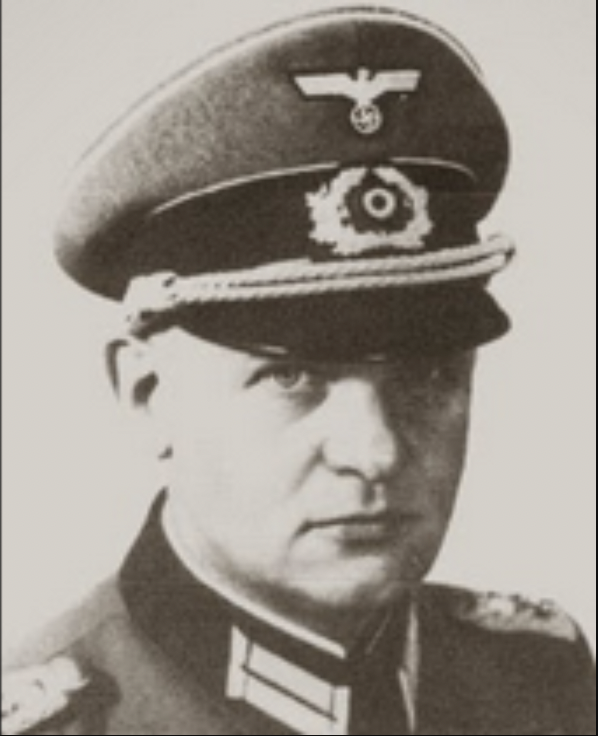 Not
only did the guards follow the colonel's
lead, but according to reports, citizens of Moosburg are also
starting to hide bazookas or render them unusable in order to sabotage
further fighting. He was also ordered to march south with the captured
officers who had probably been intended to be used as bargaining chips
in possible negotiations with the Allies. Such a march without either
prepared accommodation or food would have meant deadly hardships for the
prisoners. Whilst the crews were to remain in Moosburg, the camp
buildings were to be blown up so that no accommodations could fall into
enemy hands. Instead, both Major Koller and Colonel Burger decided to
hand over the city and the camp without a fight and prevented the
prisoners from being taken away.
Not
only did the guards follow the colonel's
lead, but according to reports, citizens of Moosburg are also
starting to hide bazookas or render them unusable in order to sabotage
further fighting. He was also ordered to march south with the captured
officers who had probably been intended to be used as bargaining chips
in possible negotiations with the Allies. Such a march without either
prepared accommodation or food would have meant deadly hardships for the
prisoners. Whilst the crews were to remain in Moosburg, the camp
buildings were to be blown up so that no accommodations could fall into
enemy hands. Instead, both Major Koller and Colonel Burger decided to
hand over the city and the camp without a fight and prevented the
prisoners from being taken away. Given
that the stalag was surrounded by fanatical Nazis officials, his
ability to save the lives of civilians, prisoners and soldiers on both
sides is remarkable and prevented Moosburg from being shelled. After the
war he and his family continued to live in Moosburg until 1957; his
wife worked as a teacher whilst his son Willy- now a lawyer and bank
director in Munich- attended elementary school in Moosburg and later
grammar school in Freising. In 1964 Burger died at the age of 76.
 On the left the funeral procession for two Russian prisoners of war who died on the day the camp was liberated. In
all probability this was a result of the PoWs finding the cellar in
which the Wehrmacht had stored 8,000 litres of wine. The Russian
soldiers in particular got drunk and, already physically weakened, the
consumption of alcohol became a lethal dose. The next day the military
government had to order forty coffins for those who did not survive the
binge. When the Americans closed the cellar, angry prisoners set it on
fire. A farmer's property also burned when he hesitated to surrender a
calf. At the same time, after the second day of the looting seventeen
rapes were reported. City pastors and chaplains then set up shelters for
women and girls in the rectory; it took eight days for the Americans to
contain the looting and another fortnight to stop it completely.
On the left the funeral procession for two Russian prisoners of war who died on the day the camp was liberated. In
all probability this was a result of the PoWs finding the cellar in
which the Wehrmacht had stored 8,000 litres of wine. The Russian
soldiers in particular got drunk and, already physically weakened, the
consumption of alcohol became a lethal dose. The next day the military
government had to order forty coffins for those who did not survive the
binge. When the Americans closed the cellar, angry prisoners set it on
fire. A farmer's property also burned when he hesitated to surrender a
calf. At the same time, after the second day of the looting seventeen
rapes were reported. City pastors and chaplains then set up shelters for
women and girls in the rectory; it took eight days for the Americans to
contain the looting and another fortnight to stop it completely..gif)
The GIF on the right shows by contrast former prisoners of war with recently
issued Red Cross food parcels following the liberation of the camp-
a number of buildings are still in use. The cases of Americans and
British Imperial troops were unique in several respects: their countries
were unoccupied by Germany, they held large numbers of German
servicemen in captivity, ensuring the attention of the German
government, and lastly, their status as 'legitimate' signatories to the
Geneva Convention was not called into doubt by Germany (unlike the
Soviet Union or, after 1939, Poland). The inspectors were not just
valued by the home governments as a source of information - their agents
usually argued forcefully for the improvement of conditions of their
charges directly with the Commandants of the camps, and noted in their
reports if their complaints were satisfactorily dealt with at that level
or whether further action would be required at a higher level of
authority.


 Whilst the layout
is recognisable, today all that remains physically is a single dilapidated prisoner barrack and three guard barracks. The present physical remains at the site consist of one former prisoner barrack and three former guard barracks, all pretty much remainng within a dilapidated state. The foundational layout of the camp remains partially visible. Following the dissolution of Stalag VII A, the barracks complex was repurposed to provide initial accommodation for German expellees arriving in Moosburg, and so this specific reuse of the former camp infrastructure provides the direct historical and topographical connection between the site's function as a post-war expellee reception centre and the subsequent erection of a monument dedicated to that same group.
Whilst the layout
is recognisable, today all that remains physically is a single dilapidated prisoner barrack and three guard barracks. The present physical remains at the site consist of one former prisoner barrack and three former guard barracks, all pretty much remainng within a dilapidated state. The foundational layout of the camp remains partially visible. Following the dissolution of Stalag VII A, the barracks complex was repurposed to provide initial accommodation for German expellees arriving in Moosburg, and so this specific reuse of the former camp infrastructure provides the direct historical and topographical connection between the site's function as a post-war expellee reception centre and the subsequent erection of a monument dedicated to that same group. .gif)

Some surviving vestiges of the original barracks being used, and along Schlesierstraße
For a site devoted entirely to Moosburg: Moosburg Online
 Nearby
in front of St. Pius church on land devoted to serve as a memorial to
the prisoners of the stalag is this fountain, the Stalag Gedenkbrunnen,
which had been created by French prisoner Antoniucci Volti
in 1942 and set up in 1963. The reliefs are intended to represent the
four great rivers of France- the Garonne, Loire, Rhône and Seine. Volti
himself had been born in Albano, Italy, in 1915, before his family moved
to France in 1920. A book by art historian Christine Fößmeier, "Volti -
A major French artist in Stalag VII A Moosburg," is expected to be
published. Volti attended the École des Arts Décoratifs in Nice and
later went to Paris. After the war he returned to Paris, where his
studio and his works were destroyed shortly thereafter. Moosburg
therefore possesses, as Fößmeier's project description states, "a unique
excerpt from the work of Volti". He continued to work in Paris after
the war, where he died in 1989. Volti's works can be found in the Musée
National d'Art Moderne in Paris, the Musée de la Ville de Paris, Albi,
Menton, Nice and Honfleur.
Nearby
in front of St. Pius church on land devoted to serve as a memorial to
the prisoners of the stalag is this fountain, the Stalag Gedenkbrunnen,
which had been created by French prisoner Antoniucci Volti
in 1942 and set up in 1963. The reliefs are intended to represent the
four great rivers of France- the Garonne, Loire, Rhône and Seine. Volti
himself had been born in Albano, Italy, in 1915, before his family moved
to France in 1920. A book by art historian Christine Fößmeier, "Volti -
A major French artist in Stalag VII A Moosburg," is expected to be
published. Volti attended the École des Arts Décoratifs in Nice and
later went to Paris. After the war he returned to Paris, where his
studio and his works were destroyed shortly thereafter. Moosburg
therefore possesses, as Fößmeier's project description states, "a unique
excerpt from the work of Volti". He continued to work in Paris after
the war, where he died in 1989. Volti's works can be found in the Musée
National d'Art Moderne in Paris, the Musée de la Ville de Paris, Albi,
Menton, Nice and Honfleur. .gif)
 The bridge that became the main strategic objective in the battle
between Patton and the German ϟϟ in Moosburg, led by the tanks of
Sergeants Claude Newton and William Summers and Lieutenants Hack and
Boucher. On the morning of April 28 ϟϟ formations arrived in Moosburg
with a regiment of the Nibelungen division taking up position in the
town supported by a combat group made up of members of the French 33rd
Waffen Grenadier Division of the ϟϟ Charlemagne who had arrived in the Moosburg area in the second half of April 1945 as part of the emergency redeployment of remaining French volunteer units to southern Bavaria. The division had been reduced to approximately 700 combat effective men by this stage with the remnants transported by rail from the Pomeranian front and immediately assigned defensive positions along the Isar river line. The unit was placed under the tactical control of the XIII SS Army Corps and was tasked with preventing American forces from crossing the Isar and advancing towards Munich from the north east.
The bridge that became the main strategic objective in the battle
between Patton and the German ϟϟ in Moosburg, led by the tanks of
Sergeants Claude Newton and William Summers and Lieutenants Hack and
Boucher. On the morning of April 28 ϟϟ formations arrived in Moosburg
with a regiment of the Nibelungen division taking up position in the
town supported by a combat group made up of members of the French 33rd
Waffen Grenadier Division of the ϟϟ Charlemagne who had arrived in the Moosburg area in the second half of April 1945 as part of the emergency redeployment of remaining French volunteer units to southern Bavaria. The division had been reduced to approximately 700 combat effective men by this stage with the remnants transported by rail from the Pomeranian front and immediately assigned defensive positions along the Isar river line. The unit was placed under the tactical control of the XIII SS Army Corps and was tasked with preventing American forces from crossing the Isar and advancing towards Munich from the north east.  Looking the other direction on the right towards the Gasthof zur Länd. On April 24, 1945 elements of the Charlemagne Division took up positions in the vicinity of Moosburg an der Isar and were ordered to hold the bridges and crossing points in coordination with scattered units of the Wehrmacht and local Volkssturm formations. The French volunteers were deployed in small battle groups along the western bank of the Isar with the primary objective of delaying the advance of the United States 14th Armoured Division. The ϟϟ commander was
initially determined to defend Moosburg "for the long term" but was
eventually dissuaded by Colonel Burger who instead sought to send a
negotiating delegation made up of Red Cross representatives and captured
officers to the Americans, who had already reached walls. By 15.30 the
delegation and the ϟϟ officer headed towards the front. The Germans
eventually bombed the bridge as Newton’s tank moved into the first span
in order to keep the American tanks from crossing it but by the evening
the 14th Armoured Division was established along the Isar. Behind it
were miles-long columns of German prisoners being marched to the rear
and the fields all around with two thousands of Germans prisoners
guarded under lights. Among them lay the burned out German vehicles
caught in the fight that morning with the German dead lying in grotesque
positions as Graves Registration Officers moved among them preparing
for burial and British ex-prisoners of war rode bicycles through the
towns. The bridge has recently been replaced by a new one seen here.
Looking the other direction on the right towards the Gasthof zur Länd. On April 24, 1945 elements of the Charlemagne Division took up positions in the vicinity of Moosburg an der Isar and were ordered to hold the bridges and crossing points in coordination with scattered units of the Wehrmacht and local Volkssturm formations. The French volunteers were deployed in small battle groups along the western bank of the Isar with the primary objective of delaying the advance of the United States 14th Armoured Division. The ϟϟ commander was
initially determined to defend Moosburg "for the long term" but was
eventually dissuaded by Colonel Burger who instead sought to send a
negotiating delegation made up of Red Cross representatives and captured
officers to the Americans, who had already reached walls. By 15.30 the
delegation and the ϟϟ officer headed towards the front. The Germans
eventually bombed the bridge as Newton’s tank moved into the first span
in order to keep the American tanks from crossing it but by the evening
the 14th Armoured Division was established along the Isar. Behind it
were miles-long columns of German prisoners being marched to the rear
and the fields all around with two thousands of Germans prisoners
guarded under lights. Among them lay the burned out German vehicles
caught in the fight that morning with the German dead lying in grotesque
positions as Graves Registration Officers moved among them preparing
for burial and British ex-prisoners of war rode bicycles through the
towns. The bridge has recently been replaced by a new one seen here.
The bridge shown in 1941 with me in front today, and April 29, 1945 below. According to author Dominik Reither in his recent book "Zwischen Hakenkreuz und Sternenbanner - Kriegsende und Nachkriegszeit in Moosburg"
which focuses on the period between April 29, 1945, when the Americans
marched into Moosburg and the election to the first Bundestag on August
14, 1949. Moosburg, which had previously been spared major
bombardments, only suffered from them towards the end of the war, when
the front drew closer and low-flying aircraft attacks in the area
increased. Whilst city commander Major Rudolf Koller, camp commander
Colonel Otto Burger and Mayor Hermann Müller had decided not to defend
Moosburg and hand it over to the approaching Americans, ϟϟ units
resisted when the American Army took the city and liberated the camp. .gif) Reither
writes how there were no dead or wounded in Moosburg during the
invasion but chaotic days of looting, rape and arson by freed prisoners
followed. It
is believed that there were 70,000 to 80,000 people in the overcrowded
Stalag at the end and Reither describes how western prisoners of war
were brought home whilst those from the east remained as displaced
persons in the town as the city administration was rebuilt, a Jewish
community formed, expellees and refugees were taken in and the Neustadt
district came into being on the Stalag site. Reither also addresses
denazification, such as the case of ex-mayor Müller, who after three
years of internment ultimately received a mild sentence and was only
classified as a follower, even though he was a staunch Nazi. Reither's
book also provides insights into the "German Youth Activities"
programme, with which the Americans also got young people off the
streets in Moosburg and led them towards democracy. He describes how
cultural, sporting and leisure activities gained momentum again and
includes anecdotes such as those from the FC Bayern Munich visit, who
made two guest appearances at SpVgg Moosburg in September 1945.
Reither
writes how there were no dead or wounded in Moosburg during the
invasion but chaotic days of looting, rape and arson by freed prisoners
followed. It
is believed that there were 70,000 to 80,000 people in the overcrowded
Stalag at the end and Reither describes how western prisoners of war
were brought home whilst those from the east remained as displaced
persons in the town as the city administration was rebuilt, a Jewish
community formed, expellees and refugees were taken in and the Neustadt
district came into being on the Stalag site. Reither also addresses
denazification, such as the case of ex-mayor Müller, who after three
years of internment ultimately received a mild sentence and was only
classified as a follower, even though he was a staunch Nazi. Reither's
book also provides insights into the "German Youth Activities"
programme, with which the Americans also got young people off the
streets in Moosburg and led them towards democracy. He describes how
cultural, sporting and leisure activities gained momentum again and
includes anecdotes such as those from the FC Bayern Munich visit, who
made two guest appearances at SpVgg Moosburg in September 1945.
.gif)

Drake Winston with his FC Eichenfeld team after winning the 2019 Sparkasse Cup final in Moosburg against the home side.
Mauern

Had taken considerable time to hunt down the site of a Roman villa that had
been excavated just about fifteen miles away back in 1987 before being
covered up again with only this photo giving me the clues as to its
actual location. It's just outside a little town called Mauern situated on the Hörgertshausener and Mauerner Bach between
Moosburg and Nandlstadt, and is often referred to as the "gateway to the
Hallertau." Its name could come from the Roman "ad murun", and sure enough
Roman bricks were found nearby in Alpersdorf in 2007. Archaeological
excavations have established that Mauern was already settled approximately
7,500 years ago and has maintained an almost continuous pattern of
habitation since that time. At the eastern edge of the settlement,
recent archaeological investigations unearthed finds attributed to the
Münchshöfener Kultur, indicating that this fertile terrain along the
Mauerner Bach was occupied as far back as roughly 4,500 BCE.  During the Roman period, isolated farmsteads dominated the landscape of
the region around Mauern, and the nucleated villages that characterise
the area today did not emerge until the early medieval period; a single
Roman farmstead of this type is designated a "villa rustica." The villa
rustica at Niederndorf lies on a south-facing slope with outstanding
loess soils in the zone between Moosburg and Mauern, roughly 300 metres
above the Mauerner Bach, with a natural spring immediately behind the
building remains that likely served both for drinking water and for the
supply of the bathhouse. Aerial photographs of the relevant field parcel
first indicated the presence of a buried villa rustica, and field
surveys undertaken in 1986 brought to light numerous Roman artefacts
together with stones suggesting roughly rectangular structural outlines;
because the building remains were severely threatened, a rescue
excavation was carried out in the spring of 1987. A Roman
villa rustica is situated near Niederndorf, where a small thermal bath and a kiln were excavated here. The stone foundation measured approximately
6.5 metres by 7 metres in a nearly square plan, and within it was an
underfloor heating system: from a fire opening, the praefurnium, warm
air passed through a heating channel beneath the floor of the building,
with cruciform heating channels made of tufa extending from the centre
of the room to the inner corners of the foundation, their floors
consisting of a gravelly lime morite layer. The thermal bath had
underfloor heating and was divided into the typical sequence of rooms,
including a changing room, cold bath, tepid bath, and warm bath;
concentrated metal objects were discovered in the heating shaft of the
praefurnium, objects that were probably concealed there during Alemannic
plundering and then never retrieved.
During the Roman period, isolated farmsteads dominated the landscape of
the region around Mauern, and the nucleated villages that characterise
the area today did not emerge until the early medieval period; a single
Roman farmstead of this type is designated a "villa rustica." The villa
rustica at Niederndorf lies on a south-facing slope with outstanding
loess soils in the zone between Moosburg and Mauern, roughly 300 metres
above the Mauerner Bach, with a natural spring immediately behind the
building remains that likely served both for drinking water and for the
supply of the bathhouse. Aerial photographs of the relevant field parcel
first indicated the presence of a buried villa rustica, and field
surveys undertaken in 1986 brought to light numerous Roman artefacts
together with stones suggesting roughly rectangular structural outlines;
because the building remains were severely threatened, a rescue
excavation was carried out in the spring of 1987. A Roman
villa rustica is situated near Niederndorf, where a small thermal bath and a kiln were excavated here. The stone foundation measured approximately
6.5 metres by 7 metres in a nearly square plan, and within it was an
underfloor heating system: from a fire opening, the praefurnium, warm
air passed through a heating channel beneath the floor of the building,
with cruciform heating channels made of tufa extending from the centre
of the room to the inner corners of the foundation, their floors
consisting of a gravelly lime morite layer. The thermal bath had
underfloor heating and was divided into the typical sequence of rooms,
including a changing room, cold bath, tepid bath, and warm bath;
concentrated metal objects were discovered in the heating shaft of the
praefurnium, objects that were probably concealed there during Alemannic
plundering and then never retrieved.  These finds suggest that a Roman road
route ran from Moosburg through Mauern and further northwards. On the basis of the finds and the
overall structural evidence, the villa rustica is unlikely to have been
established before the middle of the 2nd century CE, and the soil
quality, south-facing aspect, and reliable water supply offered ideal
conditions for the estate, though it certainly did not survive the
Alemannic incursions of the 3rd century, during which the iron
deposition is contextualised.
These finds suggest that a Roman road
route ran from Moosburg through Mauern and further northwards. On the basis of the finds and the
overall structural evidence, the villa rustica is unlikely to have been
established before the middle of the 2nd century CE, and the soil
quality, south-facing aspect, and reliable water supply offered ideal
conditions for the estate, though it certainly did not survive the
Alemannic incursions of the 3rd century, during which the iron
deposition is contextualised.
The Nazi era saw the agricultural character of Mauern and the surrounding Hallertau hop-growing district falling within the wider network of farms and estates that received prisoner labour from Stalag VII A. A dedicated labour office within the camp allocated prisoners to agricultural, craft, and industrial enterprises; there were both individual assignments and work detachments comprising several hundred inmates, and the employing firms were required to provide a minimum of accommodation and food together with a modest wage that prisoners could spend in the camp. By January 1944, the camp designed for 10,000 persons already held approximately 20,000 prisoners and was severely overcrowded, with a further roughly 55,000 prisoners deployed in work assignments and housed in satellite camps.
 Nearby just
outside Wang is this seemingly makeshift memorial in a clearing
commemorating victims of the death march column that passed through the
municipality whcih had originated from the Flossenbürg concentration
camp system, incorporating prisoners from the large Hersbruck subcamp as
well as inmates evacuated from Straubing prison. On that day seven
prisoners were shot dead by ϟϟ guards at a location in Volkmannsdorf
after they had become too exhausted to continue marching. The column,
which numbered several thousand people, was being forced southward
toward Dachau as American forces advanced rapidly through Bavaria in the
final phase of the war. The seven victims, who have never been
identified by name, were selected for immediate execution when they
could no longer keep pace, and their bodies were left where they fell
without burial or further attention from the guards. The inscription on
the cross reads:
Nearby just
outside Wang is this seemingly makeshift memorial in a clearing
commemorating victims of the death march column that passed through the
municipality whcih had originated from the Flossenbürg concentration
camp system, incorporating prisoners from the large Hersbruck subcamp as
well as inmates evacuated from Straubing prison. On that day seven
prisoners were shot dead by ϟϟ guards at a location in Volkmannsdorf
after they had become too exhausted to continue marching. The column,
which numbered several thousand people, was being forced southward
toward Dachau as American forces advanced rapidly through Bavaria in the
final phase of the war. The seven victims, who have never been
identified by name, were selected for immediate execution when they
could no longer keep pace, and their bodies were left where they fell
without burial or further attention from the guards. The inscription on
the cross reads:
 The
cross was erected as a provisional memorial and has remained in place
for many years. On May 1, 2017 an ecumenical remembrance ceremony was
held in Wang, organised by local residents and municipal councillor
Josef Schlecht. Heavy rain forced the cancellation of the planned
procession to the cross, so the service took place inside the parish
church of St Laurentius in Volkmannsdorf. During the ceremony speeches,
prayers and music were presented, and Josef Schlecht spoke of the
necessity of breaking the long silence surrounding the events of late
April 1945 and of developing a so-called 'Path of Peace' through the
municipality with additional information points along the former march
route. The seven murdered prisoners formed part of much larger
evacuation transports that left Flossenbürg and its subcamps in mid
April 1945 under chaotic conditions. The Hersbruck subcamp in particular
had held up to 6000 prisoners at its peak, many of whom had already
suffered extreme mortality rates due to brutal underground labour
projects. The addition of prisoners from Straubing prison further
swelled the columns moving through Upper Bavaria. The killings on April
29, 1945 in Volkmannsdorf occurred as the guards pushed the marchers
forward with increasing brutality, executing those who collapsed or
lagged behind. No local residents are recorded as having been involved
in the removal or burial of the bodies, and the site remained unmarked
until the cross was placed all these decades later.
The
cross was erected as a provisional memorial and has remained in place
for many years. On May 1, 2017 an ecumenical remembrance ceremony was
held in Wang, organised by local residents and municipal councillor
Josef Schlecht. Heavy rain forced the cancellation of the planned
procession to the cross, so the service took place inside the parish
church of St Laurentius in Volkmannsdorf. During the ceremony speeches,
prayers and music were presented, and Josef Schlecht spoke of the
necessity of breaking the long silence surrounding the events of late
April 1945 and of developing a so-called 'Path of Peace' through the
municipality with additional information points along the former march
route. The seven murdered prisoners formed part of much larger
evacuation transports that left Flossenbürg and its subcamps in mid
April 1945 under chaotic conditions. The Hersbruck subcamp in particular
had held up to 6000 prisoners at its peak, many of whom had already
suffered extreme mortality rates due to brutal underground labour
projects. The addition of prisoners from Straubing prison further
swelled the columns moving through Upper Bavaria. The killings on April
29, 1945 in Volkmannsdorf occurred as the guards pushed the marchers
forward with increasing brutality, executing those who collapsed or
lagged behind. No local residents are recorded as having been involved
in the removal or burial of the bodies, and the site remained unmarked
until the cross was placed all these decades later.

 Between Freising and Moosburg is the 'Naturfreunde' centre in
Hangenham overlooking the area which hosted the Nazis in 1933. The
Naturfreunde, or 'Friends of Nature', is an international movement
committed to the protection of nature. Founded in Austria in 1895, it
expanded to Germany shortly thereafter. By the early 20th century,
Naturfreunde centres were established throughout the country, becoming
popular hubs for nature enthusiasts, social reformers, and political
activists. However, with the rise of the Nazi regime, these centres were
faced with unique challenges and pressures. Under the Nazi regime, the
Naturfreunde centres underwent significant transformations. Steven B.
Bowman argues that these transformations were primarily driven by the
regime's intentions to manipulate public opinion and control societal
institutions. Naturfreunde centres, which had traditionally been known
for their politically left-leaning views and commitment to social and
environmental justice, were targeted for 'cleansing'. According to
Bowman, this was part of the wider Nazi policy of Gleichschaltung or
'coordination', which aimed at bringing all aspects of German life under
the control of the Nazi Party. Despite Bowman's argument seeming
comprehensive, Richard J. Evans maintains that while there were indeed
attempts at manipulating the Naturfreunde centres, it wasn't solely due
to the Gleichschaltung policy, instead contending that the Nazi regime
saw these centres as potential platforms for propagating its own
ideology about the significance of 'Blood and Soil' – a racially driven
environmental ethos, and the volkisch connection to the land. The
centres were seen as strategic platforms for indoctrinating the youth
and spreading Nazi ideology among the populace.
Between Freising and Moosburg is the 'Naturfreunde' centre in
Hangenham overlooking the area which hosted the Nazis in 1933. The
Naturfreunde, or 'Friends of Nature', is an international movement
committed to the protection of nature. Founded in Austria in 1895, it
expanded to Germany shortly thereafter. By the early 20th century,
Naturfreunde centres were established throughout the country, becoming
popular hubs for nature enthusiasts, social reformers, and political
activists. However, with the rise of the Nazi regime, these centres were
faced with unique challenges and pressures. Under the Nazi regime, the
Naturfreunde centres underwent significant transformations. Steven B.
Bowman argues that these transformations were primarily driven by the
regime's intentions to manipulate public opinion and control societal
institutions. Naturfreunde centres, which had traditionally been known
for their politically left-leaning views and commitment to social and
environmental justice, were targeted for 'cleansing'. According to
Bowman, this was part of the wider Nazi policy of Gleichschaltung or
'coordination', which aimed at bringing all aspects of German life under
the control of the Nazi Party. Despite Bowman's argument seeming
comprehensive, Richard J. Evans maintains that while there were indeed
attempts at manipulating the Naturfreunde centres, it wasn't solely due
to the Gleichschaltung policy, instead contending that the Nazi regime
saw these centres as potential platforms for propagating its own
ideology about the significance of 'Blood and Soil' – a racially driven
environmental ethos, and the volkisch connection to the land. The
centres were seen as strategic platforms for indoctrinating the youth
and spreading Nazi ideology among the populace.
 Despite
these transformations and pressures, Naturfreunde centres also served
as pockets of resistance against the Nazi regime. Marcus Funck's work,
'Naturfreunde in the Nazi Era', gives valuable insight into this aspect
by positing that the Naturfreunde centres, due to their historical
commitment to social and political reform, harboured dissenters and
acted as discreet nodes of the resistance movement. Evans corroborates
Funck's argument, asserting that Naturfreunde centres, due to their
historically egalitarian and left-leaning ethos, were likely to be
fertile ground for the resistance movement. However, Evans also points
out the danger in overstating the level of active resistance these
centres could offer, given the level of surveillance and repression by
the Gestapo and the fear of reprisals.
Despite
these transformations and pressures, Naturfreunde centres also served
as pockets of resistance against the Nazi regime. Marcus Funck's work,
'Naturfreunde in the Nazi Era', gives valuable insight into this aspect
by positing that the Naturfreunde centres, due to their historical
commitment to social and political reform, harboured dissenters and
acted as discreet nodes of the resistance movement. Evans corroborates
Funck's argument, asserting that Naturfreunde centres, due to their
historically egalitarian and left-leaning ethos, were likely to be
fertile ground for the resistance movement. However, Evans also points
out the danger in overstating the level of active resistance these
centres could offer, given the level of surveillance and repression by
the Gestapo and the fear of reprisals.
 During the Roman period, isolated farmsteads dominated the landscape of
the region around Mauern, and the nucleated villages that characterise
the area today did not emerge until the early medieval period; a single
Roman farmstead of this type is designated a "villa rustica." The villa
rustica at Niederndorf lies on a south-facing slope with outstanding
loess soils in the zone between Moosburg and Mauern, roughly 300 metres
above the Mauerner Bach, with a natural spring immediately behind the
building remains that likely served both for drinking water and for the
supply of the bathhouse. Aerial photographs of the relevant field parcel
first indicated the presence of a buried villa rustica, and field
surveys undertaken in 1986 brought to light numerous Roman artefacts
together with stones suggesting roughly rectangular structural outlines;
because the building remains were severely threatened, a rescue
excavation was carried out in the spring of 1987. A Roman
villa rustica is situated near Niederndorf, where a small thermal bath and a kiln were excavated here. The stone foundation measured approximately
6.5 metres by 7 metres in a nearly square plan, and within it was an
underfloor heating system: from a fire opening, the praefurnium, warm
air passed through a heating channel beneath the floor of the building,
with cruciform heating channels made of tufa extending from the centre
of the room to the inner corners of the foundation, their floors
consisting of a gravelly lime morite layer. The thermal bath had
underfloor heating and was divided into the typical sequence of rooms,
including a changing room, cold bath, tepid bath, and warm bath;
concentrated metal objects were discovered in the heating shaft of the
praefurnium, objects that were probably concealed there during Alemannic
plundering and then never retrieved.
During the Roman period, isolated farmsteads dominated the landscape of
the region around Mauern, and the nucleated villages that characterise
the area today did not emerge until the early medieval period; a single
Roman farmstead of this type is designated a "villa rustica." The villa
rustica at Niederndorf lies on a south-facing slope with outstanding
loess soils in the zone between Moosburg and Mauern, roughly 300 metres
above the Mauerner Bach, with a natural spring immediately behind the
building remains that likely served both for drinking water and for the
supply of the bathhouse. Aerial photographs of the relevant field parcel
first indicated the presence of a buried villa rustica, and field
surveys undertaken in 1986 brought to light numerous Roman artefacts
together with stones suggesting roughly rectangular structural outlines;
because the building remains were severely threatened, a rescue
excavation was carried out in the spring of 1987. A Roman
villa rustica is situated near Niederndorf, where a small thermal bath and a kiln were excavated here. The stone foundation measured approximately
6.5 metres by 7 metres in a nearly square plan, and within it was an
underfloor heating system: from a fire opening, the praefurnium, warm
air passed through a heating channel beneath the floor of the building,
with cruciform heating channels made of tufa extending from the centre
of the room to the inner corners of the foundation, their floors
consisting of a gravelly lime morite layer. The thermal bath had
underfloor heating and was divided into the typical sequence of rooms,
including a changing room, cold bath, tepid bath, and warm bath;
concentrated metal objects were discovered in the heating shaft of the
praefurnium, objects that were probably concealed there during Alemannic
plundering and then never retrieved.  These finds suggest that a Roman road
route ran from Moosburg through Mauern and further northwards. On the basis of the finds and the
overall structural evidence, the villa rustica is unlikely to have been
established before the middle of the 2nd century CE, and the soil
quality, south-facing aspect, and reliable water supply offered ideal
conditions for the estate, though it certainly did not survive the
Alemannic incursions of the 3rd century, during which the iron
deposition is contextualised.
These finds suggest that a Roman road
route ran from Moosburg through Mauern and further northwards. On the basis of the finds and the
overall structural evidence, the villa rustica is unlikely to have been
established before the middle of the 2nd century CE, and the soil
quality, south-facing aspect, and reliable water supply offered ideal
conditions for the estate, though it certainly did not survive the
Alemannic incursions of the 3rd century, during which the iron
deposition is contextualised. The Nazi era saw the agricultural character of Mauern and the surrounding Hallertau hop-growing district falling within the wider network of farms and estates that received prisoner labour from Stalag VII A. A dedicated labour office within the camp allocated prisoners to agricultural, craft, and industrial enterprises; there were both individual assignments and work detachments comprising several hundred inmates, and the employing firms were required to provide a minimum of accommodation and food together with a modest wage that prisoners could spend in the camp. By January 1944, the camp designed for 10,000 persons already held approximately 20,000 prisoners and was severely overcrowded, with a further roughly 55,000 prisoners deployed in work assignments and housed in satellite camps.
Nearby just
outside Wang is this seemingly makeshift memorial in a clearing
commemorating victims of the death march column that passed through the
municipality whcih had originated from the Flossenbürg concentration
camp system, incorporating prisoners from the large Hersbruck subcamp as
well as inmates evacuated from Straubing prison. On that day seven
prisoners were shot dead by ϟϟ guards at a location in Volkmannsdorf
after they had become too exhausted to continue marching. The column,
which numbered several thousand people, was being forced southward
toward Dachau as American forces advanced rapidly through Bavaria in the
final phase of the war. The seven victims, who have never been
identified by name, were selected for immediate execution when they
could no longer keep pace, and their bodies were left where they fell
without burial or further attention from the guards. The inscription on
the cross reads:At this location, at the end of April 1945, seven prisoners on the death march from the Flossenbürg and Hersbruck concentration camps, as well as from the Straubing prison, on their way to the Dachau concentration camp, were murdered by the escorting troops.
The
cross was erected as a provisional memorial and has remained in place
for many years. On May 1, 2017 an ecumenical remembrance ceremony was
held in Wang, organised by local residents and municipal councillor
Josef Schlecht. Heavy rain forced the cancellation of the planned
procession to the cross, so the service took place inside the parish
church of St Laurentius in Volkmannsdorf. During the ceremony speeches,
prayers and music were presented, and Josef Schlecht spoke of the
necessity of breaking the long silence surrounding the events of late
April 1945 and of developing a so-called 'Path of Peace' through the
municipality with additional information points along the former march
route. The seven murdered prisoners formed part of much larger
evacuation transports that left Flossenbürg and its subcamps in mid
April 1945 under chaotic conditions. The Hersbruck subcamp in particular
had held up to 6000 prisoners at its peak, many of whom had already
suffered extreme mortality rates due to brutal underground labour
projects. The addition of prisoners from Straubing prison further
swelled the columns moving through Upper Bavaria. The killings on April
29, 1945 in Volkmannsdorf occurred as the guards pushed the marchers
forward with increasing brutality, executing those who collapsed or
lagged behind. No local residents are recorded as having been involved
in the removal or burial of the bodies, and the site remained unmarked
until the cross was placed all these decades later. Pfrombach

Looking
over the village of Pfrombach which was incorporated later into the
town of Moosburg and consisted primarily of agricultural holdings with
scattered farmsteads and the central Pfarrkirche St. Margaretha, seen in
this Nazi period postcard. In the final days of the war in 1945 heavy
fighting erupted here between retreating ϟϟ soldiers and advancing
American forces. The clashes occurred as German units conducted
rearguard actions while the front line disintegrated in the rural areas
north and east of Moosburg an der Isar.  American
troops pushed forward through the open farmland and small villages in
early May 1945 after the main town of Moosburg had already seen its own
combat on April 29, 1945. In Pfrombach the engagements proved
particularly intense around the village centre where roads and open
fields offered limited cover. The Pfarrkirche St. Margaretha, a fifteenth century Gothic hall church, stood in a prominent position and became exposed to direct fire during these exchanges.
American
troops pushed forward through the open farmland and small villages in
early May 1945 after the main town of Moosburg had already seen its own
combat on April 29, 1945. In Pfrombach the engagements proved
particularly intense around the village centre where roads and open
fields offered limited cover. The Pfarrkirche St. Margaretha, a fifteenth century Gothic hall church, stood in a prominent position and became exposed to direct fire during these exchanges.
The church tower sustained heavy damage from gunfire and shell fragments with multiple impacts visible across the structure and especially concentrated on the upper sections and spire. This surviving photo from the immediate postwar period captures the badly shot-up Kirchturm showing clear bullet holes shattered masonry and damaged roofing where projectiles struck the tower. The damage remained confined largely to the exterior of the tower and did not destroy the main nave or choir but required significant repair work before the church could resume full services.The fighting in Pfrombach formed part of the scattered last resistance offered by ϟϟ detachments attempting to slow the American advance toward the Isar and beyond in the first days of May 1945. No prolonged house-to-house combat developed inside the village itself but short sharp exchanges of small arms fire and heavier weapons occurred as the retreating units moved through or near the settlement. The church tower likely drew fire because of its height which offered potential observation or because ϟϟ elements passed close to the building during their withdrawal although as seen in my photos, I managed to find higher ground to look down upon the whole area. Once
the Americans secured the area the immediate threat of further
destruction ended and the village returned to a state of occupation with
the usual restrictions and requisitions that followed in the region. The church building required repair and restoration that was completed only in 1946. On
the left is the war memorial in 1920 after being dedicated for the local
dead in WWI and today with the additions from the second world war; it
stood as the central site for all official remembrance activities in the
village both during and after the Nazi period. On May 6, 1951 the
community of Pfrombach held a Heimkehrerfeier at this memorial to
welcome back the last German prisoners of war who had only then returned
from captivity years after the end of hostilities shown below. The
ceremony marked a formal moment of homecoming for those who had endured
long imprisonment and allowed the village to gather publicly in
recognition of their survival and return.
Once
the Americans secured the area the immediate threat of further
destruction ended and the village returned to a state of occupation with
the usual restrictions and requisitions that followed in the region. The church building required repair and restoration that was completed only in 1946. On
the left is the war memorial in 1920 after being dedicated for the local
dead in WWI and today with the additions from the second world war; it
stood as the central site for all official remembrance activities in the
village both during and after the Nazi period. On May 6, 1951 the
community of Pfrombach held a Heimkehrerfeier at this memorial to
welcome back the last German prisoners of war who had only then returned
from captivity years after the end of hostilities shown below. The
ceremony marked a formal moment of homecoming for those who had endured
long imprisonment and allowed the village to gather publicly in
recognition of their survival and return.  During
the same event the community attached three new stone tablets to the
existing war memorial. These Steintafeln recorded the names of the
fallen and missing soldiers from the Pfrombach parish who had died in
both the First and Second World Wars. In addition the tablets listed the
names of fallen and missing Heimatvertriebene expelled from their
eastern homelands during and after the Second World War. The addition of
the three stone tablets in May 1951 expanded the memorial from its
earlier focus on the Great War to encompass the full scope of losses
suffered by the local Catholic parish across the two conflicts and the
expellee population that had settled in the area after 1945. The
Heimkehrerfeier itself took place directly at the Krieger-Denkmal with
villagers assembling around the monument for speeches prayers and the
formal unveiling or dedication of the new tablets.
During
the same event the community attached three new stone tablets to the
existing war memorial. These Steintafeln recorded the names of the
fallen and missing soldiers from the Pfrombach parish who had died in
both the First and Second World Wars. In addition the tablets listed the
names of fallen and missing Heimatvertriebene expelled from their
eastern homelands during and after the Second World War. The addition of
the three stone tablets in May 1951 expanded the memorial from its
earlier focus on the Great War to encompass the full scope of losses
suffered by the local Catholic parish across the two conflicts and the
expellee population that had settled in the area after 1945. The
Heimkehrerfeier itself took place directly at the Krieger-Denkmal with
villagers assembling around the monument for speeches prayers and the
formal unveiling or dedication of the new tablets.
 My GIF on the right shows the flag dedication and inauguration of the war memorial on October 10, 1920. The other photos date from the Heimkehrerfeier of
May 6, 1951 showing the memorial with the freshly installed stone
tablets and the gathered community including returning prisoners of war
and local families.
My GIF on the right shows the flag dedication and inauguration of the war memorial on October 10, 1920. The other photos date from the Heimkehrerfeier of
May 6, 1951 showing the memorial with the freshly installed stone
tablets and the gathered community including returning prisoners of war
and local families.
The three stone tablets provided a permanent and visible expansion of the memorial’s purpose. One tablet listed the names from the Great War whilst the second and third recorded those from the Second World War including both the parish’s own soldiers and the additional category of Heimatvertriebene who had lost their lives during flight expulsion or subsequent hardships. This act of inscription in May 1951 reflected the village’s effort to honour all categories of loss in a single public monument rather than creating separate memorials. The Heimkehrerfeier therefore combined celebration of the returning prisoners with solemn remembrance of the dead and missing creating a unified communal event at the war memorial.
 American
troops pushed forward through the open farmland and small villages in
early May 1945 after the main town of Moosburg had already seen its own
combat on April 29, 1945. In Pfrombach the engagements proved
particularly intense around the village centre where roads and open
fields offered limited cover. The Pfarrkirche St. Margaretha, a fifteenth century Gothic hall church, stood in a prominent position and became exposed to direct fire during these exchanges.
American
troops pushed forward through the open farmland and small villages in
early May 1945 after the main town of Moosburg had already seen its own
combat on April 29, 1945. In Pfrombach the engagements proved
particularly intense around the village centre where roads and open
fields offered limited cover. The Pfarrkirche St. Margaretha, a fifteenth century Gothic hall church, stood in a prominent position and became exposed to direct fire during these exchanges. The church tower sustained heavy damage from gunfire and shell fragments with multiple impacts visible across the structure and especially concentrated on the upper sections and spire. This surviving photo from the immediate postwar period captures the badly shot-up Kirchturm showing clear bullet holes shattered masonry and damaged roofing where projectiles struck the tower. The damage remained confined largely to the exterior of the tower and did not destroy the main nave or choir but required significant repair work before the church could resume full services.The fighting in Pfrombach formed part of the scattered last resistance offered by ϟϟ detachments attempting to slow the American advance toward the Isar and beyond in the first days of May 1945. No prolonged house-to-house combat developed inside the village itself but short sharp exchanges of small arms fire and heavier weapons occurred as the retreating units moved through or near the settlement. The church tower likely drew fire because of its height which offered potential observation or because ϟϟ elements passed close to the building during their withdrawal although as seen in my photos, I managed to find higher ground to look down upon the whole area.
 Once
the Americans secured the area the immediate threat of further
destruction ended and the village returned to a state of occupation with
the usual restrictions and requisitions that followed in the region. The church building required repair and restoration that was completed only in 1946. On
the left is the war memorial in 1920 after being dedicated for the local
dead in WWI and today with the additions from the second world war; it
stood as the central site for all official remembrance activities in the
village both during and after the Nazi period. On May 6, 1951 the
community of Pfrombach held a Heimkehrerfeier at this memorial to
welcome back the last German prisoners of war who had only then returned
from captivity years after the end of hostilities shown below. The
ceremony marked a formal moment of homecoming for those who had endured
long imprisonment and allowed the village to gather publicly in
recognition of their survival and return.
Once
the Americans secured the area the immediate threat of further
destruction ended and the village returned to a state of occupation with
the usual restrictions and requisitions that followed in the region. The church building required repair and restoration that was completed only in 1946. On
the left is the war memorial in 1920 after being dedicated for the local
dead in WWI and today with the additions from the second world war; it
stood as the central site for all official remembrance activities in the
village both during and after the Nazi period. On May 6, 1951 the
community of Pfrombach held a Heimkehrerfeier at this memorial to
welcome back the last German prisoners of war who had only then returned
from captivity years after the end of hostilities shown below. The
ceremony marked a formal moment of homecoming for those who had endured
long imprisonment and allowed the village to gather publicly in
recognition of their survival and return.  During
the same event the community attached three new stone tablets to the
existing war memorial. These Steintafeln recorded the names of the
fallen and missing soldiers from the Pfrombach parish who had died in
both the First and Second World Wars. In addition the tablets listed the
names of fallen and missing Heimatvertriebene expelled from their
eastern homelands during and after the Second World War. The addition of
the three stone tablets in May 1951 expanded the memorial from its
earlier focus on the Great War to encompass the full scope of losses
suffered by the local Catholic parish across the two conflicts and the
expellee population that had settled in the area after 1945. The
Heimkehrerfeier itself took place directly at the Krieger-Denkmal with
villagers assembling around the monument for speeches prayers and the
formal unveiling or dedication of the new tablets.
During
the same event the community attached three new stone tablets to the
existing war memorial. These Steintafeln recorded the names of the
fallen and missing soldiers from the Pfrombach parish who had died in
both the First and Second World Wars. In addition the tablets listed the
names of fallen and missing Heimatvertriebene expelled from their
eastern homelands during and after the Second World War. The addition of
the three stone tablets in May 1951 expanded the memorial from its
earlier focus on the Great War to encompass the full scope of losses
suffered by the local Catholic parish across the two conflicts and the
expellee population that had settled in the area after 1945. The
Heimkehrerfeier itself took place directly at the Krieger-Denkmal with
villagers assembling around the monument for speeches prayers and the
formal unveiling or dedication of the new tablets.  My GIF on the right shows the flag dedication and inauguration of the war memorial on October 10, 1920. The other photos date from the Heimkehrerfeier of
May 6, 1951 showing the memorial with the freshly installed stone
tablets and the gathered community including returning prisoners of war
and local families.
My GIF on the right shows the flag dedication and inauguration of the war memorial on October 10, 1920. The other photos date from the Heimkehrerfeier of
May 6, 1951 showing the memorial with the freshly installed stone
tablets and the gathered community including returning prisoners of war
and local families. The three stone tablets provided a permanent and visible expansion of the memorial’s purpose. One tablet listed the names from the Great War whilst the second and third recorded those from the Second World War including both the parish’s own soldiers and the additional category of Heimatvertriebene who had lost their lives during flight expulsion or subsequent hardships. This act of inscription in May 1951 reflected the village’s effort to honour all categories of loss in a single public monument rather than creating separate memorials. The Heimkehrerfeier therefore combined celebration of the returning prisoners with solemn remembrance of the dead and missing creating a unified communal event at the war memorial.
Hangenham
 Between Freising and Moosburg is the 'Naturfreunde' centre in
Hangenham overlooking the area which hosted the Nazis in 1933. The
Naturfreunde, or 'Friends of Nature', is an international movement
committed to the protection of nature. Founded in Austria in 1895, it
expanded to Germany shortly thereafter. By the early 20th century,
Naturfreunde centres were established throughout the country, becoming
popular hubs for nature enthusiasts, social reformers, and political
activists. However, with the rise of the Nazi regime, these centres were
faced with unique challenges and pressures. Under the Nazi regime, the
Naturfreunde centres underwent significant transformations. Steven B.
Bowman argues that these transformations were primarily driven by the
regime's intentions to manipulate public opinion and control societal
institutions. Naturfreunde centres, which had traditionally been known
for their politically left-leaning views and commitment to social and
environmental justice, were targeted for 'cleansing'. According to
Bowman, this was part of the wider Nazi policy of Gleichschaltung or
'coordination', which aimed at bringing all aspects of German life under
the control of the Nazi Party. Despite Bowman's argument seeming
comprehensive, Richard J. Evans maintains that while there were indeed
attempts at manipulating the Naturfreunde centres, it wasn't solely due
to the Gleichschaltung policy, instead contending that the Nazi regime
saw these centres as potential platforms for propagating its own
ideology about the significance of 'Blood and Soil' – a racially driven
environmental ethos, and the volkisch connection to the land. The
centres were seen as strategic platforms for indoctrinating the youth
and spreading Nazi ideology among the populace.
Between Freising and Moosburg is the 'Naturfreunde' centre in
Hangenham overlooking the area which hosted the Nazis in 1933. The
Naturfreunde, or 'Friends of Nature', is an international movement
committed to the protection of nature. Founded in Austria in 1895, it
expanded to Germany shortly thereafter. By the early 20th century,
Naturfreunde centres were established throughout the country, becoming
popular hubs for nature enthusiasts, social reformers, and political
activists. However, with the rise of the Nazi regime, these centres were
faced with unique challenges and pressures. Under the Nazi regime, the
Naturfreunde centres underwent significant transformations. Steven B.
Bowman argues that these transformations were primarily driven by the
regime's intentions to manipulate public opinion and control societal
institutions. Naturfreunde centres, which had traditionally been known
for their politically left-leaning views and commitment to social and
environmental justice, were targeted for 'cleansing'. According to
Bowman, this was part of the wider Nazi policy of Gleichschaltung or
'coordination', which aimed at bringing all aspects of German life under
the control of the Nazi Party. Despite Bowman's argument seeming
comprehensive, Richard J. Evans maintains that while there were indeed
attempts at manipulating the Naturfreunde centres, it wasn't solely due
to the Gleichschaltung policy, instead contending that the Nazi regime
saw these centres as potential platforms for propagating its own
ideology about the significance of 'Blood and Soil' – a racially driven
environmental ethos, and the volkisch connection to the land. The
centres were seen as strategic platforms for indoctrinating the youth
and spreading Nazi ideology among the populace. Despite
these transformations and pressures, Naturfreunde centres also served
as pockets of resistance against the Nazi regime. Marcus Funck's work,
'Naturfreunde in the Nazi Era', gives valuable insight into this aspect
by positing that the Naturfreunde centres, due to their historical
commitment to social and political reform, harboured dissenters and
acted as discreet nodes of the resistance movement. Evans corroborates
Funck's argument, asserting that Naturfreunde centres, due to their
historically egalitarian and left-leaning ethos, were likely to be
fertile ground for the resistance movement. However, Evans also points
out the danger in overstating the level of active resistance these
centres could offer, given the level of surveillance and repression by
the Gestapo and the fear of reprisals.
Despite
these transformations and pressures, Naturfreunde centres also served
as pockets of resistance against the Nazi regime. Marcus Funck's work,
'Naturfreunde in the Nazi Era', gives valuable insight into this aspect
by positing that the Naturfreunde centres, due to their historical
commitment to social and political reform, harboured dissenters and
acted as discreet nodes of the resistance movement. Evans corroborates
Funck's argument, asserting that Naturfreunde centres, due to their
historically egalitarian and left-leaning ethos, were likely to be
fertile ground for the resistance movement. However, Evans also points
out the danger in overstating the level of active resistance these
centres could offer, given the level of surveillance and repression by
the Gestapo and the fear of reprisals.Regardless
of the levels of resistance, the Nazi regime's suppression of the
Naturfreunde centres was ultimately successful. According to Bowman, the
regime's strategy of suppression was two-pronged: infiltration and
violent repression. Agents from the Gestapo infiltrated the centres,
reporting any signs of resistance, while overt signs of dissent were
brutally crushed. Many Naturfreunde members were arrested, and the
centres were either repurposed or closed. Marcus Funck provides a more
detailed account of the suppression through accounts of specific
instances of arrests, closures and even the execution of some
Naturfreunde members. This intensifying repression forced the centres
into a grim struggle for survival, and many eventually went into
dormancy or complete dissolution.Langenbach
 The socio economic landscape of Langenbach like other such rural towns was fundamentally altered by the Reich Hereditary Farm Law of September 29, 1933 which designated 54 farms here as Erbhof, meaning they couldn't be sold mortgaged or subdivided. To maintain their status farmers were required to prove their Aryan ancestry back to 1800. The Reichsnährstand controlled agricultural production through strict delivery quotas; in 1938 the grain delivery requirement for the Freising district including Langenbach was increased by 10% to support national food security and farmers who failed to meet these quotas faced disciplinary action from the district farm courts. The local economy was further strained by the Four Year Plan which prioritised the production of milk and grain for the urban centres and the growing military. During the war by June 1944 Langenbach employed 142 foreign labourers including 85 prisoners of war and 57 civilian Ostarbeiter who were housed in local barns and monitored by the ϟϟ and the gendarmerie. The regime enforced strict racial segregation a local police directive from 1940 warned that any German woman seen socialising with a prisoner would be publicly shamed and imprisoned.
The Nazi era in Langenbach ended on April 29, 1945 when units of the 14th Armoured Division of the United States Army entered the village whilst advancing towards Moosburg. The local Volkssturm which had been organised in the autumn of 1944 and consisted of approximately 60 elderly men and teenagers offered no significant resistance. Following the occupation on April 29, 1945 the United States military government removed all Nazi Party officials from their posts. Statistics from the 1946 denazification proceedings show that 34 residents were classified as offenders or lesser offenders. The human cost of the conflict was significant with 54 soldiers from the village confirmed dead or missing representing a substantial loss for a community of its size.
 Two miles south of Niederhummel bei Langenbach are the remains of a Roman road. Archaeological
interest in the region during the 1930s was heavily influenced by the
regime's desire to document the historical depth of settlement in the
Isar valley. The remains of this Roman road, which runs through the
Niederhummel and Langenbach area, were subject to topographical surveys
and scholarly attention during this period. This road formed part of the
vital communication link between the Roman province of Rhaetia and the
military centres on the Danube, specifically connecting the Isar
crossing points to the regional capital at Augsburg. Working under the auspices of regional historical
societies and the Bavarian State Office for Monument Protection, researchers identified the road as a raised
embankment, often referred to locally as the Römerweg, which was still
visible in the landscape as a distinct linear feature. The ideological
framework of the era sought to interpret such Roman remains not merely
as foreign impositions but as evidence of the long-standing strategic
importance of the German landscape. Surveys conducted between 1934 and
1938 noted that the road surface near Niederhummel consisted of packed
gravel and stone, a construction method that had allowed it to persist
for nearly two millennia.
Two miles south of Niederhummel bei Langenbach are the remains of a Roman road. Archaeological
interest in the region during the 1930s was heavily influenced by the
regime's desire to document the historical depth of settlement in the
Isar valley. The remains of this Roman road, which runs through the
Niederhummel and Langenbach area, were subject to topographical surveys
and scholarly attention during this period. This road formed part of the
vital communication link between the Roman province of Rhaetia and the
military centres on the Danube, specifically connecting the Isar
crossing points to the regional capital at Augsburg. Working under the auspices of regional historical
societies and the Bavarian State Office for Monument Protection, researchers identified the road as a raised
embankment, often referred to locally as the Römerweg, which was still
visible in the landscape as a distinct linear feature. The ideological
framework of the era sought to interpret such Roman remains not merely
as foreign impositions but as evidence of the long-standing strategic
importance of the German landscape. Surveys conducted between 1934 and
1938 noted that the road surface near Niederhummel consisted of packed
gravel and stone, a construction method that had allowed it to persist
for nearly two millennia.
Langenbach

The Nazi era in Langenbach ended on April 29, 1945 when units of the 14th Armoured Division of the United States Army entered the village whilst advancing towards Moosburg. The local Volkssturm which had been organised in the autumn of 1944 and consisted of approximately 60 elderly men and teenagers offered no significant resistance. Following the occupation on April 29, 1945 the United States military government removed all Nazi Party officials from their posts. Statistics from the 1946 denazification proceedings show that 34 residents were classified as offenders or lesser offenders. The human cost of the conflict was significant with 54 soldiers from the village confirmed dead or missing representing a substantial loss for a community of its size.
Niederhummel

